
"It’s Not Enough": Ralf Schumacher Demands Harsher Penalty for Sainz After Piastri Collision
The former F1 driver calls Carlos Sainz’s five-second time penalty "unsportsmanlike" and insufficient after the Williams driver ignored eight blue flags and collided with race leader Oscar Piastri at the Hungarian Grand Prix.

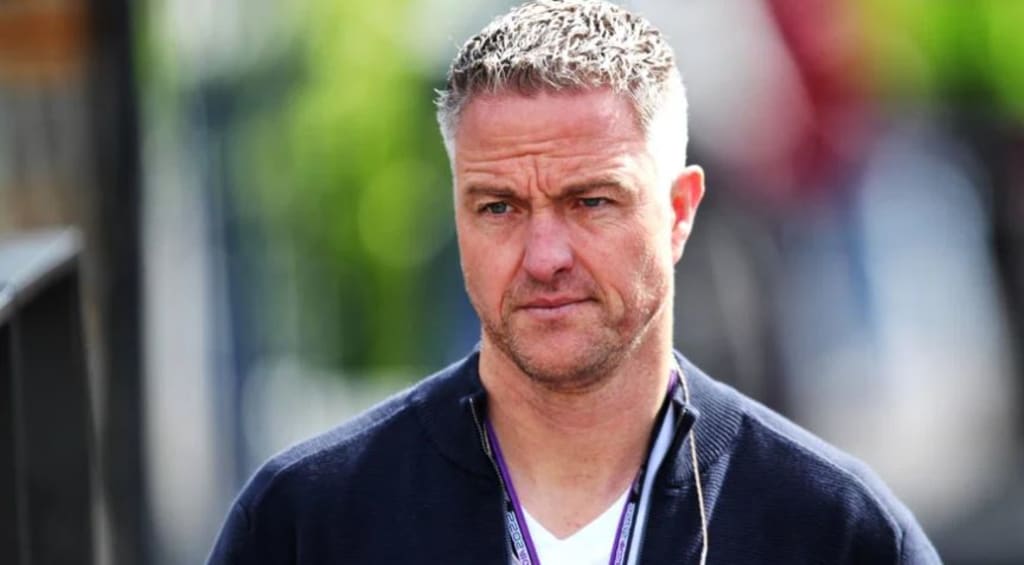
Ralf Schumacher has launched a scathing critique of the stewards’ decision to issue Carlos Sainz only a five-second penalty for colliding with race leader Oscar Piastri during the Hungarian Grand Prix, arguing that the punishment fails to reflect the severity of the incident. Sainz, who was being lapped while battling Fernando Alonso, ignored eight consecutive blue flag signals before making contact with Piastri, destroying the McLaren driver’s track position and effectively costing him a likely victory. For Schumacher, the leniency of the sanction sets a dangerous precedent that undermines both sporting integrity and safety.
A Preventable Collision With Championship Consequences
The incident occurred at a critical juncture in the race. Piastri had recently pitted and was closing rapidly on teammate Lando Norris, poised to reclaim the lead after the pit stop cycle completed. Instead, his momentum was shattered when Sainz, despite receiving multiple warnings via team radio, dashboard alerts, and marshals’ boards, failed to yield. The collision forced Piastri off-line and dropped him behind slower traffic, ultimately altering the championship trajectory for both McLaren drivers.
Schumacher emphasized that this wasn’t a racing incident between competitors but a failure of basic protocol by a driver not in contention for points. “None of them were competing for the points,” he told Sky Deutschland. “Then the leader of the race comes, and Sainz drove into his car.” In modern F1, blue flag compliance is non-negotiable; it exists precisely to prevent backmarkers from interfering with title-relevant battles. Ignoring eight signals transforms negligence into recklessness a distinction Schumacher believes the stewards failed to acknowledge.
Why a Five-Second Penalty Falls Short
Sainz’s five-second penalty had negligible impact on his final classification, rendering it functionally meaningless as a deterrent. Schumacher argued that such token punishments incentivize complacency: “A normal punishment is not enough. For me, Carlos Sainz should be punished for the next race. In qualifying at Zandvoort, he has to get one.” His proposal for a grid penalty at the following event would carry tangible consequences, signaling that blue flag violations affecting race outcomes warrant escalated sanctions.
This stance aligns with growing paddock frustration over inconsistent stewarding. David Coulthard previously described Hungary’s blue flag management as resembling a “first day at school,” highlighting systemic issues beyond individual error. Yet Schumacher placed primary responsibility on the driver, rejecting technical excuses about GPS failures or missing dashboard warnings. “Every driver knows what it’s all about,” he stated. “You have your engineer, you ask questions, and also look in the mirror. If he tells me he can’t look in the mirror when he’s driving, then he’s overwhelmed and has to stop.”
Rejecting Technical Excuses: Driver Accountability First
Sainz’s post-race defense cited malfunctioning blue flag indicators on his steering wheel, a claim partially corroborated by reports of GPS system glitches. However, Schumacher dismissed this as inadequate justification. Modern F1 cars are equipped with redundant communication channels: team radio, physical marshal boards, and rearview mirrors. Reliance on a single electronic system contradicts fundamental racing discipline. “That’s really unsportsmanlike!” Schumacher declared, framing the oversight as a choice rather than an unavoidable technical failure.
His comments underscore a broader debate about driver adaptability in increasingly complex machinery. While technology enhances safety, it cannot replace situational awareness. Backmarkers must proactively monitor their surroundings, especially when warned repeatedly. To suggest otherwise implies that elite drivers lack the multitasking capacity required for F1, a notion Schumacher finds unacceptable.
Setting Precedents: Safety and Sporting Fairness
Beyond this specific incident, Schumacher’s outrage reflects concern about long-term norms. If five-second penalties remain the standard for ignoring multiple blue flags and causing collisions with leaders, backmarkers may perceive compliance as optional. This erodes trust in race control and increases risk for front-runners navigating traffic. “It must not happen at all,” Schumacher insisted, advocating for penalties severe enough to deter future infractions.
The stakes extend beyond individual races. Consistent enforcement protects championship integrity and ensures that outcomes reflect competitive merit, not procedural failures. As F1’s 2026 title fight intensifies, clarity on blue flag protocols becomes essential. Schumacher’s demand for harsher sanctions isn’t merely punitive; it’s prescriptive, urging the sport to uphold standards that preserve both fairness and safety.
Moving Forward: Clarity Over Controversy
The Hungarian GP controversy highlights the need for updated guidelines addressing technological failures without absolving driver responsibility. Stewards could implement tiered penalties based on signal count, collision impact, and championship relevance. Teams might also face accountability for inadequate communication protocols. Ultimately, Schumacher’s fury stems from a belief that F1’s credibility depends on enforcing rules uniformly, regardless of a driver’s status or technical grievances. Until then, incidents like Sainz-Piastri will continue to fuel debates about whether the sport prioritizes spectacle over substance.
About the Creator
Mark Lim
Hi I am mark an automotive student and a car, tech and food enthusiast ! Im gonna try and post daily & hope you enjoy what I write and do share my page with people you know. I would gladly appreciate it! Cheers
Enjoyed the story? Support the Creator.
Subscribe for free to receive all their stories in your feed.
Comments
There are no comments for this story
Be the first to respond and start the conversation.