
IndyCar Unveils IR-28: A Lighter, Faster, and Safer Machine Set to Redefine the 2028 Season
The next-generation chassis promises enhanced wheel-to-wheel racing, a groundbreaking hybrid system, and the most advanced safety architecture in series history.

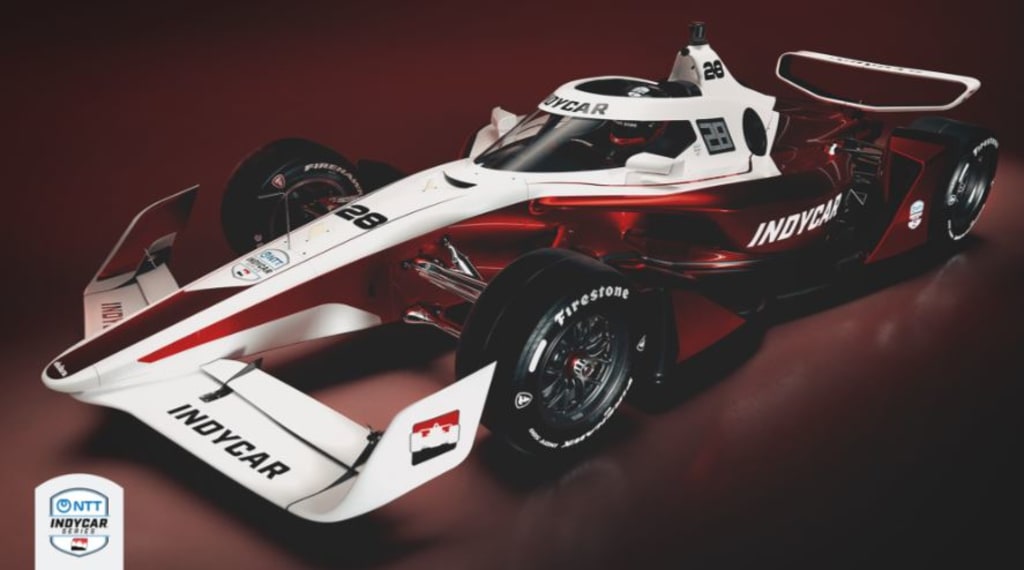
The NTT IndyCar Series has officially pulled back the curtain on its future, unveiling the IR-28 chassis and powertrain package that will define the 2028 championship and beyond. Developed in partnership with longtime constructor Dallara, the new car represents a comprehensive ground-up redesign aimed at solving modern open-wheel racing’s most persistent challenges: improving overtaking, reducing weight, increasing driver safety, and integrating next-generation hybrid technology without sacrificing the raw essence of IndyCar competition. With initial testing scheduled to begin immediately, series officials and drivers alike are heralding the IR-28 as the dawn of a new era, one that honors tradition while aggressively pursuing innovation.
At the heart of the IR-28’s philosophy is “raceability.” The car weighs approximately 100 pounds less than its predecessor, a significant reduction achieved through holistic engineering rather than piecemeal tweaks. This lighter platform is paired with a completely reimagined aerodynamic architecture designed to optimize wake management from front to back, directly addressing the turbulent air that has historically hindered close following and passing. New front and rear wings have been styled for both visual aggression and functional efficiency, with a dedicated superspeedway configuration that maximizes downforce while minimizing drag for Indianapolis Motor Speedway. Crucially, the design reduces the disruptive airflow that makes trailing cars lose grip, thereby encouraging the “wheel-to-wheel action” that fans crave and that defines IndyCar’s identity.
Mechanical innovation further enhances on-track dynamics. The IR-28 introduces electronically controlled, driver-adjustable anti-roll bars, allowing real-time tuning adjustments from the cockpit while eliminating cluttery knobs and handles, a dual win for performance and safety. Additionally, the Custom AXIS Inertance Control Suspension System offers unprecedented flexibility in spring, damper, and inerter tuning within a lightweight shared damping architecture. According to developers, this system improves mechanical grip and setup adaptability across diverse track types, giving teams more tools to extract performance without compromising drivability.
Powering this agile machine is a new 2.4-liter twin-turbocharged V6 engine capable of producing up to 760 horsepower, with both Chevrolet and Honda committed to the formula. But the true technological leap lies in the hybrid system. For the first time in IndyCar history, the IR-28 features a battery-based Energy Storage System (ESS) supplied by BOLD Technology, offering approximately 14 times the energy storage capacity of the current supercapacitor unit. Paired with UK-based Helix’s low-voltage hybrid platform, this system delivers greater power deployment options, improved energy management, and an additional 20-pound weight savings. Xtrac, IndyCar’s exclusive transmission supplier since 2000, has also contributed a new gearbox that sheds 25 pounds, further contributing to the car’s overall mass reduction.
Safety remains non-negotiable in this evolution. The IR-28 integrates decades of crash data and incident analysis into a stronger, more efficient side-impact structure with enhanced energy absorption. Wider internal dimensions accommodate a broader range of driver physiques, while improved airflow and cooling systems boost comfort during grueling races. The aeroscreen, roll hoop, and survival cell have all been refined to meet or exceed current standards, ensuring that speed never comes at the cost of protection.
Drivers have already expressed enthusiasm. Reigning champion Alex Palou called the design “super cool” and a “proper next step,” while Alexander Rossi praised its futuristic yet authentic aesthetic. Both acknowledged the work ahead in validating the car across varied circuits but emphasized confidence in its foundational direction.
IndyCar President J. Douglas Boles struck a balanced tone: “There is still plenty of work to do before 2028, but we are well on our way to showcasing a new era of IndyCar.” That era will be defined not just by lap records or sleek bodywork, but by a deliberate recalibration of what open-wheel racing can be: lighter, smarter, safer, and more competitively vibrant than ever before. As the IR-28 hits the test track this week, it carries not only the hopes of engineers and manufacturers but the enduring spirit of a series determined to lead, not follow, into motorsport’s next chapter.
About the Creator
Mark Lim
Hi I am mark an automotive student and a car, tech and food enthusiast ! Im gonna try and post daily & hope you enjoy what I write and do share my page with people you know. I would gladly appreciate it! Cheers
Enjoyed the story? Support the Creator.
Subscribe for free to receive all their stories in your feed.
Comments
There are no comments for this story
Be the first to respond and start the conversation.