
India Tyre Market: Vehicle Ownership Growth, EV Adoption & Manufacturing Expansion
Rising vehicle ownership, accelerating EV adoption, and expanding highway networks are driving powerful growth across India's tyre market.
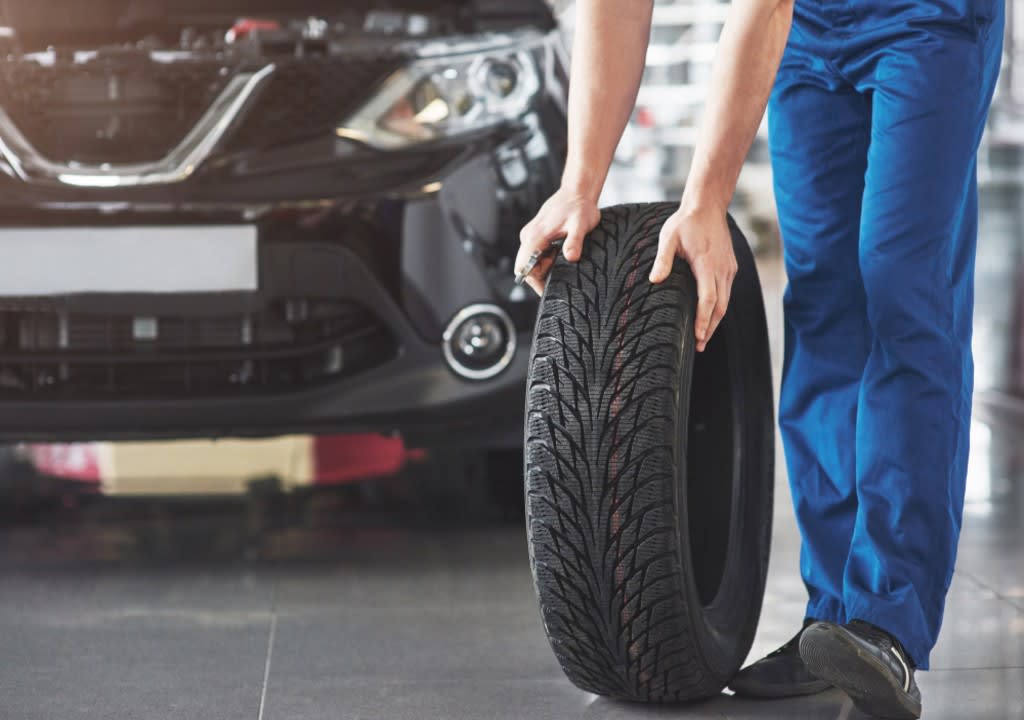
India's tyre industry is navigating a sustained growth phase anchored in structurally non-discretionary demand tied to the country's rapidly expanding vehicle fleet, accelerating road and highway infrastructure development, and the mandatory replacement cycles that govern tyre consumption across all vehicle categories. Rising passenger vehicle ownership, a booming commercial freight sector, and India's emergence as a competitive global tyre manufacturing and export hub are collectively reshaping the market from a domestically focused industry into an increasingly globally integrated manufacturing powerhouse. As India's automobile production scales across passenger cars, two-wheelers, and commercial vehicles and EV adoption accelerates across segments, tyres are reinforcing their role as the foundational safety and performance component enabling India's mobility transformation.
According to IMARC Group's latest market report, the Indian tyre market was valued at USD 14.45 billion in 2025. It is projected to reach USD 27.67 billion by 2034, expanding at a compound annual growth rate (CAGR) of 7.49% during 2026–2034. The market's growth is being driven by rising vehicle ownership, expanding road and highway infrastructure, increasing automobile production, and strong replacement tyre demand. Additionally, government support for domestic manufacturing, growing adoption of radial and tubeless tyres, and the rapid expansion of electric vehicle (EV) fleets are creating new opportunities for innovation and long-term industry growth.
Key Emerging Trends in Indian Tyre Market
Growing Demand for EV-Specific Tyres:
The rapid adoption of electric two-wheelers and fleet-integrated electric buses is compelling tyre manufacturers to develop specialized low-rolling-resistance, high-durability tyres tailored to the unique torque delivery, load distribution, and acoustic requirements of EV platforms. EV-specific tyre fitments represent the fastest-growing sub-segment within India's tyre industry, with OEM and tyre producer partnerships co-developing dedicated EV tyre platforms engineered for India's road conditions and thermal environments. Manufacturers are investing in silica compound optimization, advanced tread geometry simulation, and foam acoustic inserts to balance the competing demands of range maximization, battery-pack load support, and cabin noise reduction that define EV tyre performance requirements.
Expansion of Tyre-as-a-Service Business Models:
Fleet operators, logistics companies, and public transport providers in India are increasingly shifting toward subscription-based and service-integrated tyre management models to reduce operating costs and improve vehicle uptime. These models incorporate real-time tyre pressure monitoring, predictive wear analytics, scheduled maintenance alerts, and streamlined replacement cycles under unified contract frameworks, enabling fleet aggregators to convert tyre expenditure from a variable capital cost into a manageable operational expense. OEM and tyre producers are partnering with digital platform providers to deliver telematics-integrated insights, and this model is expected to expand significantly through 2034 as large e-commerce fulfilment operators and transport aggregators standardize fleet management practices across their rapidly growing national networks.
Radial Technology Mandate and Tubeless Tyre Standardization:
India's regulatory momentum toward phasing out bias tyres in commercial vehicle categories and mandating radial technology is reshaping the competitive landscape by driving a structural shift toward higher-value tyre products across the market. Radial tyres deliver superior fuel efficiency, extended tread life, and improved safety characteristics suited to India's expanding highway network, making them the preferred specification across new passenger car and commercial vehicle platforms. Tubeless tyres, already accounting for 79.0% of total demand in 2025, reflect the broad-based standardization of this technology across vehicle categories, with continued regulatory and OEM-driven adoption reinforcing both volume growth and average selling price improvement throughout the forecast period.
Why the Market is Growing So Rapidly?
Rising Vehicle Production and Expanding Automobile Ownership:
Robust automobile production across all vehicle categories generates substantial OEM tyre demand while simultaneously building the installed vehicle base that drives future replacement requirements across consumer and commercial segments. Passenger vehicle sales reached 4.3 million units in FY 2024-25 according to SIAM data, directly sustaining demand across medium and small tyre categories, while commercial vehicle production creates consistent large tyre requirements for freight and logistics applications. In September 2024, Tata Motors commenced construction on a new greenfield manufacturing plant in Tamil Nadu to produce next-generation cars and SUVs, exemplifying the sustained capex commitment from India's automotive sector that continuously replenishes both OEM supply requirements and the replacement demand pipeline.
Government Manufacturing Incentives and Infrastructure Investment:
The Indian government's PLI scheme for automotive components is directly incentivizing tyre manufacturers to expand domestic production capacity and adopt advanced manufacturing technologies, creating a compounding improvement in India's cost competitiveness and quality standards. The national highway network has expanded 60% since 2014 to over 146,195 km in 2024, creating vast new road surfaces requiring consistent tyre replacement cycles and supporting the long-haul commercial vehicle fleet growth that drives truck and bus radial demand. Manufacturing FDI rose 18% year-on-year in FY 2024-25 to USD 19.04 Billion, reflecting growing investor conviction in India's tyre manufacturing sector as a platform for both domestic market capture and competitive export supply.
Strengthening Export Competitiveness and Global Supply Chain Repositioning:
Indian tyre manufacturers are leveraging investments in modern production facilities, advanced compound technologies, and automation to scale output while meeting the stringent quality standards of international OEM customers seeking to diversify supply chains away from traditional Asian manufacturing centers. Indian tyre exports already exceeded INR 23,073 crore in FY 2024, demonstrating the sector's growing ability to compete in global markets on quality, value, and delivery reliability. The China-plus-one strategic realignment is creating meaningful new partnership and greenfield investment opportunities for India's tyre sector, with foreign manufacturers evaluating India-based joint ventures and local production investments as part of long-term supply chain resilience strategies that directly benefit India's domestic manufacturing ecosystem.
Top Companies Shaping the Indian Tyre Market Include:
- MRF Tyres
- Apollo Tyres Ltd
- CEAT Limited
- Bridgestone
- JK Tyre & Industries Ltd.
- Continental
- The Goodyear Tire & Rubber Company
- The Yokohama Rubber Co., Ltd.
India Tyre Market Segmentation:
➤ By Vehicle Type (Passenger Cars Lead with 32% Share)
- Two Wheelers
- Three Wheelers
- Passenger Cars
- Light Commercial Vehicles
- Medium and Heavy Commercial Vehicles
- Off the Road
➤ By OEM and Replacement Segment (Replacement Leads with 58% Share)
- OEM Tyres
- Replacement Tyres
➤ By Domestic Production and Imports (Domestic Production Leads with 70% Share)
- Domestic Production
- Imports
➤ By Radial and Bias Tyres (Radial Leads with 64% Share)
- Radial Tyres
- Bias Tyres
➤ By Tube and Tubeless Tyres (Tubeless Leads with 79% Share)
- Tubeless Tyres
- Tube Tyres
➤ By Tyre Size (Medium Leads with 50% Share)
- Small
- Medium
- Large
➤ By Price Segment (Medium Leads with 55% Share)
- Low
- Medium
- High
➤ By Region (West and Central India Leads with 33% Share)
- North India
- West and Central India
- South India
- East India
Note: If you require specific details, data, or insights that are not currently included in the scope of this report, we are happy to accommodate your request. As part of our customization service, we will gather and provide the additional information you need, tailored to your specific requirements.
Recent News and Developments
March 2026: MRF signed an MoU with the Tamil Nadu government to establish a new greenfield manufacturing plant in Sivaganga district at the SIPCOT Industrial Park, involving an investment of approximately ₹5,300 crore over 12 years and expected to generate around 1,000 direct jobs, reinforcing MRF's domestic manufacturing leadership.
January 2026: JK Tyre inaugurated Phase III of capacity expansion at its passenger car radial tyre manufacturing facility in Banmore, Madhya Pradesh, as part of a multi-phase investment plan exceeding ₹1,000 crore aimed at strengthening domestic manufacturing capabilities across key product categories.
About the Creator
Jane Knitch
With years of experience as a market researcher & consultant specializing in industry trends, market intelligence, and business insights, I create data-driven content that helps readers understand evolving markets and industry developments.
Enjoyed the story? Support the Creator.
Subscribe for free to receive all their stories in your feed.
Comments
There are no comments for this story
Be the first to respond and start the conversation.