
I Use My Car’s Autohold Button Like a Handbrake. It’s Faster Than the Real One.
A 1.5L Elantra owner explains why Autohold isn’t useless. You just have to stop letting it be automatic.
Red light. Ninety seconds.
Foot off the brake. Green Hold on the dashboard. Shift to N. Phone screen lights up, then goes dark. Horn from behind. Shift to D. Tap the gas. Hold goes off. Car moves.
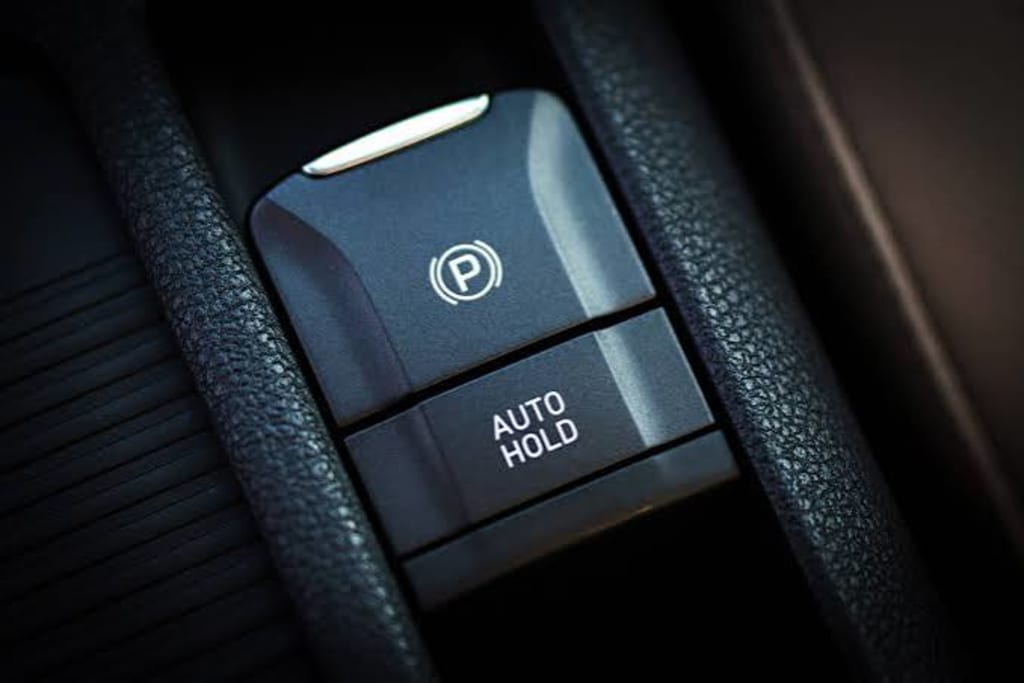
I drive a 1.5L naturally aspirated new Elantra. It has Autohold. The button sits behind the electronic parking brake. Many cars put this button next to the gear shifter. Some put it in the screen. Different places. Different logic.
A friend drives my car. At an intersection, he brakes to a stop, lifts his foot. Car does not move. He looks down at the dashboard, then up at the road. He says, why isn't it moving? I say, press deeper. He presses deeper. Green Hold comes on. Green light. He hits the gas. Car lurches. He brakes. Nose dips. He says, this feature is not good. I say, it's your foot. He does not believe me.
Why do people dislike it?
First, trigger logic varies. My car: light brake does not trigger. Deep brake does. My friend's car does not have this feature. He does not know the pressure. Some cars Hold as soon as you stop. Some release when you shift to N. Some require seatbelt. You get used to one car, then drive another, and you curse.
Second, release is not linear. 1.5L low-end torque is weak. Light gas: car does not move. Heavy gas: Hold releases, car jumps forward. In traffic, the car ahead moves one meter. You hit the gas. Car jumps. You brake. Foot tired.
Third, reversing. Backing into a parking spot. Car stops. AH kicks in. You hit the gas. Car jumps. Stop again. Jump again. I turn off AH when washing the car or parking.
Fourth, auto start-stop. Stop, engine off, foot off brake, car does not move. Hit gas: engine starts, AH releases, car moves. Shakes. The annoying part is the combination.
Fifth, brake lights. When AH holds, tail lights stay on. Short red light, fine. A hundred-plus seconds, the car behind gets annoyed. I switch to electronic parking brake.
Sixth, reviews. Three minutes. Stop, gas, go. No hill, no traffic, no parking, no long red light. Then they call it useless.
My use:
Flat road. Light brake. Stop. AH not triggered. Shift to N. Foot relaxes. If the car feels like it might roll, or the red light is long, press deeper. Hold lights up. Shift to N. Start: shift to D, light gas.
Later, I used it as a handbrake. Electronic parking brake button has high force, operation delay. Motor clamps rear wheels, also slow. AH is fast. Short red light: stop, press AH, release foot. Go: press brake, tap AH, release brake, hit gas. You can even beat the gas. Faster than handbrake.
Long red light, over a hundred seconds, use electronic parking brake. Because AH keeps tail lights on. Mazda 3 owner: AH is behind the handbrake, position does not change. Press once. It is a temporary handbrake.
Scenario rules:
Reverse, parking, car wash, towing: turn off AH.
Creeping in traffic: turn off AH, use brake.
Short red light under 30 seconds: D with foot brake, or D+AH.
Medium red light 30 to 90 seconds: D or N+AH.
Long red light over 100 seconds: N+EPB, or P.
Hill: AH on, D, gas directly. Do not shift to N.
Park and leave: P+EPB. Do not use AH as parking brake.
Start: light gas, wait for AH release, then add gas. Small displacement, do not floor it.
Yesterday, my friend drove my car again. Intersection. He brakes to a stop, lifts his foot. Car does not move. He looks at the dashboard. I say, press deeper. He presses deeper. Hold lights up. Green light. He lightly taps the gas. Car moves. He says, not bad. I say, don't give it too much gas. He says, I know. The car behind does not honk. Red light turns green. Car moves forward.
At first I used the electronic parking brake. It felt slow. You pull the button. You wait. The motor whines somewhere in the rear. The light on the dash changes. Then you can lift your foot. By the time it engages, the red light has already changed. With AH, you press. The green Hold appears. You lift your foot. Done. The difference is small on paper. In traffic, it is the difference between waiting and moving.
Another friend drove my car. He stopped at a stop sign. He lifted his foot. The car rolled back an inch. He panicked. He hit the brake. He said, the Autohold is broken. I said, you didn't press hard enough. He said, how hard? I said, hard enough to make the green light come on. He tried again. The green light came on. He said, why doesn't it just work? I said, because it doesn't know what you want. It only knows pressure.
Some cars have a button that turns the system on, but does not hold the car. You have to stop, then press again. Some cars hold when you stop, then release when you touch the gas. Some cars hold for a few seconds, then switch to the parking brake. There is no single standard. That is why one driver loves it and another hates it.
The tool is simple. The calibration is not. The driver has to choose the scene. It does not know whether you are reversing, whether the red light is long, or whether the car behind is impatient. It follows one set of rules. You follow the road.
I use it as a handbrake. Short red light: AH. Long red light: EPB. Reverse: off. Hill: on. That is it.
Some people want it to do everything. It does not. So they call it useless. But if you treat it as a temporary brake, it is quick. It releases with a tap. It holds with a press. It is faster than the electronic parking brake. It is simpler than shifting to P every time.
The green Hold light is small. The dashboard is dark. The engine hums. The red light counts down. Ninety seconds. Eighty. Seventy. Foot off the brake. Car stays. Phone stays dark. No horn. Light turns green. Tap the gas. Hold goes off. Car moves.
About the Creator
Jin
Writer of reamstories
https://reamstories.com/jin
Enjoyed the story? Support the Creator.
Subscribe for free to receive all their stories in your feed. You could also become a paid subscriber, letting them know you appreciate their work.
Comments
There are no comments for this story
Be the first to respond and start the conversation.