
Genesis Delays IMSA GTP Entry to 2028 as Abiteboul Prioritizes WEC Foundation and Market Validation
Team Principal Cyril Abiteboul confirms the Korean manufacturer will not join IMSA’s top class next year, citing the need to consolidate its WEC program and assess championship stability following Acura’s departure.

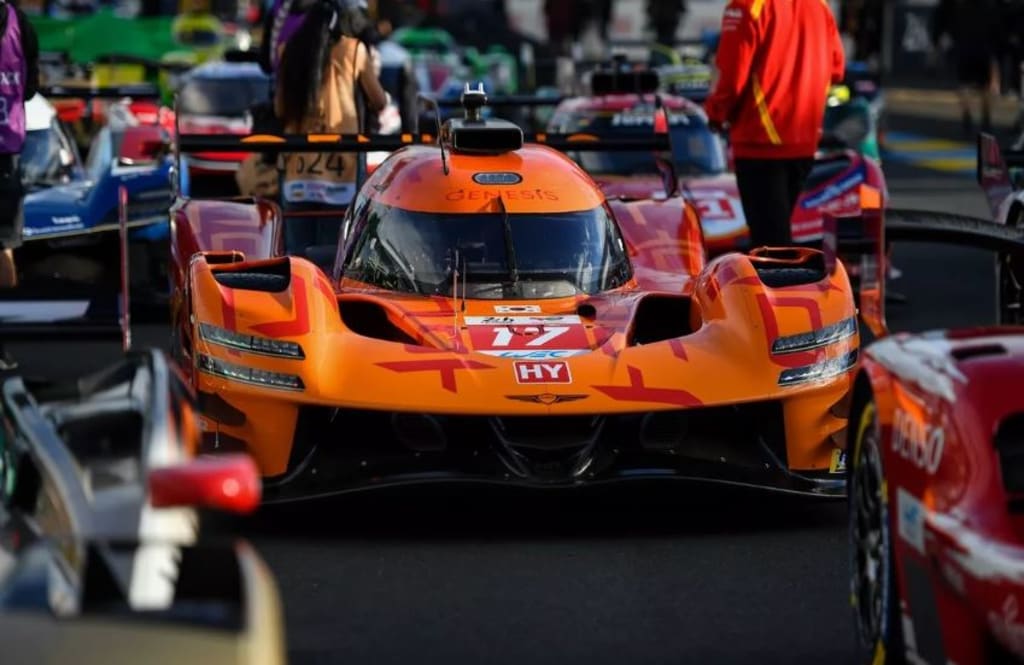
Genesis Magma Racing has officially ruled out an IMSA GTP debut for the 2027 season, pushing its anticipated entry into North America’s premier sports car category to at least 2028. The announcement, made by Team Principal Cyril Abiteboul ahead of the 24 Hours of Le Mans, reflects a deliberate strategy to solidify the brand’s FIA World Endurance Championship campaign before expanding. With the GMR-001 LMDh making its Le Mans debut this weekend, Abiteboul emphasized that doing things “step by step” is essential to ensuring the program’s long-term success, especially as external factors like Acura’s impending exit from IMSA introduce new uncertainties about return on investment.
Consolidating WEC Before Expansion
Although Genesis had previously targeted a 2027 IMSA entry alongside its WEC efforts, Abiteboul clarified that the immediate priority remains establishing competitiveness and operational maturity in the world championship. “The first thing we wanted really to consolidate is WEC,” he explained during a media availability at Le Mans. He described the Genesis Magma Racing project as uniquely demanding because the manufacturer chose to run the program in-house rather than outsourcing to an established team. This approach requires significant management attention and financial resources, making a simultaneous dual-series launch impractical without risking dilution of effort.
Le Mans serves as a critical benchmark in this assessment. Abiteboul stated he wanted to use the race to evaluate progress against internal plans before committing to expansion. “From that, we will be able to judge where we can… what we should be doing next,” he noted. This pragmatic stance underscores a philosophy of sustainable growth over rapid scaling, a contrast to manufacturers who have stretched themselves thin across multiple platforms prematurely.
Acura’s Exit and Championship Stability Concerns
A key factor in the delay is the evolving landscape of IMSA itself. Acura’s confirmed withdrawal after the 2026 season has raised questions about grid stability and promoter strategy. “The news of Acura stopping is not good news for usthe dynamic of the championship is,” Abiteboul admitted. “We'd like to understand and to see what is the dynamic of the championship, what is the promoter's position on that, because at the end of the day, it's all about return on investment.”
This caution reflects broader industry concerns about manufacturer retention in an era of rising costs and shifting marketing priorities. For Genesis, entering IMSA isn’t just a racing decision it’s a business case tied directly to U.S. market performance. With America accounting for nearly one-third of global sales, any motorsport investment must demonstrably support commercial objectives. Rushing into a potentially unstable championship environment contradicts that imperative.
Austin Activation as Decision Catalyst
Rather than setting a fixed timeline, Genesis has identified the Lone Star Le Mans round at Circuit of The Americas (September 4–6) as a pivotal evaluation point. Abiteboul revealed plans for a “huge activation” in Austin designed to gauge fan engagement and local market response. “I think this will be an interesting moment for us to decide if an expansion in IMSA makes sense,” he said. The data gathered from this activation—combined with post-Le Mans performance analysis will inform the final decision on entry timing.
Importantly, Abiteboul stressed that IMSA remains part of the long-term vision. “It's still our desire,” he affirmed. “Let's see when we are in Austin how we're feeling in U.S. markets, and from there, make the final decision.” This conditional language signals flexibility: if WEC consolidation exceeds expectations and IMSA demonstrates renewed stability post-Acura, a 2028 entry could still materialize. Conversely, if market indicators or championship dynamics remain unfavorable, further delays are possible.
Strategic Implications for Genesis and IMSA
For Genesis, the delay represents disciplined risk management. By avoiding overextension during its formative WEC years, the brand protects its core investment while preserving optionality for future growth. For IMSA, however, Genesis’ hesitation highlights the challenge of retaining manufacturers amid competitive and economic headwinds. Acura’s departure already created a gap; Genesis’ postponed entry extends the period of uncertainty for promoters seeking to bolster GTP grids.
Ultimately, Abiteboul’s message is clear: Genesis will enter IMSA only when conditions align with both competitive readiness and commercial justification. In an era where motorsport programs face increasing scrutiny, that patience may prove more valuable than premature presence. As the GMR-001 tackles La Sarthe this weekend, its performance won’t just determine Le Mans results it will help shape whether and when Genesis stars finally shine on American soil.
About the Creator
Mark Lim
Hi I am mark an automotive student and a car, tech and food enthusiast ! Im gonna try and post daily & hope you enjoy what I write and do share my page with people you know. I would gladly appreciate it! Cheers
Enjoyed the story? Support the Creator.
Subscribe for free to receive all their stories in your feed.
Comments
There are no comments for this story
Be the first to respond and start the conversation.