
From Assembly to Manufacturing: Egypt's Audacious Plan to Become a Regional Automotive Powerhouse
With a new study calling for doubled production and deep localisation, Egypt is taking decisive steps toward building a fully integrated automotive industry.

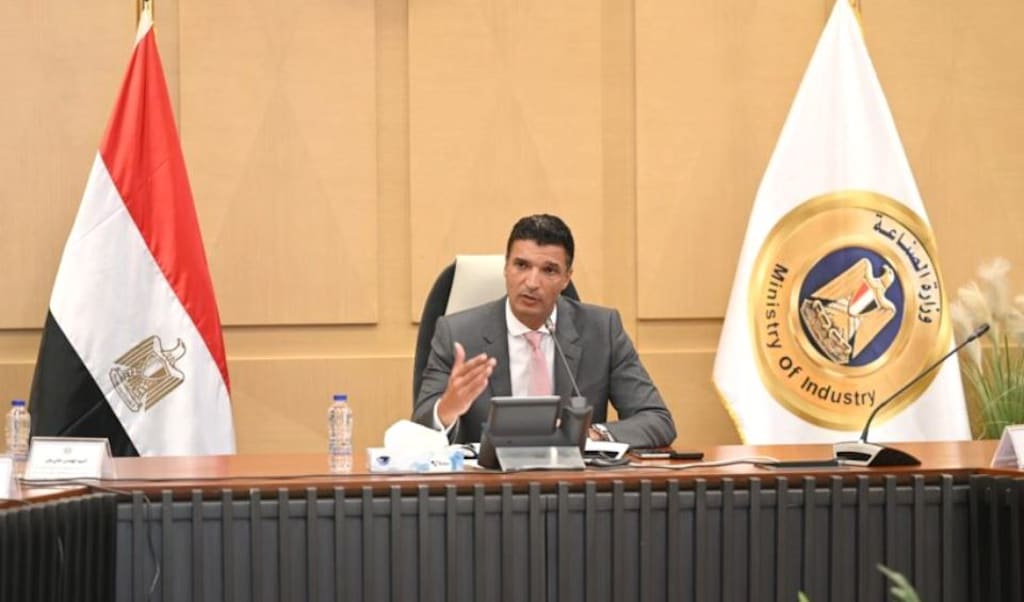
Egypt's Minister of Industry, Khaled Hashem, has discussed executive steps to increase local content in the automotive industry and manufacture vehicle bodies entirely in Egypt during an expanded meeting with the Presidential Advisory Council of Egyptian Scientists and representatives of automotive manufacturers and component suppliers. The meeting, which brought together key stakeholders from across the automotive value chain, marked a significant milestone in Egypt's long-standing ambition to transform from a vehicle assembly hub into a true automotive manufacturing nation.
The meeting reviewed an automotive development study prepared by the council that aims to double vehicle production in Egypt over the next five years while deepening the localisation of automotive components, particularly metal parts and vehicle bodies, to strengthen the country's competitiveness and position Egypt as a regional automotive manufacturing hub. The study represents a comprehensive roadmap for the industry's development, identifying opportunities for growth, investment, and technology transfer across the value chain.
A Joint Committee to Drive Implementation
Hashem announced the formation of a joint committee comprising representatives from the Ministry of Industry, the Presidential Advisory Council, and automotive manufacturers to develop an executive framework for implementing the study's recommendations. The establishment of this committee reflects the government's commitment to translating vision into action, ensuring that the study's recommendations are not left to gather dust but are actively pursued through coordinated efforts across the public and private sectors.
He added that the committee would meet regularly to monitor progress and translate the recommendations into practical outcomes. This focus on accountability and regular review underscores the seriousness of Egypt's intent to build a competitive automotive industry that can serve both domestic and export markets.
Discussions focused on establishing an integrated automotive ecosystem linking vehicle assembly plants with domestic supply chains capable of producing components that meet the global standards of international automakers. The vision is of an interconnected network of suppliers, manufacturers, and service providers that can support the entire automotive value chain, from raw materials to finished vehicles.
The Role of Egyptian Engineering Expertise
Participants also highlighted the role of Egyptian engineering expertise in vehicle design, tooling, industrial processes, and testing. The recognition of local engineering capabilities represents a significant shift in perspective. Historically, Egypt has been seen primarily as a market for vehicles rather than a source of engineering talent. The new approach leverages the country's pool of skilled engineers and technical professionals, positioning them as key contributors to the industry's development.
Future proposals included expanding the domestic supply of steel sheets for additional vehicle models assembled in Egypt, increasing exports of locally manufactured components to regional markets through cooperation with global parent companies, developing lightweight materials to improve fuel efficiency, and preparing local manufacturers to produce metal components required for electric vehicles. These proposals reflect a forward-looking approach that anticipates the industry's evolution, including the growing importance of electric vehicles and lightweight materials.
Beyond Assembly: A Fully Integrated Industry
Hashem stressed that the ministry's objective is to move beyond vehicle assembly and establish a fully integrated automotive manufacturing industry covering every stage of the value chain. This vision represents a fundamental shift in Egypt's approach to industrial development, moving away from the relatively low-value activity of assembly toward higher-value activities such as component manufacturing, technology development, and research and innovation.
"Assembly is only one step toward making Egypt a true automotive manufacturing nation through local component production, technology localisation, and the development of a competitive industrial base capable of serving both domestic and export markets," he said. The minister's words capture the ambition of the program, which aims to create a self-sustaining automotive ecosystem that can compete with established manufacturing hubs in the region.
The minister also revealed that the ministry is working to attract investments from specialised foundry companies as part of efforts to deepen local manufacturing in heavy and engineering industries, particularly the automotive sector. The attraction of foundry investments is a critical component of the strategy, as it would provide the foundation for a robust local supply chain capable of producing high-quality components for both domestic and export markets.
He said these efforts would be implemented alongside Egypt's Automotive Industry Development Programme (AIDP), with a focus on technology transfer, upgrading existing factories, and establishing integrated production facilities. The AIDP provides a framework for the industry's development, offering incentives and support for manufacturers that increase local content and invest in technology.
A National Scrappage and Replacement Programme
In addition, Hashem said the Ministry of Industry is coordinating with the Ministry of Finance to launch a national vehicle scrappage and replacement programme. The initiative will offer incentives to encourage citizens to replace ageing vehicles with newer, more efficient models, boosting demand for locally manufactured vehicles while generating additional scrap metal for domestic steel production.
He noted that maximising the use of locally available scrap metal has become a strategic priority to reduce imports and secure raw materials for Egypt's iron and steel industry. The scrappage programme serves multiple purposes: it modernises the vehicle fleet, reduces emissions, supports local manufacturers, and provides a source of raw materials for the steel industry, a virtuous cycle that aligns with the government's broader industrial policy objectives.
Industry Readiness and Commitment
Representatives of automotive manufacturers outlined their ongoing efforts to increase local content and value addition in vehicle components, expressing their readiness to expand domestic production of metal vehicle structures, provided sufficient raw materials and skilled labour are available. They said this would enable them to demonstrate the capabilities of Egypt's automotive manufacturing sector to their global parent companies.
The willingness of manufacturers to expand domestic production reflects a growing confidence in Egypt's industrial capabilities and the government's commitment to supporting the industry's development. By demonstrating the ability to produce high-quality components at competitive costs, Egyptian manufacturers can strengthen their position within their parent companies' global supply chains, potentially opening up export opportunities.
Egypt's ambition to become a regional automotive manufacturing hub is bold, but it is not without precedent. Countries such as Morocco, South Africa, and Thailand have successfully built competitive automotive industries through a combination of government support, foreign investment, and local content requirements. Egypt possesses many of the same advantages: a large domestic market, a strategic location, a skilled workforce, and a strong industrial base.
The challenge will be to execute the vision consistently and effectively. The joint committee, the AIDP, and the scrappage programme provide a framework for action, but success will depend on the commitment of all stakeholders, government, industry, and academia, to work together toward a common goal.
As Egypt moves forward with its automotive development strategy, the country is positioning itself to capture a larger share of the value chain in one of the world's most important industries. The shift from assembly to manufacturing is not just an economic goal; it is a statement of intent about Egypt's future as an industrial nation.
About the Creator
Mark Lim
Hi I am mark an automotive student and a car, tech and food enthusiast ! Im gonna try and post daily & hope you enjoy what I write and do share my page with people you know. I would gladly appreciate it! Cheers
Enjoyed the story? Support the Creator.
Subscribe for free to receive all their stories in your feed.
Comments
There are no comments for this story
Be the first to respond and start the conversation.