
Former Red Bull Mechanic Warns F1’s Expanding Calendar Risks "Genuine Professional Burnout"
As Formula 1 confirms a 23rd race for 2026, ex-Red Bull crew member Calum Nicholas urges the sport to prioritize logistical efficiency and staff well-being over commercial growth to protect the human backbone of the paddock.

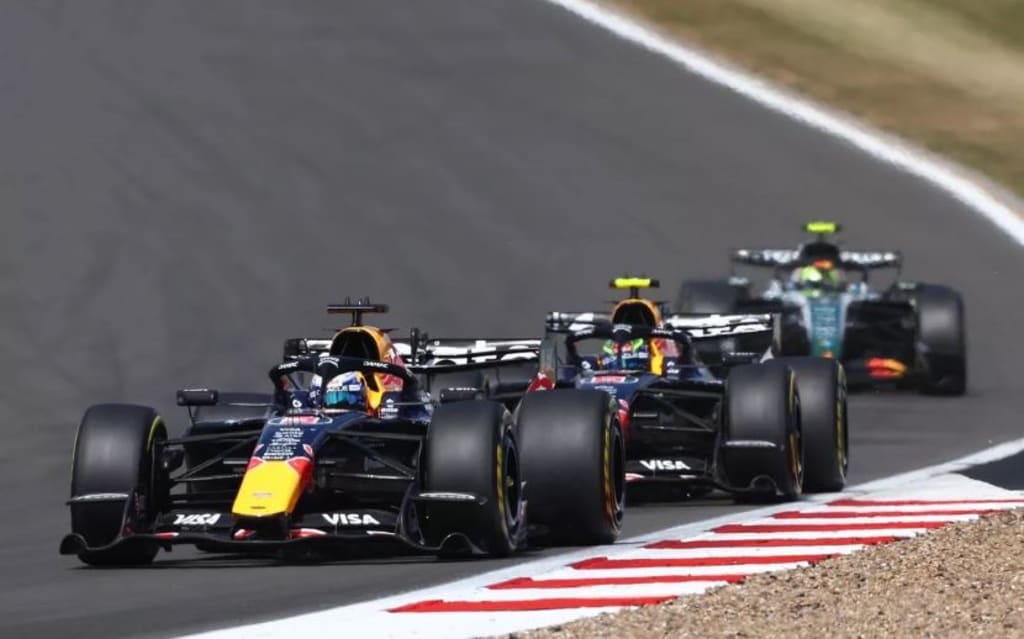
Former Red Bull mechanic Calum Nicholas has issued a stark warning to Formula 1 stakeholders: the sport’s relentless calendar expansion is pushing personnel toward "genuine professional burnout." Speaking on the Talking Bull podcast during the Hungarian Grand Prix weekend, just as F1 confirmed the rescheduled Bahrain GP would be held in Malaysia from October 2–4, bringing the 2026 tally to 23 races, Nicholas emphasized that commercial ambitions must be balanced against the physical and mental limits of traveling staff and their families.
The Human Cost of Growth
Nicholas, who now works outside the garage but retains deep ties to the paddock, acknowledged the tension between fan demand and workforce sustainability. “On the one hand, I want to see as many races as we can,” he said. “But professional burnout is a real thing. It's all very well saying, ‘Well, you had time off earlier in the year,’ but there just comes a point where the workload can be too much.”
Crucially, he expanded the definition of “personnel” beyond the 80-odd team members who travel to each event. “It's not just those travelling away to the races. It's all the people back home, the families trying to make it work, who make sacrifices for them to be away.” This holistic view underscores that burnout is not merely an individual issue but a systemic one affecting support networks that enable staff to remain in the sport long-term.
Rotational Systems: A Necessary but Insufficient Fix
Teams have begun adapting to the grueling schedule through rotational staffing. Red Bull introduced an initiative in 2025 allowing mechanics to select a set number of races to skip annually, enabling them to plan around family commitments. “They can plan that and choose their races so that they can make it work with kids and all of that stuff,” Nicholas explained.
While such measures are vital, Nicholas stressed they are reactive rather than proactive. Teams can mitigate fatigue, but they cannot eliminate it if the underlying calendar structure remains inefficient. He urged F1’s commercial rights holder and the FIA to embed well-being into the scheduling process itself, rather than treating it as a team-level HR problem.
Logistics Matter More Than Race Count
For Nicholas, the sequence of races matters as much as the total number. He contrasted two triple-headers to illustrate this point:
Austria-Britain-Belgium: “One of the better ones because you're not going far. The flights are really short, and that helps.”
Vegas-Qatar-Abu Dhabi: “Takes a far greater toll. It's a long way across the globe, and there's the jet lag and all of those things.”
The newly added Malaysian round compounds this challenge. Inserted between Azerbaijan (Sept 27) and Singapore (Oct 11), it creates another transcontinental triple-header spanning three time zones in 14 days. While commercially logical for filling a gap left by Middle East cancellations, it exemplifies the kind of logistical strain Nicholas warns against. His message is clear: when 23+ races are inevitable, minimizing intercontinental jumps and clustering regional events becomes a non-negotiable duty of care.
A Sustainable Path Forward
Nicholas’ intervention arrives at a critical juncture. With F1 targeting 30+ races in future cycles and new venues continually emerging, the margin for error in workforce management is shrinking. His call for caution is not anti-growth but pro-sustainability: without protecting the humans who build, operate, and maintain the cars, the spectacle itself becomes fragile.
As teams refine rotational policies and F1 evaluates future calendars, Nicholas’ perspective offers a grounded counterweight to commercial optimism. The sport’s greatest asset isn’t its global footprint or broadcast revenue; it’s the skilled, dedicated people who make it possible. Ensuring they can endure the journey is not optional; it’s existential.
About the Creator
Mark Lim
Hi I am mark an automotive student and a car, tech and food enthusiast ! Im gonna try and post daily & hope you enjoy what I write and do share my page with people you know. I would gladly appreciate it! Cheers
Enjoyed the story? Support the Creator.
Subscribe for free to receive all their stories in your feed.
Comments
There are no comments for this story
Be the first to respond and start the conversation.