
Fast Cars Aren’t the Problem. Weak Rules Are.
The launch race looks like innovation. Too often, it shifts cost onto buyers, workers, and suppliers.
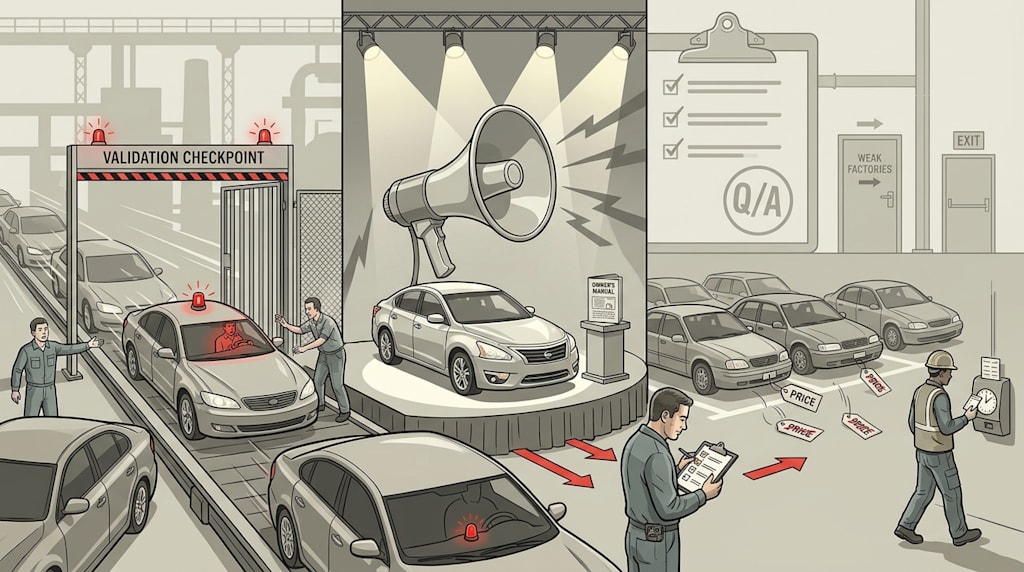
Car companies are launching new models faster than ever. New brands, versions, trims, and price cuts arrive month after month. Launch events promise more than the owner’s manual supports. That has made “fast-tracked car” a label people use to mean short development cycles, thin validation, and exaggerated driver-assistance claims. Some of that criticism lands. Some of it unfairly dismisses serious engineering work.
The useful question is narrower: where does speed help, and where does it push cost onto buyers, workers, and suppliers? Quick updates are not the problem. Unchecked updates are.
1. Fast updates are normal
If a model keeps selling, no automaker wants to spend on a facelift. A facelift costs R&D, validation, supplier changes, and marketing. Competition still forces updates: rules change, rivals launch, buyers expect new screens and driver-assistance features. A facelift can be normal competition and technical progress.
The problem starts when a facelift mainly creates new-model anxiety, when a model-year change exists to lift short-term sales, when validation is squeezed, or when unfinished features reach buyers and get fixed later by OTA. Cars are not phones. They carry people on public roads in bad weather, at night, in traffic, and in rare crash scenarios. Development cycles can shrink. Validation standards cannot. Software can update. Safety limits cannot.
Criticism should focus on evidence: Was the car validated? Is the marketing accurate? Are feature limits clear? Is quality consistent? Who handles after-sales and resale value? The target is unchecked speed, not speed itself.
2. Too many automakers, too slow an exit
China has many automakers, brands, and plants. Competition can be healthy. The problem is that entry is easier than exit. Local protection, jobs, tax revenue, and existing assets keep weak players alive. A brand selling fewer than 10,000 cars a year still launches new models with local subsidies and contract manufacturing. A model eight months old gets an early facelift because a rival released a new version. Used-car dealers ask how long a model has been on sale because fast facelifts hit resale value.
These scenes create a loop: launch, cut price, launch again, cut price again. Buyers get short-term deals. The industry absorbs the cost. Thin profits push automakers to stretch supplier payment terms, cut validation, or demand more overtime. Payment terms move from three months to six months. Weekends disappear into project milestones. Resale value drops 30% in a year. These are not abstract risks. They are cost shifts.
Profit is not a favor to shareholders. It is the margin that pays for quality, stable jobs, and R&D.
3. Launch rules need sharper teeth
Two areas need work.
First, testing standards. Driver assistance needs shared, detailed, repeatable tests. The rules should name which scenarios must be tested, which functions must be limited, which edge cases must be disclosed, how takeover and crash data get reported, and how OTA updates get filed. Vague standards leave room for boastful demos. Vague boundaries let buyers confuse driver assistance with self-driving.
Second, marketing. A launch event can say “zero takeover” or “self-driving” while the manual says the driver must monitor the road at all times. That gap invites a race to the loudest claim. Careful companies look slow. Reckless companies get attention. Regulators should set enforceable language for claims that blur feature limits or use extreme footage to imply everyday performance. The goal is not to slow innovation. The goal is to make competition depend on capability, not stagecraft.
4. Buyers and workers want the same thing
Buyers want low prices and good cars. Workers want healthy employers, stable pay, and fewer pointless hours. These goals do not conflict. Buyers need safety, after-sales support, and resale value that does not collapse. Workers need stable jobs and a solvent industry. If automakers earn no profit, they will cut product quality, supplier margins, or payroll. Each choice hurts ordinary people.
The industry needs a shift from launch events to lifecycle quality, from price wars to value, and from loose entry to a system that lets weak capacity exit. Raise safety and consistency thresholds. Allow mergers, reorganizations, and bankruptcies. Stop shielding inefficient plants. Make marketing claims testable, data traceable, and responsibility enforceable. Good companies can then earn money. Weak ones can leave. Buyers and workers both gain.
5. Criticize the choice, not the effort
Most Chinese automakers are serious. Many choices come from survival pressure. A bad product deserves criticism. The whole industry does not deserve a lazy label. At the same time, survival pressure does not excuse unsafe features, false marketing, hidden data, or abusive hours. Judge companies by products and responsibilities that can be checked.
Return to speed. The question is what happens before and after. Validation before speed makes progress. Cost shifting after speed makes damage. The policy target is thin validation, false claims, blocked exits, and disordered competition. Good firms need profit. Weak capacity needs an exit. Marketing needs proof. Workers need time. That is how the industry moves from low-quality involution to high-quality competition.
About the Creator
Jin
Writer of reamstories
https://reamstories.com/jin
Enjoyed the story? Support the Creator.
Subscribe for free to receive all their stories in your feed. You could also become a paid subscriber, letting them know you appreciate their work.
Comments
There are no comments for this story
Be the first to respond and start the conversation.