
[Exclusive] "Why Are Sales So Strong Only in Korea?"
Tesla Hits 200,000 Units Sold in 10 Years Defying Global Trends, While Hyundai Prepares Its Response

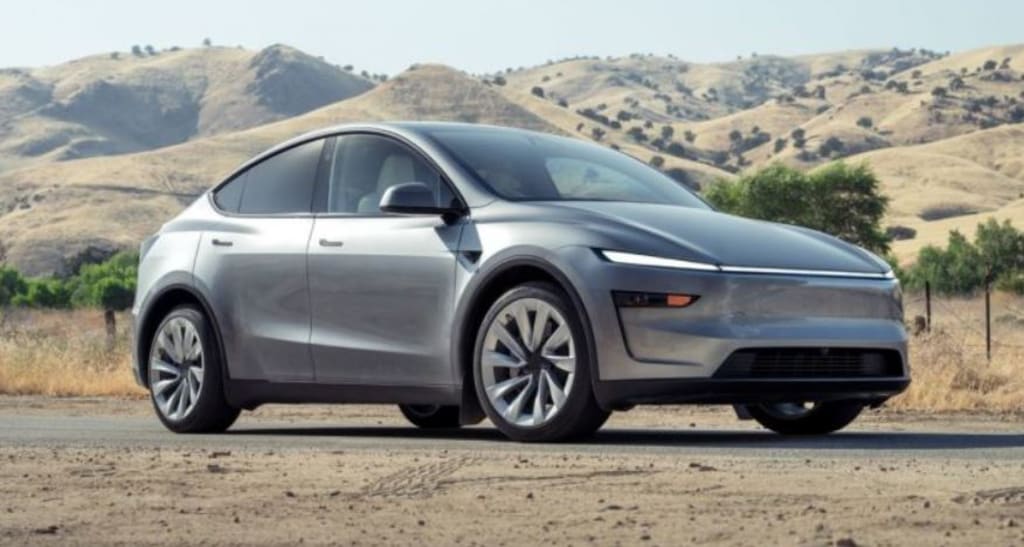
Since entering the South Korean market a decade ago, Tesla has achieved a remarkable milestone: cumulative sales have now surpassed 200,000 vehicles, according to the latest industry data. What makes this achievement even more striking is the contrast with its performance elsewhere in the world. While Tesla has lost its global top spot to Chinese electric vehicle maker BYD and faces growing competition across most international markets, its momentum in South Korea remains exceptionally strong, leaving analysts and competitors asking the same question: Why is this growth happening here, and nowhere else?
Fastest Growth in Imported Car History
Tesla officially established its Korean subsidiary in 2016 and began selling vehicles in 2017. In its first year, only 303 units were delivered, and annual sales remained relatively modest, hovering around 10,000 units between 2020 and 2023. But starting last year, the trend shifted dramatically into high gear.
Data from the Korea Automobile Importers & Distributors Association shows that Tesla sold 56,139 units in the first half of 2026 alone — nearly matching the total sales of 59,916 units recorded for the whole of 2025. If this pace continues, the company is on track to break the 100,000-unit annual sales barrier for the first time by the end of this year.
Reaching 200,000 cumulative sales in just ten years is considered unprecedented for an imported brand in Korea. For comparison, established luxury names like Mercedes-Benz and BMW took 13 years after setting up their local subsidiaries to hit the same milestone.
Two Key Drivers: Price Cuts and FSD Technology
Industry experts point to two major factors behind this late but explosive surge: aggressive pricing strategies and the long-awaited introduction of advanced autonomous driving features.
1. More Competitive Pricing
In response to slowing global EV demand, Tesla began implementing significant price reductions across its lineup starting in 2023. This trend continued into the Korean market, where the company launched major discount campaigns from December 2025 onward. For example, the price of the Model 3 Performance was cut by as much as 9.4 million won, making it far more accessible compared to its earlier price point.
Additionally, the introduction of China-manufactured Model Y and Model 3 variants played a critical role. Produced at Tesla’s Gigafactory in Shanghai, these models benefit from lower production costs while still qualifying for local incentives, allowing the brand to offer prices that undercut many competitors.
2. The Arrival of Supervised FSD
Perhaps the biggest catalyst for rising interest was the official launch of Supervised Full Self-Driving (FSD) technology in November 2025. Following an agreement under the Korea-U.S. Free Trade Agreement (FTA), Korean regulators recognized that U.S. safety standards for autonomous systems were equivalent to domestic requirements, clearing the way for FSD to be made available.
The feature is now offered on U.S.-built Model S, Model X, and Cybertruck vehicles equipped with the latest Hardware 4 (HW4) platform. For Korean consumers who have long shown a high interest in smart technology and advanced mobility, this development turned Tesla from just another EV brand into a provider of cutting-edge driving technology.
Half of All Sales Came in Just Two Years
What makes the growth curve even more notable is that half of Tesla’s total sales in Korea have been recorded in the past 24 months alone. This rapid expansion came at a time when Tesla was facing increasing pressure globally: in late 2023, China’s BYD overtook it as the world’s largest electric vehicle maker, and competition from European, Japanese, and other Chinese brands intensified.
Yet in Korea, the opposite happened. The combination of lower prices and the promise of autonomous driving created a perfect storm of demand, even as the rest of the world saw EV markets cool down.
Clouds on the Horizon: Legal Battles and Price Hikes
Despite the impressive sales figures, challenges are emerging that could test whether this momentum can be maintained.
First, there is growing discontent among existing owners. Those who purchased vehicles equipped with the older Hardware 3 (HW3) system and paid nearly 10 million won to pre-order FSD are now unable to use the full feature, as it is limited only to newer HW4 vehicles. Owners of China-built models are also excluded from the service. This has led to a class-action lawsuit filed against Tesla Korea, seeking refunds and compensation, a legal battle that is still ongoing.
Second, there has been a sudden shift in pricing strategy. As the South Korean government resumed EV purchase subsidies for the second half of 2026, Tesla unexpectedly raised prices for several models by 3 million to 7 million won. The move has raised questions in the market: with subsidies back in play, is Tesla now confident enough to raise prices, or does it risk losing the price advantage that drove its recent success?
The Local Response: Hyundai’s Counterattack
Tesla’s rapid rise has not gone unnoticed by domestic manufacturers. Hyundai Motor Group, which includes Kia and Genesis, has long dominated the Korean EV market, but has seen its share erode as Tesla grows.
In response, the group is accelerating plans to launch new models with longer ranges, faster charging capabilities, and its own advanced driver-assistance systems. Industry insiders say Hyundai is also reviewing its pricing and incentive structures to ensure it remains competitive, while investing heavily in software and autonomous driving technology to match Tesla’s appeal.
Looking Ahead
Tesla’s unique success in South Korea remains a fascinating case study. While its global position is shifting, its ability to capture the imagination of Korean consumers through a mix of affordability, technology, and brand image has created a market where it continues to outperform all expectations.
Whether this run can continue will depend on how well the company resolves its legal disputes, manages its pricing strategy, and keeps delivering on the promise of autonomous driving. For now, however, one thing is clear: in Korea, Tesla is not just competing, it is setting the pace.
About the Creator
Mark Lim
Hi I am mark an automotive student and a car, tech and food enthusiast ! Im gonna try and post daily & hope you enjoy what I write and do share my page with people you know. I would gladly appreciate it! Cheers
Enjoyed the story? Support the Creator.
Subscribe for free to receive all their stories in your feed.
Comments
There are no comments for this story
Be the first to respond and start the conversation.