
"Even AI Would Have Predicted It": Wolff Unfazed by McLaren’s Hungary Win as Mercedes Bets on Strategic Development
Despite losing their qualifying dominance and the Hungarian Grand Prix to McLaren, Toto Wolff insists Mercedes’ measured upgrade strategy under the cost cap is a calculated gamble for second-half supremacy.

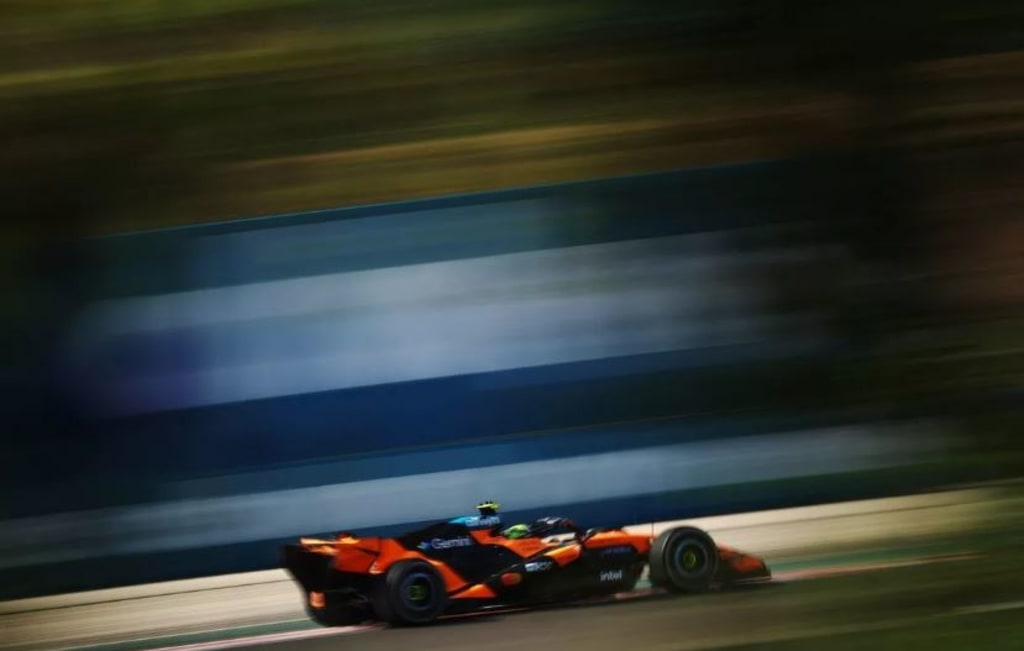
Mercedes’ stranglehold on the 2026 Formula 1 season has undeniably loosened. After winning the first six races, the Silver Arrows have taken only two of the last five victories, culminating in Lando Norris’s commanding pole-to-win performance at the Hungarian Grand Prix. Yet, despite McLaren breaking Mercedes’ qualifying streak and Ferrari closing the gap, team principal Toto Wolff remains remarkably unperturbed. His reasoning is both pragmatic and pointed: Hungary was always destined to favor McLaren, and Mercedes’ current lull is the intentional result of a strategic development approach dictated by the cost cap era.
AI, Track History, and Predictable Performance
When asked about McLaren’s sudden resurgence, Wolff deflected alarmism with a dose of data-driven realism. “When you ask the artificial intelligence who are the favorites in Budapest, the artificial intelligence is going to say McLaren,” he stated post-race. He noted that McLaren had dominated the Hungaroring in recent years, including a 1-2 finish in 2025, making their 2026 success a function of circuit suitability rather than a fundamental shift in competitive balance.
This perspective reframes the narrative from “Mercedes is faltering” to “McLaren is excelling where expected.” Kimi Antonelli’s third-place finish and George Russell’s recovery drive suggest the car’s underlying pace remains intact, even if peak single-lap performance has temporarily slipped. Wolff cautioned against overreacting to short-term swings: “We need to be careful not to swing from everyone is suddenly competitive to a team is suddenly not competitive.”
The Cost Cap Calculus: Why Mercedes Waited
The core of Wolff’s confidence lies in Mercedes’ deliberate upgrade cadence. While Ferrari and McLaren have introduced significant packages at Miami, Spa, and Hungary, Mercedes has been notably restrained. This isn’t stagnation; it’s strategy. Under F1’s stringent cost cap, teams can no longer throw parts at every race weekend as they did in previous eras.
“We need to be really just strategic about when to bring the upgrades,” Wolff explained. “Rather than just throwing it in at every grand prix like in the past, we cannot do this.” Instead, Mercedes has opted for fewer, larger updates designed to deliver step changes in performance, accepting temporary vulnerability in exchange for sustained gains later in the season. “You leapfrog a little bit, then it flattens out and others come stronger,” he acknowledged, describing the inevitable see-saw of modern F1 development.
Crucially, Wolff confirmed Mercedes is “in a good spot” cost-cap-wise and has intentionally saved resources for the second half. This suggests the team believes its upcoming package will offset McLaren’s current advantage, particularly at circuits less tailored to papaya strengths.
The 2026 Development War: A Marathon of Peaks and Valleys
Wolff’s comments underscore a defining characteristic of the 2026 regulations: rapid convergence. With all-new cars and power units, early-season advantages are inherently fragile. Teams that master correlation and manufacturing efficiency first gain an initial edge, but rivals quickly close gaps through iterative learning. McLaren’s Hungary win reflects this maturation process; they’ve simply hit their development stride at a track that amplifies their strengths.
For Mercedes, the test now is execution. Their bet hinges on whether their consolidated upgrade strategy yields sufficient performance delta to reclaim dominance before the championship enters its decisive phase. If Zandvoort or Monza reveals another deficit, questions about resource allocation will intensify. But if their next package delivers as planned, Hungary may be remembered not as the moment Mercedes lost control, but as the calm before their strategic storm.
In a sport prone to narrative whiplash, Wolff’s composure serves a purpose beyond PR. It signals internal alignment and long-term thinking—qualities essential for navigating the volatility of a new regulation cycle. By attributing McLaren’s success to predictable factors and framing Mercedes’ position as a conscious trade-off, he maintains team focus and stakeholder confidence during a vulnerable window.
Whether this patience pays off remains to be seen. But in a championship defined by development velocity, sometimes the smartest move isn’t reacting fastest; it’s knowing when not to react at all. For now, Mercedes trusts its roadmap more than the headlines, betting that artificial intelligence and human ingenuity will converge again in their favor before the checkered flag falls on 2026.
About the Creator
Mark Lim
Hi I am mark an automotive student and a car, tech and food enthusiast ! Im gonna try and post daily & hope you enjoy what I write and do share my page with people you know. I would gladly appreciate it! Cheers
Enjoyed the story? Support the Creator.
Subscribe for free to receive all their stories in your feed.
Comments
There are no comments for this story
Be the first to respond and start the conversation.