
Dries Vanthoor Slams Detroit Penalty After Collision with Brother Laurens: "I Was Just a Passenger"
The BMW WRT driver insists he was pushed into his brother’s Porsche by a Ford Mustang, questioning race control’s decision-making after two penalties derailed a potential podium finish.

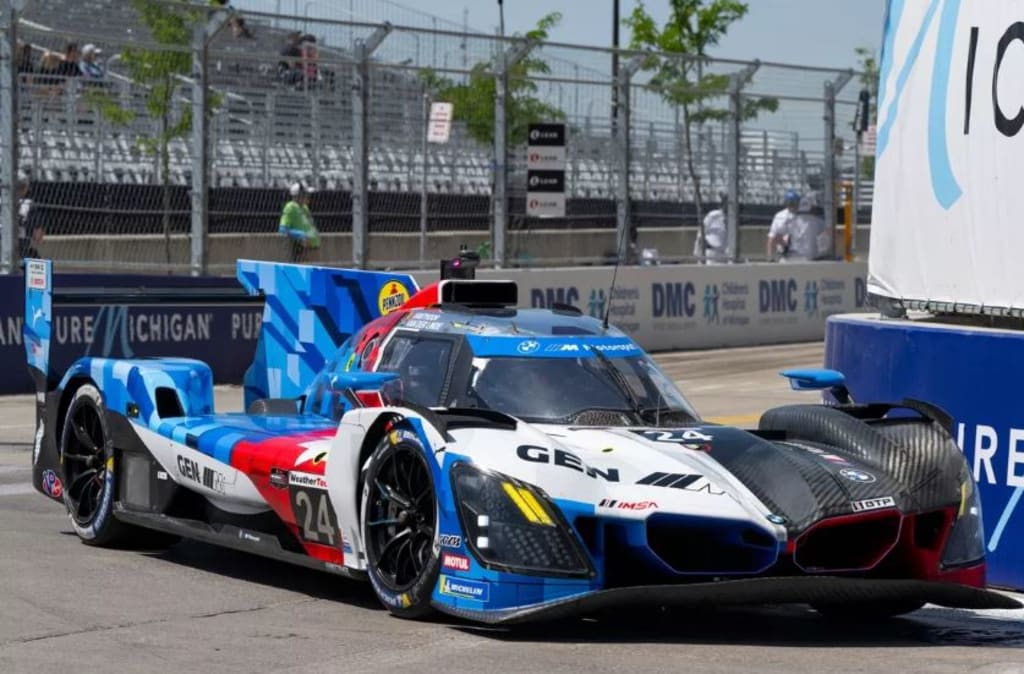
Dries Vanthoor has strongly contested the drive-through penalty that ruined his IMSA Chevrolet Detroit Sports Car Classic, insisting he bore no responsibility for the collision with his brother Laurens’ #6 Penske Porsche. The incident, which triggered the race’s second caution and dropped the #24 BMW M Hybrid V8 to ninth in the final standings, occurred almost exactly four years after the brothers’ infamous clash at the 2022 Nürburgring 24 Hours. While IMSA maintains its decision followed thorough review, Vanthoor argues that critical external camera angles were overlooked, painting him as the victim rather than the aggressor in a chain-reaction contact initiated by a GT-class Ford Mustang.
“I Couldn’t Do Anything Else”
According to Vanthoor, the sequence of events left him with zero agency. Braking for Turn 3 while overtaking two GT cars, he was struck from behind before reaching the turn-in point. “The Ford Mustang hit me and pushed me into Laurens,” he told Motorsport.com. “He touched me, and because of that, I couldn't stop the car. This is why I hit Laurens. I couldn't do anything else. I was just a passenger.”
Vanthoor suspects race control relied solely on his onboard footage, which would show only the impact with Laurens’ car without revealing the preceding contact from the Mustang. “If you look from the outside, it's clear that I was pushed into him from behind,” he explained. Compounding the frustration, the TV broadcast replay showed only debris from Laurens’ Porsche, omitting the crucial moment of initial contact entirely. Without that visual evidence presented publicly or apparently considered privately, Vanthoor feels the penalty lacked foundational justification.
Frustration Over Consistency and Context
This wasn’t Vanthoor’s only grievance with race control that weekend. Earlier in the race, he received another drive-through penalty for tangling with the #14 Vasser Sullivan Lexus, a car that continued racing without pitting for repairs and fought for the class win until the final ten minutes. “Of course, the contact was my fault, but he kept going... So I find it a bit strange to get a penalty for that,” Vanthoor said. His comment highlights a recurring debate in endurance racing: whether penalties should account for actual damage and competitive impact, not merely technical fault.
Combined with an early pit stop for low tire pressures, the two penalties completely negated the #24 BMW’s genuine pace. Teammate Sheldon van der Linde had qualified the car as the second-fastest GTP entry behind the dominant #31 Cadillac, and sister car #25 maximized its opportunities to finish second. For Dries, the result wasn’t just disappointing; it felt unjust given the circumstances beyond his control.
IMSA Stands By Decision Process
When asked to respond to Vanthoor’s claims, IMSA issued a statement emphasizing procedural rigor: “IMSA Race Control under the direction of the Race Director and supported by a rotating panel of race- and championship-winning endurance sports car drivers serving as Driver Advisors carefully reviews all available information before a penalty is assessed.” The organization confirmed both incidents involving the #24 car were reviewed using “the full range of resources available” and met the threshold for incident responsibility under driving standards.
Notably absent from the statement was any reference to external camera footage or acknowledgment of the alleged Mustang contact. This omission may reflect either that such footage didn’t exist/wasn’t conclusive, or that race control deemed the subsequent collision with Laurens’ car sufficient grounds for penalty regardless of initiating cause. Either way, the gap between Vanthoor’s lived experience and official rationale remains unresolved.
Echoes of Nordschleife, New Questions for Detroit
The timing adds emotional weight: June 11, 2026, marked four years plus one day since the Vanthoor brothers’ previous high-profile collision at the Nürburgring. That incident also sparked debate over blame and context. Now, history repeats with similar ambiguity but this time, the stakes include championship points and manufacturer pride in BMW’s sophomore LMDh campaign.
For WRT and BMW, the Detroit outcome represents lost potential compounded by perceived inconsistency. For IMSA, it underscores the challenge of adjudicating multi-car incidents on tight street circuits where camera coverage is inherently limited. And for Dries Vanthoor, it leaves lingering doubt about whether justice was served or whether he was simply punished for being in the wrong place when someone else made the first mistake. Until external footage emerges to settle the question, his insistence that he was “just a passenger” will remain the defining narrative of a race that could have been so much more.
About the Creator
Mark Lim
Hi I am mark an automotive student and a car, tech and food enthusiast ! Im gonna try and post daily & hope you enjoy what I write and do share my page with people you know. I would gladly appreciate it! Cheers
Enjoyed the story? Support the Creator.
Subscribe for free to receive all their stories in your feed.
Comments
There are no comments for this story
Be the first to respond and start the conversation.