
Does Charging Your Phone in the Car Actually Waste Gas? The Truth About Fuel Consumption and Battery Drain
While every electrical load technically costs fuel, your smartphone charger’s impact is negligible here’s the real math behind mileage, battery health, and smarter charging habits.

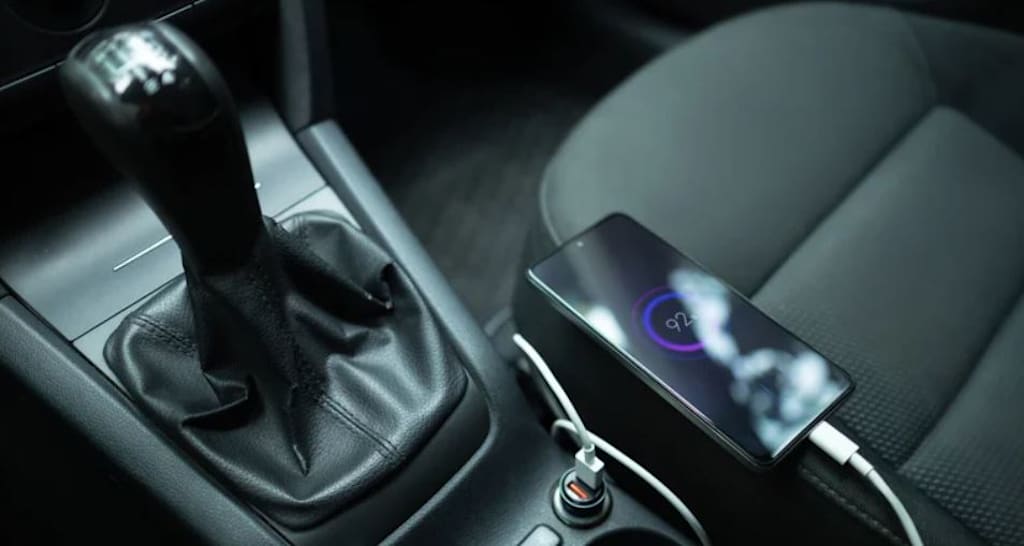
In an era of volatile gas prices and heightened environmental awareness, motorists are scrutinizing every potential source of fuel waste, including the seemingly innocuous act of charging a phone via a car’s USB port. The question arises with increasing frequency: does plugging in your smartphone actually burn extra gasoline? Technically, yes any electrical draw from your vehicle ultimately consumes fuel. But practically? The impact is so minuscule it’s virtually undetectable in real-world driving conditions. Understanding why this is true and knowing when to actually worry about electrical loads—requires separating persistent myths from measurable physics, while also considering broader implications for vehicle maintenance, safety, and smart energy use.
Why Phone Charging Uses Fuel (But Barely Any)
Your car’s electrical system operates on a straightforward mechanical chain: the engine powers the alternator, which generates electricity to run accessories and recharge the 12V battery. When you plug in your phone, it draws power from this system, forcing the alternator to work slightly harder, which in turn demands marginally more fuel from the engine to maintain rotational speed. However, smartphone chargers typically consume only 5–15 watts during active fast charging, and often less during trickle charging or idle states. To put this in perspective:
Car air conditioning systems draw thousands of watts, increasing fuel consumption by up to 10% according to Kwik Fit and other automotive studies.
Even basic turn signals, brake lights, or interior dome lights often exceed a phone charger’s continuous draw.
Bloomberg (via How-To Geek) quantifies the impact at roughly 0.03 MPG. In a vehicle rated at 20 MPG, continuous phone charging reduces efficiency to 19.97 MPG a difference so small it falls within normal measurement variance and is imperceptible outside controlled laboratory testing.
This isn’t permission to ignore efficiency entirely, but context is everything. Worrying about phone charging while simultaneously running AC at max blast, accelerating aggressively, speeding above 65 mph, or carrying excess cargo is like fretting over a single raindrop during a hurricane. Prioritize high-impact behaviors first; treat phone charging as background noise in your overall fuel economy equation. For hybrid and EV owners, the calculus shifts slightly since electricity comes from the traction battery rather than direct engine load but even then, a 10W phone charger represents less than 0.1% of typical cabin accessory loads.
Will It Drain Your Car Battery? Debunking a Persistent Myth
A common misconception among drivers is that plugging in a phone will drain the car’s 12V starter battery. When the engine is running, this is categorically false. The alternator supplies all accessory power and maintains battery charge; the phone adds negligible load that the alternator easily compensates for without affecting battery state of charge. Modern voltage regulators are designed precisely to handle such minor fluctuations seamlessly.
However, with the engine off, the dynamic changes completely. The phone now draws directly from the 12V battery with no replenishment. While unlikely to cause a full discharge during short stops (e.g., grabbing coffee), extended charging sessions such as leaving a phone plugged in for hours while parked can deplete older, weakened, or undersized batteries. This risk increases significantly if:
The vehicle hasn’t been driven recently (battery already partially depleted)
The battery is over three years old or shows signs of sulfation
Multiple accessories remain powered (dash cams, infotainment standby modes)
Ambient temperatures are extreme (cold reduces capacity; heat accelerates degradation)
Best practice: avoid charging with the engine off unless absolutely necessary, and never rely on car USB ports as a primary power source during prolonged idling or camping trips. If you must charge while stationary, limit sessions to 30 minutes or use a dedicated portable power bank instead.
Hidden Costs Beyond Fuel: Heat, Wear, and Safety
While fuel consumption is negligible, other factors deserve attention. Wireless charging pads generate significant waste heat due to induction inefficiencies (often 20–30% energy loss), which can thermally stress both phone and vehicle electronics over time. Cheap, uncertified chargers may lack proper voltage regulation, risking damage to phone batteries or vehicle USB circuits. Additionally, loose cables or poorly positioned mounts create distraction hazards the NHTSA estimates distracted driving causes thousands of crashes annually, far outweighing any theoretical fuel savings from avoiding charging.
From a maintenance perspective, consistently maxing out USB ports with multiple devices could theoretically accelerate alternator wear, though modern units are rated for far higher loads. More realistically, the greatest “cost” of in-car charging is opportunity cost: time spent troubleshooting connectivity issues, replacing fried cables, or dealing with overheated phones that throttle performance mid-navigation.
Smarter Alternatives for Cost-Conscious and Safety-Minded Drivers
If maximizing every drop of fuel or minimizing wear and distraction is critical, consider these evidence-based alternatives:
Portable Power Banks: Charge at home using grid electricity (typically $0.12/kWh vs. $3+/gallon gas-equivalent) and use in-car only for emergency top-ups. A 20,000mAh bank provides 4–6 full phone charges.
Solar Chargers: Ideal for frequent outdoor enthusiasts or emergency preparedness; eliminates grid/fuel dependency entirely. Modern foldable panels deliver 20–30W reliably in direct sun.
Optimize Phone Settings: Reduce screen brightness by 30%, disable unused radios (Wi-Fi/Bluetooth/GPS when not navigating), and enable battery saver mode to lower wattage draw by 40–60%.
Use Wired Over Wireless: Wired charging is 20–30% more efficient, generates less heat, and avoids alignment fumbling that distracts from driving.
Dedicated Car Chargers with Smart ICs: Invest in certified chargers with dynamic current adjustment they optimize output based on device needs, reducing wasted energy versus fixed-output OEM ports.
These options address cost, safety, and longevity concerns without sacrificing essential connectivity. But for most drivers, the fuel savings from skipping car charging won’t offset the hassle or safety risks of arriving with a dead phone. Focus instead on tire pressure (+3% MPG), smooth acceleration (+10% MPG), reducing idle time, and route planning changes that yield tangible returns measured in dollars, not fractions of cents.
The Bigger Picture: Energy Literacy in Modern Vehicles
Understanding phone charging’s true impact fosters broader energy literacy. As vehicles integrate more electronics from ADAS sensors to infotainment suites drivers benefit from distinguishing between meaningful and trivial loads. This knowledge empowers informed decisions: keeping AC moderate saves real fuel; obsessing over phone charging does not. It also prepares drivers for the EV transition, where managing cabin and accessory loads directly impacts range anxiety.
Moreover, recognizing the resilience of modern automotive electrical systems builds confidence. Cars are engineered to handle far greater stresses than a smartphone imposes. Trusting that engineering frees mental bandwidth for actual safe driving practices.
Charge Confidently, Drive Smartly
Charging your phone in the car is not free, but it is functionally free. The 0.03 MPG penalty is dwarfed by normal driving variables and poses zero risk to battery health under typical use. While hypermilers and extreme frugalists may prefer external power sources, average motorists can plug in guilt-free. Reserve your energy-saving efforts for actions that actually move the needle and keep your phone charged safely for navigation, emergencies, roadside assistance, and peace of mind. After all, the true cost of a dead phone mid-journey in missed exits, delayed help, or compromised safety far exceeds fractions of a cent in fuel. Drive smart, charge confidently, and let your vehicle’s robust electrical system do exactly what it was designed to do.
About the Creator
Mark Lim
Hi I am mark an automotive student and a car, tech and food enthusiast ! Im gonna try and post daily & hope you enjoy what I write and do share my page with people you know. I would gladly appreciate it! Cheers
Enjoyed the story? Support the Creator.
Subscribe for free to receive all their stories in your feed.
Comments
There are no comments for this story
Be the first to respond and start the conversation.