
Comprehensive Guide to Calcium Carbonate Manufacturing Processes and Applications
Capacity as Demand for Calcium Carbonate Continues to Rise
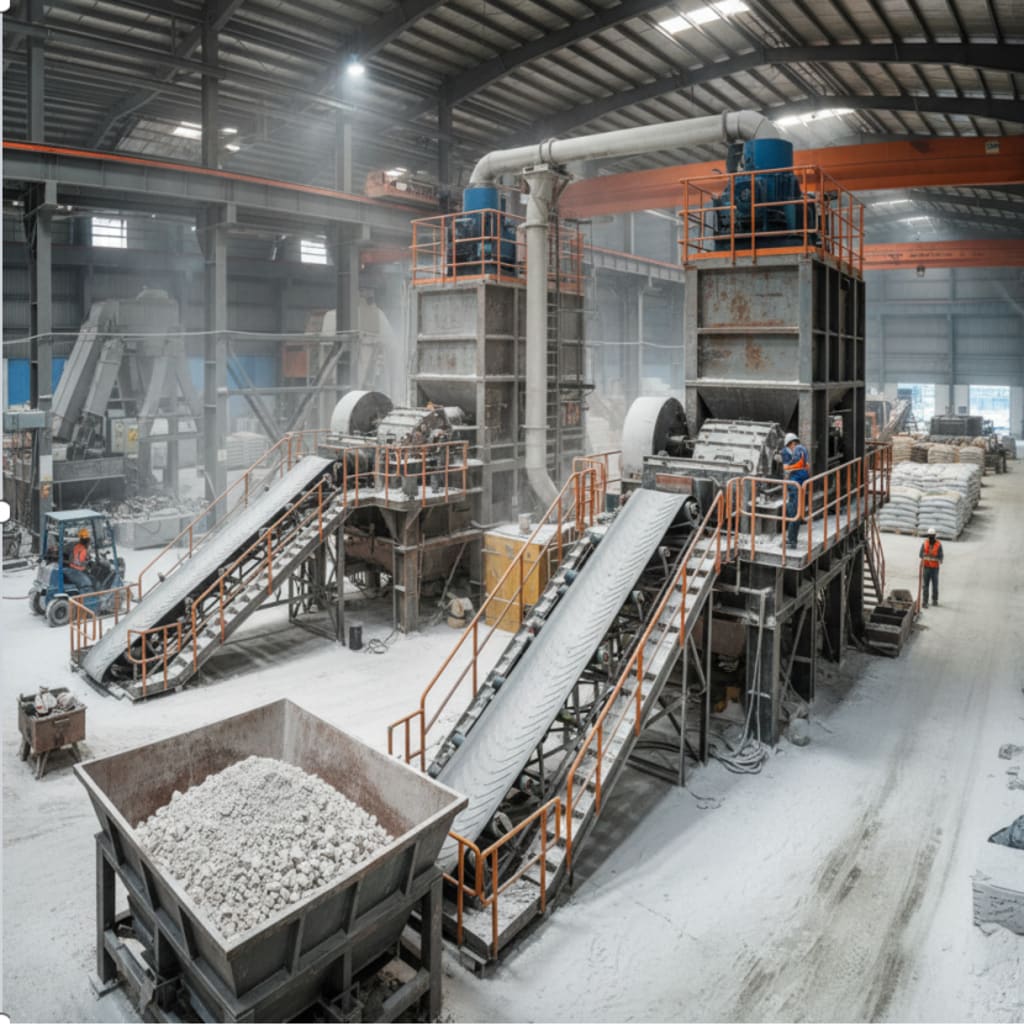
The global minerals sector is witnessing significant growth. Calcium carbonate remains one of the most widely used industrial materials. Recent investments in mining, processing, and advanced production systems have increased attention on this versatile compound.Manufacturers worldwide are expanding operations to meet demand from construction, plastics, paper, coatings, and environmental sectors. Industry analysts report steady growth driven by infrastructure projects and sustainable manufacturing initiatives.
Understanding modern calcium carbonate manufacturing processes helps businesses evaluate supply chains and production opportunities. It also highlights how technological improvements continue shaping industrial mineral markets.
Rising Importance of Calcium Carbonate in Modern Industry
Calcium carbonate is a naturally occurring mineral. It is primarily obtained from limestone, marble, and chalk deposits.Its unique physical and chemical properties support a wide range of industrial applications. The material offers excellent whiteness, stability, and cost efficiency.Recent market developments show growing demand from emerging economies. Infrastructure expansion and manufacturing growth continue supporting consumption across multiple sectors.Governments are also encouraging efficient resource utilization. This trend has increased investment in advanced processing technologies.
Raw Materials and Sourcing for Calcium Carbonate
The primary raw material for calcium carbonate production is limestone, a sedimentary rock composed primarily of calcium carbonate crystals. Other sources include chalk, marble, and aragonite. The quality of the limestone directly impacts the quality of the final calcium carbonate product. Key considerations when sourcing raw materials include purity, particle size, and mineralogical composition. Huabang Mica sources high-quality limestone from carefully selected quarries to ensure consistent product performance.
The Manufacturing Processes: Ground Calcium Carbonate (GCC) vs. Precipitated Calcium Carbonate (PCC)
There are two main methods for producing calcium carbonate: Ground Calcium Carbonate (GCC) and Precipitated Calcium Carbonate (PCC). GCC is produced by mechanically grinding limestone. PCC, on the other hand, is manufactured through a chemical precipitation process. The choice between GCC and PCC depends on the desired application and specific product requirements. GCC is generally more cost-effective, while PCC offers greater control over particle size, shape, and purity. Both methods are employed by Huabang Mica to cater to a diverse range of customer needs.
Key Difference: GCC involves mechanical processing of naturally occurring limestone, while PCC uses a chemical reaction to create the calcium carbonate.
Ground Calcium Carbonate Production Process
Ground Calcium Carbonate, often called GCC, represents one of the most common forms available in the market.The manufacturing process starts with crushing. Large stones pass through primary and secondary crushers.After crushing, the material enters grinding equipment. Ball mills and roller mills are frequently used.Grinding reduces particle size according to customer requirements. Different industries require specific particle distributions.
Classification systems separate particles by size. Oversized materials return for additional grinding.The final product undergoes testing before packaging. Manufacturers verify particle size, brightness, and purity.This production route remains popular because of its efficiency and relatively low processing cost.
Precipitated Calcium Carbonate Manufacturing
Precipitated Calcium Carbonate, known as PCC, involves a more advanced production process.Manufacturers first calcine limestone at high temperatures. This step produces calcium oxide.The calcium oxide reacts with water to form calcium hydroxide. The resulting slurry becomes the foundation for further processing.
Carbon dioxide is introduced under controlled conditions. This reaction creates fine calcium carbonate particles.Engineers carefully control temperature, pressure, and reaction time. These factors influence particle shape and size.PCC offers enhanced performance characteristics. Many industries prefer it for specialized applications.
Paper manufacturers frequently use PCC to improve brightness and print quality. Plastic producers also value its reinforcing properties.
Technological Innovations in Production
Technology continues transforming mineral processing operations. Modern facilities rely on advanced automation systems.Real-time monitoring improves operational accuracy. Sensors provide continuous performance data.
Artificial intelligence applications are becoming more common. These tools help optimize energy consumption and production efficiency.
Digital quality control systems reduce human error. They also improve product consistency.Several manufacturers have adopted predictive maintenance programs. These systems identify equipment issues before failures occur.Such innovations support productivity improvements across the industry.
Environmental Considerations and Sustainability
Environmental responsibility remains a major focus. Producers are investing in cleaner manufacturing methods.Dust collection systems help reduce emissions. Modern filtration equipment improves workplace safety.Water recycling initiatives are gaining popularity. Many facilities now reuse process water whenever possible.Energy-efficient equipment also contributes to sustainability goals. Reduced energy consumption lowers operational costs.Carbon management strategies continue evolving. Researchers are exploring methods to improve environmental performance throughout the production cycle.
These efforts align with broader industrial sustainability objectives.
Applications in the Construction Sector
Construction remains one of the largest consumers of calcium carbonate.The material plays an important role in cement production. It also appears in concrete formulations and building materials.Manufacturers use it to improve product consistency. It can also enhance durability characteristics.Growing infrastructure projects worldwide continue supporting demand. Urban development programs create new opportunities for producers.As construction standards evolve, demand for high-quality mineral additives remains strong.
Expanding Role in the Plastics Industry
Plastic manufacturers rely on calcium carbonate as a functional filler.The material helps reduce production costs while maintaining performance standards.It can improve rigidity and dimensional stability. Some formulations also benefit from enhanced processing efficiency.Packaging, automotive, and consumer goods sectors frequently utilize calcium carbonate-filled materials.Recent innovations focus on achieving better compatibility with polymer systems.This trend is encouraging collaboration between mineral suppliers and plastic manufacturers.
Importance in Paper Manufacturing
The paper industry represents another significant market segment.Producers use calcium carbonate to enhance brightness and opacity. These qualities improve print performance.Many modern paper grades incorporate mineral fillers. This approach helps optimize production economics.As demand for high-quality printing materials continues, calcium carbonate remains an important ingredient.Manufacturers are also developing specialized grades for premium paper products.
Applications in Paints and Coatings
Paint and coating producers use calcium carbonate for several purposes.The material contributes to product consistency and surface properties.It can improve durability and support formulation stability. Manufacturers select specific grades based on application requirements.Architectural coatings frequently contain calcium carbonate. Industrial coating systems also utilize specialized formulations.Market growth in construction and renovation projects continues supporting demand.
Pharmaceutical and Food Industry Uses
Certain grades meet strict purity requirements. These materials serve pharmaceutical and food applications.
In pharmaceuticals, calcium carbonate may appear in tablets and nutritional products.
Food manufacturers use approved grades in selected applications. Regulatory compliance remains essential in these markets.
Quality assurance procedures help ensure safety and consistency.
Demand for high-purity products continues growing worldwide.
Future Outlook for the Industry
Industry experts anticipate continued market expansion. Several factors support long-term growth expectations.Infrastructure investments remain strong in many regions. Manufacturing activity is also increasing.
Technological advancements will likely improve efficiency further. Automation and digitalization are expected to play larger roles.
Sustainability initiatives may influence future production strategies. Companies are already exploring cleaner and more efficient solutions.
Research efforts continue focusing on product innovation. New applications could create additional opportunities across diverse industries.
Conclusion
Calcium carbonate remains a vital industrial material. Its importance spans construction, plastics, paper, coatings, pharmaceuticals, and many other sectors.Modern production methods combine traditional mineral processing with advanced technology. These improvements support efficiency, consistency, and sustainability.
As global industries continue evolving, demand for high-quality calcium carbonate products is expected to remain strong. Manufacturers investing in innovation and responsible production practices will likely play an important role in shaping the industry's future.
About the Creator
Emily Carter
Emily Carter is a freelance writer focused on SEO, digital marketing, content publishing, and online business trends. Her articles provide insights into search optimization, content strategy, and the evolving world of digital media.
Enjoyed the story? Support the Creator.
Subscribe for free to receive all their stories in your feed.
Comments
There are no comments for this story
Be the first to respond and start the conversation.