
China’s Car Rental Industry Accelerates Green and Smart Transformation as NEVs Reshape Mobility Ecosystems
Rental giants pivot to new energy vehicles not just for compliance, but as strategic platforms for intelligent driving experiences, ecosystem integration, and value-based competition in a maturing market.

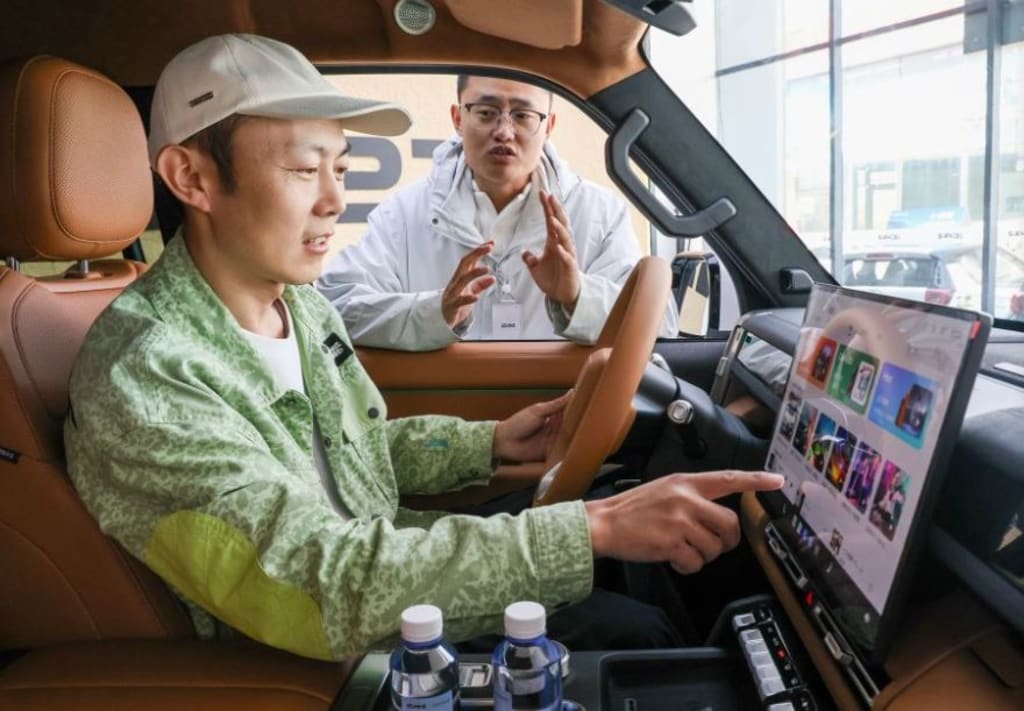
China’s car rental sector is undergoing a profound structural transformation, driven by the rapid ascent of new energy vehicles (NEVs) and the growing consumer demand for intelligent mobility. With NEV penetration in domestic passenger vehicle retail sales forecast to hit a record 64.5% in July 2026, accounting for 980,000 of an estimated 1.52 million units sold, the rental industry is no longer merely adapting to this shift; it is actively accelerating it. Leading providers like CAR Inc., eHi Car Services, and Trip.com Car Rental are aggressively restructuring their fleets, integrating smart technologies into user interfaces, and redefining their business models around sustainability, intelligence, and end-to-end service ecosystems. This evolution marks a decisive break from traditional price-driven competition toward a new paradigm centered on technological differentiation and holistic travel experiences.
Fleet electrification is now central to operational strategy. In July alone, XPeng Motors delivered 1,300 NEVs to CAR Inc., embedding advanced electric models into large-scale rental operations. This follows CAR Inc.’s 2025 procurement of approximately 100,000 vehicles, nearly half of which were NEVs. Similarly, eHi Car Services has integrated 1,000 smart SUVs from Geely and 2,000 intelligent vehicles from GAC Group since early 2026, signaling that NEVs are no longer niche offerings but core inventory. These investments are motivated by dual imperatives: economics and regulation. As Professor Ou Guoli of Beijing Jiaotong University notes, NEVs offer significantly lower operating costs than internal combustion engine vehicles, improving unit economics in a capital-intensive business. Simultaneously, under China’s “dual carbon” goals of peaking emissions before 2030 and achieving carbon neutrality by 2060, many cities now mandate minimum NEV ratios in commercial fleets. As Zhang Yejia of CCID Consulting emphasizes, NEV adoption has shifted from competitive advantage to regulatory necessity for compliant operations.
Beyond cost and compliance, rental companies are leveraging NEVs as experiential platforms. Consumer behavior is evolving: renters increasingly use short-term hires not just for transportation, but as test drives for future purchases. Holidays have become prime windows for users to experience intelligent driving features, real-world range performance, and cabin tech firsthand. This trend reflects a broader maturation of the Chinese auto market. Where buyers once prioritized space and comfort, younger consumers now rank intelligent driving capabilities as a key purchase criterion. Recognizing this, CAR Inc. launched a dedicated “intelligent driving zone” in its app in July, offering AI-powered vehicle Q&A, feature explanations, model comparisons, and personalized recommendations across more than 40 NEV brands. This transforms the rental platform from a transactional interface into an educational and discovery tool, bridging the gap between trial and ownership.
This strategic pivot is reshaping the very architecture of car rental businesses. According to Zhang Yejia, the next phase involves moving beyond vehicle provision to building integrated mobility ecosystems. Providers are exploring synergies with charging infrastructure, smart parking solutions, and cultural tourism services to enhance the entire journey, not just the drive. For instance, bundling NEV rentals with curated scenic routes, reserved charging spots, or local experience packages creates differentiated value that pure-play competitors cannot replicate. Moreover, intelligent fleet management systems powered by real-time data analytics enable higher asset utilization, dynamic pricing, and predictive maintenance, further boosting efficiency.
Globally, this mirrors a wider automotive transformation toward electrification and software-defined mobility. But China’s rental sector is uniquely positioned to lead due to its scale, policy alignment, and tech-savvy consumer base. As Professor Ou observes, the industry’s competitive axis is shifting decisively from price to value. Success will no longer be determined by who offers the cheapest daily rate, but by who can deliver the most seamless, intelligent, and sustainable mobility experience. Companies that master ecosystem integration linking energy, data, infrastructure, and lifestyle will define the next era of urban and intercity travel.
In this new landscape, car rental providers are no longer passive intermediaries. They are active participants in China’s green transition, innovation testbeds for automakers, and curators of next-generation mobility culture. The road ahead demands more than fleet upgrades; it requires reimagining what a rental company can be. Those who succeed will not just rent cars; they will orchestrate journeys, accelerate EV adoption, and help build the intelligent, low-carbon transport system China envisions for 2060.
About the Creator
Mark Lim
Hi I am mark an automotive student and a car, tech and food enthusiast ! Im gonna try and post daily & hope you enjoy what I write and do share my page with people you know. I would gladly appreciate it! Cheers
Enjoyed the story? Support the Creator.
Subscribe for free to receive all their stories in your feed.
Comments
There are no comments for this story
Be the first to respond and start the conversation.