
China's Auto Industry Embraces "Ecosystem-Based" Global Expansion
New energy and smart vehicle technologies drive a shift from simple exports to integrated overseas growth

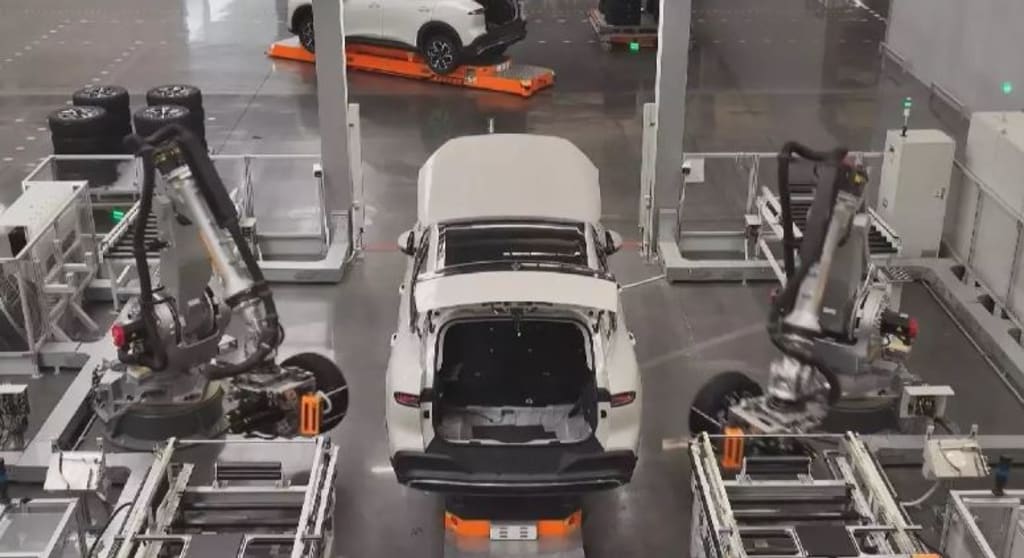
China’s automotive industry is entering a new era of international development, shifting from a model focused mainly on exporting finished vehicles to one described as “ecosystem-based global expansion.” This strategic evolution is being driven by the country’s growing technological advantages in new energy vehicles (NEVs), smart connectivity, and autonomous driving systems, allowing Chinese brands to compete on a global scale not just through low prices, but through comprehensive solutions and long-term market presence.
Industry data and official analysis confirm that this new approach is already delivering impressive results, with exports surging and market reach expanding rapidly across every continent.
Strong Growth and Diversified Global Footprint
According to officials from the China Council for the Promotion of International Trade (CCPIT), China’s exports of new energy vehicles have maintained an average annual compound growth rate of roughly 50% since 2023, a pace far outstripping the growth of traditional internal combustion engine vehicles. Over the same period, the number of countries and regions receiving Chinese vehicles has expanded to more than 100, covering markets in Europe, Southeast Asia, the Middle East, Latin America, Africa, and Oceania.
This diversification marks a significant shift from the early days of export, when sales were concentrated in just a handful of developing economies. Today, Chinese brands are establishing a presence in mature, highly regulated markets as well, proving their ability to meet strict international standards.
Zhao Yang, Vice Chairman of the CCPIT Automotive Committee, explained that this expansion is the result of more than two decades of preparation and gradual capacity building:
“Through 20 years of export experience, Chinese automakers have built a solid foundation overseas. This growth has also brought along our entire supply chain component manufacturers, battery producers, and technology firms to follow them into new markets. At the same time, we are continuously upgrading our overseas parts warehouses, logistics networks, and after-sales service systems, so that customers anywhere in the world receive the same level of support and reliability they would expect at home.”
From “Price Wars” to “Value Wars”
While the industry has achieved remarkable growth, leaders acknowledge that the competitive landscape is changing. Chen Shihua, Deputy Secretary-General of the China Association of Automobile Manufacturers (CAAM), noted that while overall production and sales remained stable during the first half of 2026, the second half of the year will require a more strategic approach.
“Chinese automakers are actively advancing their global layouts, expanding their reach into more regions, and improving local services. This has already helped strengthen the resilience of our trade,” Chen said. “However, we must move away from relying solely on low prices to attract buyers. The next stage requires us to shift from ‘price wars’ to ‘value wars’.”
Under this new strategy, success will depend on:
Optimized vehicle configurations — offering better range, performance, and comfort tailored to local needs
Upgraded services — including financing options, maintenance support, and software updates
Core self-developed technologies — such as battery systems, electric motors, and intelligent driving platforms that deliver real-world benefits
Chen emphasized that three areas must be prioritized to ensure sustainable growth:
International compliance — fully meeting local safety, emissions, and regulatory requirements in every market entered.
Risk prevention and control — navigating changes in trade policies, tariffs, geopolitical shifts, and local economic conditions
Service guarantees — building robust networks so that spare parts and technical support are always available, reducing concerns about long-term ownership
Investing in Future Technologies
To maintain its competitive edge, the industry is also accelerating investment in next-generation technologies. Chen pointed out that research and development efforts are increasingly focused on high-potential fields that will define the future of mobility:
Artificial intelligence large models — being integrated into vehicle systems to improve autonomous driving capabilities, enhance voice and interactive features, and enable smarter energy management
Solid-state batteries — a key innovation expected to deliver longer driving ranges, faster charging times, and greater safety compared to current lithium-ion technology
Vehicle-to-everything (V2X) connectivity — allowing cars to communicate with infrastructure, other vehicles, and smart city systems
Integrated energy solutions — linking vehicles with home energy storage and renewable power grids, creating a complete energy ecosystem
What “Ecosystem-Based Expansion” Truly Means
The concept of “ecosystem-based global expansion” represents a fundamental change in how Chinese automakers operate abroad. Instead of simply shipping vehicles from domestic factories, companies are now building complete local operations:
Local assembly and manufacturing: Setting up regional production facilities to reduce logistics costs, respond faster to market demand, and qualify for trade benefits
Regional supply chains: Working with local and international component suppliers to ensure stable production and lower tariffs
Technology adaptation: Adjusting software, navigation, and vehicle settings to suit local road conditions, languages, and user preferences
Full lifecycle support: Providing not just sales, but also maintenance, repairs, software updates, and even recycling services at the end of a vehicle’s life
This approach is designed to build long-term trust, strengthen brand recognition, and reduce dependence on any single market or region. By embedding themselves into local economies, Chinese automakers aim to become permanent players in the global automotive landscape, rather than just temporary exporters.
Looking Ahead
As competition in the global EV market intensifies, the shift toward ecosystem-based development is seen as essential for long-term success. By combining high growth rates with greater focus on quality, technology, and service, China’s automotive industry is positioning itself to play a leading role in the global transition toward cleaner, smarter, and more sustainable mobility.
For consumers and markets around the world, this means more choice, improved technology, and a new standard of competition that goes far beyond price alone.
About the Creator
Mark Lim
Hi I am mark an automotive student and a car, tech and food enthusiast ! Im gonna try and post daily & hope you enjoy what I write and do share my page with people you know. I would gladly appreciate it! Cheers
Enjoyed the story? Support the Creator.
Subscribe for free to receive all their stories in your feed.
Comments
There are no comments for this story
Be the first to respond and start the conversation.