
China's Auto Industry: A Collision Course of Policy and Market Reality
Once a symbol of unstoppable growth, China's car industry is now in the throes of a brutal reckoning. Policy-driven overcapacity, relentless price wars, and evaporating profits have pushed the sector to the brink of collapse.


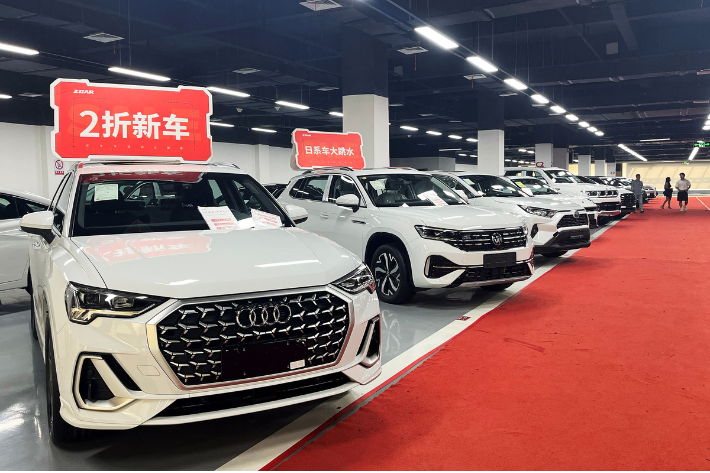
For years, the narrative was simple: China builds EVs faster, cheaper, and better than anyone else. Unstoppable growth. Endless expansion. A juggernaut crushing Western competitors.
That narrative just hit a wall.
Li Bin, founder and CEO of NIO, warned that China's auto industry has entered its most brutal "final stage," predicting that full-year domestic retail sales in 2026 could plunge by 15% to 20%. And the data backs him up: from January to May 2026, Chinese passenger car retail sales contracted by 19.5% year-on-year.
The world's largest car market is shrinking. And the companies inside it are tearing each other apart to survive.
The Profit Collapse Nobody Talks About
Here's the number that should terrify every Chinese automaker: 3.2%.
That's the industry's profit margin in Q1 2026. A record low. For context, healthy automotive profit margins typically run 8-10%.
At the 2026 China Auto Chongqing Forum, executives openly lamented that the golden era of easy profits is gone. One executive summarized the mood perfectly: "Being able to make a profit is already a stroke of luck."
Think about that. In the industry, everyone assumed that printing money, executives are now describing profitability as luck, not strategy, not execution, just luck.
This is the direct result of what Chinese industry insiders call "involution," excessive, self-destructive competition where companies undercut each other on price until nobody makes money. It's competition so intense it becomes irrational.
The Great Liquidation
The consequences are brutal and visible.
The Ministry of Industry and Information Technology permanently revoked production qualifications for eight once-prominent automakers in 2026, including Huali, Zotye, and Lifan. These weren't obscure companies. They defined China's automotive boom. Now they're gone, unable to fund the transition to electrification and intelligent vehicle technology.
Dealerships are dying even faster. Between 2024 and 2025, over 9,000 dealerships shut down. China's largest dealer, Guanghui Auto, stopped selling new cars entirely, pivoting to aftermarket services just to survive. Baolide, once a top-twenty luxury dealer, filed for bankruptcy, and its founder and executives were reportedly detained for fraud.
This is what "silent liquidation" looks like: not one dramatic collapse, but thousands of small deaths happening simultaneously across the industry.
The Government Created This Monster
Here's the uncomfortable truth: this crisis isn't a market accident. It's policy-driven.
China's aggressive promotion of new energy vehicles created a gold rush. Everyone wanted in. The result: over 129 EV brands competing in a single market. That's not competition, that's chaos. Too many companies are making increasingly similar products, racing to the bottom on price just to maintain market share.
The government is now trying to contain what it created, warning automakers against "irrational price competition." But simultaneously, by freezing production licenses for weaker players, the state is accelerating consolidation, deliberately thinning the herd.
The endgame seems clear: a handful of dominant, well-capitalized groups surviving, while everyone else disappears.
Why This Matters Globally
This connects directly to what we've been tracking: Chinese automakers aggressively expanding into South Africa, Southeast Asia, and challenging European manufacturers.
That expansion isn't just ambition, it's survival. With the domestic market contracting 19.5% and profit margins collapsing to 3.2%, Chinese automakers desperately need international markets to survive. Global expansion isn't optional anymore. It's existential.
The automakers surviving this brutal domestic reckoning will be the ones aggressive enough, well-funded enough, and ruthless enough to have already captured serious international market share.
Which is exactly what we're watching happen in Malaysia, South Africa, and beyond.
China's EV industry isn't collapsing, it's consolidating through brutal, government-accelerated natural selection. Weak players are dying. Strong players are being forced into international expansion to survive. And the promised outcome, a leaner, more competitive industry dominated by a handful of winners, is arriving faster and more violently than anyone predicted.
The juggernaut isn't unstoppable. It's eating itself alive, and only the strongest will emerge.
About the Creator
Mark Lim
Hi I am mark an automotive student and a car, tech and food enthusiast ! Im gonna try and post daily & hope you enjoy what I write and do share my page with people you know. I would gladly appreciate it! Cheers
Enjoyed the story? Support the Creator.
Subscribe for free to receive all their stories in your feed.
Comments
There are no comments for this story
Be the first to respond and start the conversation.