
China Issues New Rules for Automakers Expanding Overseas
Twenty articles address pricing, fair competition, production safety, labor protection, data security, and localized operations

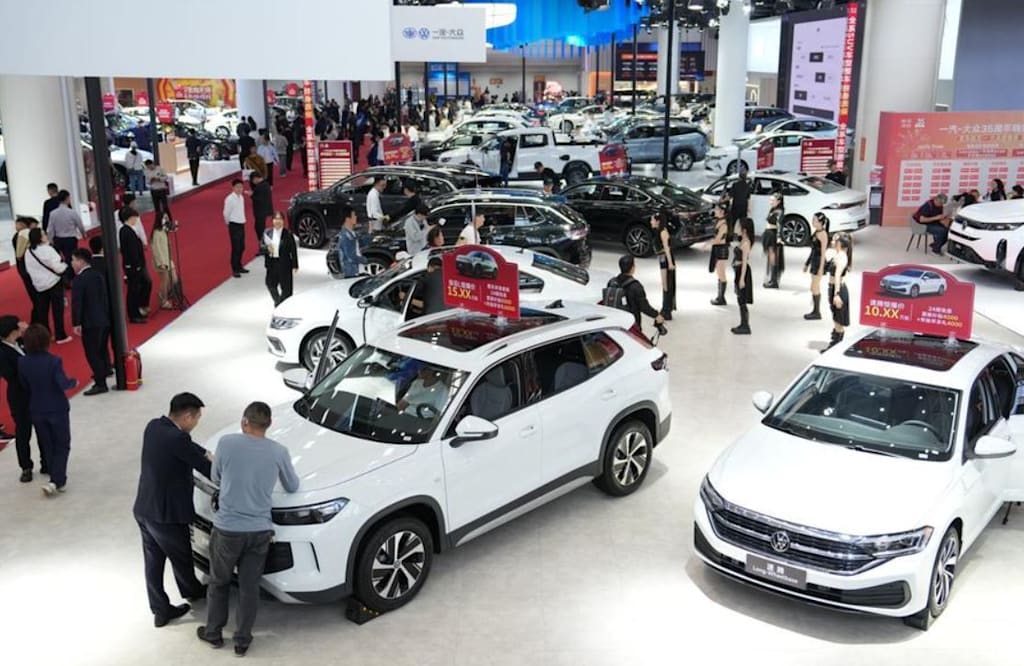
China has issued new guidance aimed at regulating the overseas competitive practices of domestic automakers and strengthening their compliance capabilities as the country’s vehicle industry expands globally.
The 20-article guideline was released on Tuesday by the Ministry of Commerce, together with the Ministry of Industry and Information Technology and the State Administration for Market Regulation. It provides general guidance for Chinese automotive companies involved in international operations, with particular attention to overseas marketing and sales practices.
The document also addresses production safety, quality management, labor protection, data security, and after-sales service. Its broader objective is to promote more orderly and sustainable international growth for China’s automotive industry.
Rules on Overseas Pricing
One of the guidelines’ main areas of focus is overseas competition, particularly vehicle pricing. The document encourages automakers to adopt cost-based pricing strategies that reflect supply and demand in international markets. Companies are also urged not to disrupt competition or seek unfair advantages through aggressive commercial practices. When setting suggested retail prices in overseas markets, automakers should comply with local laws, market principles, and established commercial practices in the countries and regions where they operate.
The guideline recommends that companies establish clear price tiers for different vehicle configurations. It also advises them to avoid frequent or substantial price changes that could harm consumer interests or undermine market stability.
Automakers are further encouraged to respect the pricing autonomy of local dealers and agents. Promotional activities should comply with local laws and customs rather than simply replicating sales methods used in China.
These recommendations reflect growing concerns that intense domestic price competition could spill into overseas markets. Excessive discounting may generate short-term sales, but it can also damage brand value, weaken dealer relationships, disrupt residual values, and reduce the resources available for local service operations.
Emphasis on Fair Competition and Mutual Benefit
An official from the Ministry of Commerce said the guideline is based on four principles: legal compliance, fair competition, mutual benefit, and win-win cooperation.
According to the official, the document will help Chinese automotive companies fulfill their social responsibilities overseas and integrate more effectively into the economic and social development of host countries. It is also expected to promote deeper integration and shared development across global automotive industry and supply chains.
The focus on cooperation is increasingly relevant as Chinese automakers move beyond vehicle exports. Companies are now investing in local factories, component supply, research and development, distribution networks, and after-sales service. This transition requires closer coordination with local governments, suppliers, dealers, employees, technology companies, and business partners.
Building Local Compliance Capabilities
Beyond market competition, the guideline aims to strengthen automakers’ ability to operate compliantly in foreign markets. Companies are encouraged to adapt their business activities to local conditions and maintain compliance throughout the entire business process. This includes market research, investment decisions, factory construction, production, procurement, sales, logistics, data management, and customer service.
The document calls for stronger quality-management systems and improved after-sales services in overseas markets. These areas are particularly important for electric and connected vehicles, which require support for battery systems, software updates, remote diagnostics, charging functions, and high-voltage components.
Automakers are also expected to comply with local requirements when processing data from connected vehicles and autonomous-driving systems. This includes protecting consumers’ personal information and ensuring that data is collected, stored, transferred, and used lawfully.
Data compliance is becoming increasingly complex as vehicles generate large amounts of information about drivers, locations, vehicle conditions, road environments, and user behavior. Different countries may impose specific requirements concerning data storage, cross-border transfers, cybersecurity, and user consent.
Broader Requirements for Local Manufacturing
The guideline comes as Chinese automakers increasingly establish production facilities outside China. Industry representatives said that local manufacturing and operations create more complicated compliance obligations than simple vehicle exports. These may include environmental protection, taxation, employment regulations, occupational safety, supply-chain management, and data localization.
Shi Yonghong, vice president of the China Chamber of Commerce for Import and Export of Machinery and Electronic Products, said that the guideline covers the entire business life cycle, from vehicle production and component supply to service networks.
He noted that this approach could support more coordinated overseas expansion across the automotive industry rather than focusing only on the export of finished vehicles.
Local manufacturing can help companies avoid trade barriers, shorten delivery times, reduce logistics costs, and respond more effectively to regional consumer preferences. However, it also exposes them to direct scrutiny from local regulators, labor organizations, communities, and environmental authorities.
Part of a Wider Overseas Compliance Framework
Industry experts said the automotive guideline complements two earlier documents issued by the Ministry of Commerce in 2025 concerning overseas anti-corruption compliance and corporate social responsibility.
Together, the documents form part of a broader support system for Chinese companies operating internationally. The new automotive-sector guideline applies these principles to the specific needs and risks of the vehicle industry.
Experts believe that industry-specific guidance is important because automotive companies face complex challenges involving product safety, supply chains, dealer networks, labor relations, software, data, environmental standards, and long-term customer support. A general compliance framework may not address all of these issues in sufficient detail. The new document provides companies with more targeted recommendations as they expand into different markets.
China’s Growing Automotive Footprint
The guideline follows a period of rapid growth in China’s global automotive presence. Customs data showed that China exported 8.32 million vehicles to more than 200 countries and regions in 2025. Chinese companies have also invested in automotive manufacturing operations in more than 80 countries and regions.
The nature of this international expansion is changing. Chinese automakers are increasingly moving from exporting vehicles to producing and supporting them locally. In July, Geely Auto and Ford announced a new cooperation agreement in Spain. The agreement represented another step toward localized production and closer collaboration in the European market.
Such developments demonstrate the growing connections between Chinese automakers and established international manufacturers. They also show why companies need to understand local regulations and business practices before expanding.
A More Sustainable Approach to Global Growth
The new guideline does not prohibit competition or prevent Chinese automakers from offering attractive prices overseas. Instead, it seeks to ensure that competition is conducted in a way that respects local markets and supports long-term development. Reasonable pricing, transparent product positioning, reliable quality, strong after-sales support, and respect for local partners can help Chinese brands build trust in international markets.
By contrast, frequent price reductions, misleading promotions, weak service systems, poor labor practices, or inadequate data protection could damage both individual companies and the wider reputation of Chinese automotive brands.
The guideline therefore represents an effort to shift the focus of overseas expansion from short-term sales volume toward sustainable local operations. China’s automotive industry has become a major force in global vehicle markets. As exports and overseas investment continue to increase, companies will face more complex responsibilities.
Success will depend not only on producing competitive vehicles but also on how effectively automakers manage local factories, employees, suppliers, dealers, customers, data, and regulators. The new 20-article guideline provides a framework for addressing these challenges. It encourages Chinese automakers to follow local laws, respect fair competition, strengthen quality and service systems, protect personal information, and build mutually beneficial relationships with host countries.
As Chinese companies establish a deeper presence overseas, compliance will become an essential part of competitiveness. Automakers that combine strong products with responsible pricing, effective local management, and reliable long-term support will be better positioned to turn rapid international growth into lasting global success.
About the Creator
Mark Lim
Hi I am mark an automotive student and a car, tech and food enthusiast ! Im gonna try and post daily & hope you enjoy what I write and do share my page with people you know. I would gladly appreciate it! Cheers
Enjoyed the story? Support the Creator.
Subscribe for free to receive all their stories in your feed.
Comments
There are no comments for this story
Be the first to respond and start the conversation.