
China and EU Reach Hybrid Vehicle Understanding, Averting Full Trade War
Dialogue Over Tariffs and Subsidies Price Undertakings Agreed Rare Earth Supply Secured Massive Trade Deficit Remains a Point of Friction Both Sides Acknowledge Differences Next Meeting Set for March What Businesses Are Watching

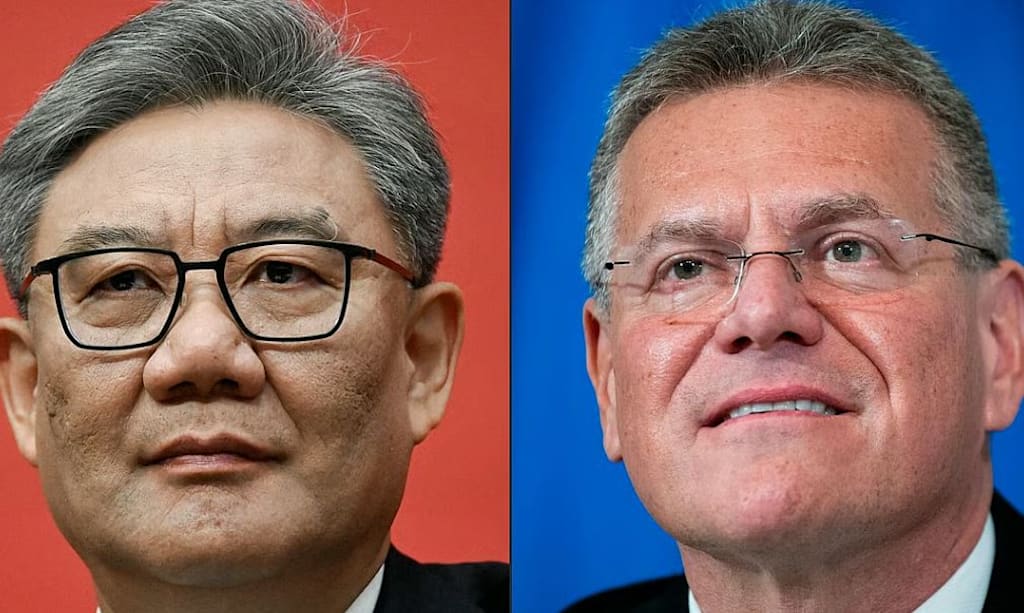
The European Union and China have stepped back from the brink of a major trade conflict, announcing a shared “understanding” on hybrid vehicle trade and committing to sustained dialogue going forward. Following high‑level talks in Beijing between European Commission Vice‑President Maroš Šefčovič and Chinese Commerce Minister Wang Wentao, the two sides issued a joint statement confirming they will adhere to agreed procedures governing company price undertakings for hybrid automobiles, the sector at the very centre of recent tensions. Crucially, Beijing also pledged to maintain supplies of rare earth minerals and permanent magnets to the EU, removing a critical supply chain concern that had loomed over European industry.
The Automotive Flashpoint
The automotive sector had emerged as the most sensitive and contentious issue in the relationship. European leaders have voiced growing alarm over a flood of competitively priced Chinese vehicles entering the market, arguing that state subsidies enable companies to sell at artificially low prices, a practice known as dumping, distorting competition and threatening domestic manufacturing. The EU’s trade deficit with China stands at roughly €1 billion (US$1.1 billion) per day, a figure Šefčovič described as “unsustainable” and which has fuelled calls across the bloc for decisive action. Critics in Brussels point to massive government support, preferential financing, and currency management as unfair advantages that have allowed Chinese manufacturers to expand rapidly across Europe.
What the Agreement Covers
The core breakthrough centres on procedures concerning company price undertakings for hybrid cars, a mechanism that allows exporters to commit to minimum price levels in return for avoiding punitive tariffs. This framework offers a middle path: it addresses European concerns about undercutting prices without imposing sweeping trade barriers that could provoke retaliation. Beyond vehicles, the statement carries significant weight in another vital area: rare earth elements. China dominates global processing of these materials, which are indispensable for electric motors, batteries, and advanced electronics. Beijing has formally stated its willingness to “continue facilitating the approval of export licences for rare earths and permanent magnets destined for the EU”, a commitment that brings immediate relief to manufacturers who feared restricted access following export controls imposed last year.
Nervousness in the Business Community
The European Chamber of Commerce in China has described a mood of “nervousness” among member companies throughout the negotiations. Adam Dunnett, the Chamber’s Secretary‑General, noted that European firms operating in China recognise the seriousness of the trade imbalance and support addressing it, but through negotiation rather than escalation. “They want it to be done in a proportionate, specific and negotiated way so that we can manage the overall relationship,” he explained. For industry, clarity and predictability around material supply chains are as important as the vehicle trade rules themselves; knowing that export licensing will remain consistent removes one major source of planning uncertainty.
Shared Stakes, Competing Pressures
The careful compromise reflects the reality that neither side can afford a full‑blown trade war. Europe relies heavily on Chinese manufacturing and markets; China, in turn, depends on exports to drive growth at a time when domestic consumption remains subdued. Some European policymakers have suggested that China’s current economic challenges strengthen the EU’s negotiating hand, but both sides have acted with evident restraint. The joint statement acknowledges that “differences” remain substantial and does not resolve every point of contention. What it does achieve is the prevention of immediate escalation and the establishment of a roadmap: the next high‑level meeting is scheduled for March 2027, keeping channels open and binding both parties to continued engagement.
A Temporary Truce or a New Foundation?
For now, the outcome is best described as de‑escalation rather than resolution. The agreement prevents the situation from worsening and secures vital material supplies, but the fundamental questions over subsidies, market access, and the long‑term trade gap remain open. The months ahead will determine whether this “understanding” evolves into durable rules or serves merely as a pause before renewed friction. What is clear is that both sides have chosen negotiation over confrontation, and for the global economy, that alone is a meaningful step forward.
About the Creator
Mark Lim
Hi I am mark an automotive student and a car, tech and food enthusiast ! Im gonna try and post daily & hope you enjoy what I write and do share my page with people you know. I would gladly appreciate it! Cheers
Enjoyed the story? Support the Creator.
Subscribe for free to receive all their stories in your feed.
Comments
There are no comments for this story
Be the first to respond and start the conversation.