
Bus and coach seating: a practical checklist for Australian operators
A practical checklist for Australian operators choosing bus and coach seating, covering comfort, durability, safety, cleanability, and maintenance needs.
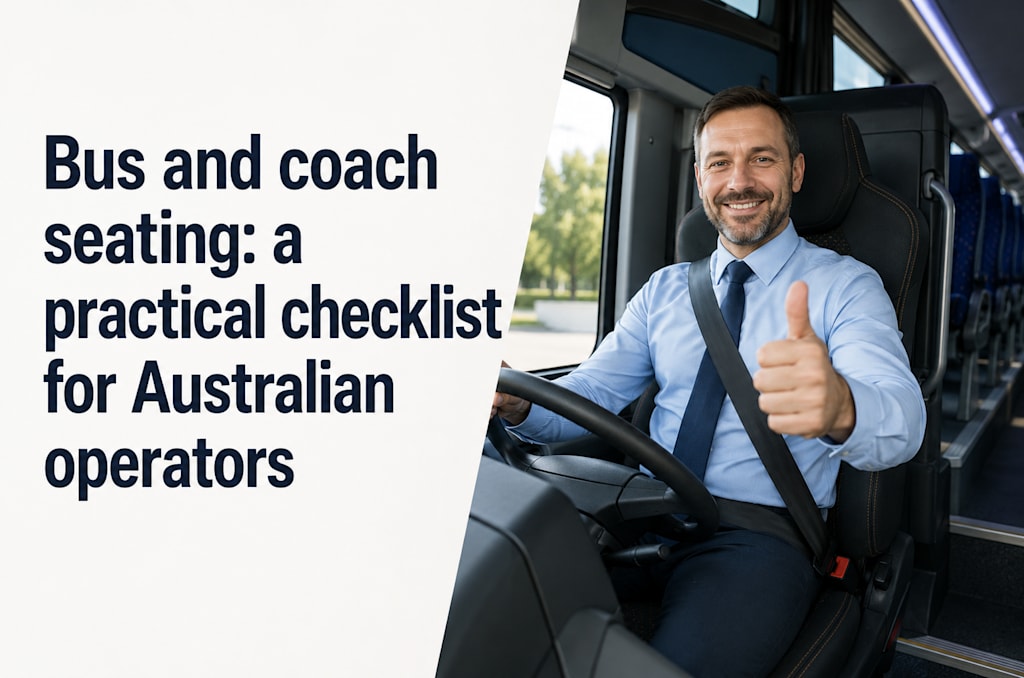
Bus and coach seating is one of those fleet decisions that looks straightforward, until you factor in duty cycles, cleaning realities, maintenance access, and passenger expectations across different route types. A seat that feels fine in a showroom can become a repair hotspot on a high-turnover school run, or a comfort problem on longer regional work.
If you’re looking for an experienced bus and coach seating specialist for Australian operators, it helps to judge “experience” by the questions they ask up front: how your vehicles are used, what breakdowns cost you in downtime, what your cleaning team can realistically maintain, and how the seat system supports compliance and documentation needs.
This guide is a buyer-style overview of what to check before you specify seats, so the fit-out performs in the real world, not just on delivery day.
Start with the use case, not the seat model
“Bus seats” covers multiple realities. Before comparing products, lock in your operating profile:
- Vehicle type: route bus, school bus, coach, shuttle, charter, mine/worker transport
- Trip length and passenger mix: short hops with high turnover vs long-haul comfort
- Traffic environment: metro stop-start, regional highways, mixed road quality
- Cleaning regime: daily wipe-downs, weekly deep cleans, or ad-hoc cleaning under pressure
- Damage and vandal risk: public routes and school work can be rough on trim and fittings
- Accessibility requirements: aisle width, priority seating, mobility aids, entry/exit flow
Once the profile is clear, you can evaluate seats against outcomes (durability, cleanability, comfort, compliance compatibility) rather than aesthetics.
Safety and compliance: build it into the spec early
Operators don’t just need “seats”, they need a seating system that integrates with the vehicle’s safety setup and documentation requirements. Early checks typically include:
- Seat belt requirements and integration (where applicable for your vehicle category and service)
- Mounting and anchorage compatibility with the chassis/floor design
- Head restraint and seat back performance expectations for the intended service
- Materials performance requirements (including fire/smoke behaviour where relevant)
- Documentation support: identifying marks, configuration records, and traceable parts for audit or maintenance
The practical lesson: compliance issues discovered late can trigger costly redesign or rework, especially in new builds or major refurbishments.
Total cost of ownership: the seat price is rarely the real price
In a commercial fleet, seating value is often decided by:
- Downtime: how long a vehicle is off the road for seat repairs or replacements
- Labour time: how quickly your team can access, remove, and refit parts
- Spare parts availability: whether you can get common wear items without delays
- Cleaning time: trim choices that reduce labour and complaints
- Re-trim and refurbishment options: whether the seat can be refreshed without full replacement
A slightly higher initial seat cost can be cheaper over the life of the vehicle if it reduces service interruptions and the “constant small fixes” that chew up workshop capacity.
Comfort: match the seat to the journey, not to marketing language
Comfort means different things on a 12-minute feeder route vs a 4-hour regional coach run.
Route and school work
Priorities often include:
- fast entry/exit and predictable passenger movement
- robust grab points and simple geometry
- hard-wearing trim that doesn’t show grime quickly
- easy-to-replace components (armrests, caps, handles, cushions)
Coach and longer-distance work
Comfort features often matter more:
- seat pitch and knee clearance decisions
- recline behaviour (and how it affects passengers behind)
- lumbar and posture support over time
- armrest design and aisle clearance
- noise and vibration feel through the seat structure
A helpful procurement habit is to trial a seat using realistic “time in seat” testing, because the first five minutes rarely predicts the two-hour mark.
Trim and materials: the maintenance team’s opinion matters
Trim choices can make or break operational satisfaction.
What to consider:
- Cleanability: textured fabrics may hide marks but can be harder to sanitise; smooth vinyls wipe faster but can show scratches
- Heat behaviour: some surfaces become uncomfortable in direct sun (important for coaches parked outdoors)
- Stain resistance: high-spill routes benefit from surfaces that don’t “hold” odours
- Repairability: can you replace a cushion cover or insert without stripping the whole seat?
A simple rule: if a material needs “special care” to look acceptable, it’s probably not the right choice for high-traffic fleet work.
Seat design details that affect operations more than you’d expect
Small design decisions often become big operational issues:
- Aisle pinch points: armrest shapes and seat bases can create constant shoulder bumps in busy vehicles
- Trip hazards: poorly placed hardware or protrusions near foot zones can cause incidents
- Under-seat space: affects cleaning access and passenger bag placement
- Grab handles: durability and placement influence boarding flow and passenger stability
- Seat spacing consistency: inconsistent pitch across rows can create complaints and rework
This is where experienced specification work shows: fewer surprises once the vehicle is in service.
Installation, retrofit, and downtime planning
For refurbishments, the “best seat” is the one you can actually install efficiently without extending downtime.
Practical retrofit questions:
- Can the seat mount to existing rails/anchor points, or is floor work required?
- What’s the installation time per vehicle, realistically, with your team and tools?
- Are there seat variants that simplify fit-out across mixed fleet models?
- Can you stage the upgrade (priority vehicles first) without creating spare-parts chaos?
For new builds, confirm early coordination between seating, flooring, restraints, accessibility layout, and any passenger amenity wiring (USB, lighting, call buttons, etc.). Late clashes here are expensive.
Spares, serviceability, and “fleet standardisation”
Operators often benefit from standardising:
- a small set of seat models across fleet types
- consistent trim families (so repairs and cleaning are predictable)
- consistent hardware and fasteners
- a defined spare parts kit (high-wear items stocked locally)
Standardisation reduces:
- ordering errors
- training burden for workshop staff
- vehicle downtime waiting on a small part
- inconsistent passenger experience across the fleet
It’s also useful for multi-depot operations where seats are serviced by different teams.
How to run a smarter selection process
A procurement process that reduces regret usually includes:
- Define the operating profile (route type, turnover, cleaning, vandal risk)
- Write a spec checklist (safety integration, materials, serviceability, comfort)
- Shortlist 2–3 options that genuinely fit the profile
- Trial seats in real conditions (or at least simulate duty cycle and cleaning)
- Collect feedback from the right people: drivers, cleaners, workshop staff, and (if possible) passenger reps
- Decide on total cost of ownership (downtime, spares, labour) not just unit price
The goal isn’t to make seating decisions slow. It’s to make them defensible and repeatable across the fleet.
Key Takeaways
- Seat selection should start with the operating profile (route vs coach, turnover, cleaning, vandal risk).
- “Value” is mostly total cost of ownership: downtime, spares, serviceability, and cleaning labour.
- Comfort needs differ by journey length, trial seats with realistic time-in-seat expectations.
- Materials and trim should be chosen with the cleaning team and workshop in mind, not just aesthetics.
- Standardising models and spares across fleets reduces disruption and makes maintenance predictable.
About the Creator
Enjoyed the story? Support the Creator.
Subscribe for free to receive all their stories in your feed.
Comments
There are no comments for this story
Be the first to respond and start the conversation.