
BMW Favored for Detroit IMSA as BoP Shifts Offset Porsche Weight Penalties
Despite headline-grabbing weight increases for both Porsche 963 variants, detailed power-to-weight analysis reveals BMW’s M Hybrid V8 holds the decisive advantage in the low-speed performance window that defines Detroit’s street circuit.

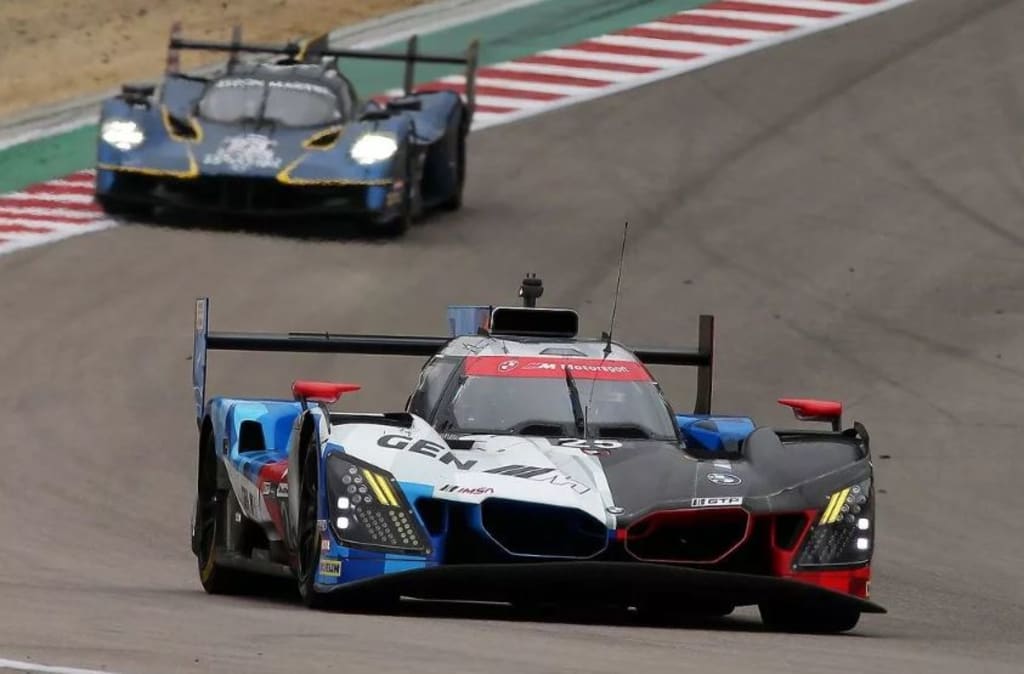
The Balance of Performance (BoP) for the 2026 Chevrolet Detroit Sports Car Classic has drawn immediate attention for its significant weight penalties on Porsche entries, but a deeper analysis of power-to-weight ratios across critical speed thresholds suggests BMW emerges as the pre-race favorite. While the factory Porsche 963s return to 1,100 kg and the JDC-Miller 2025-spec car hits an unprecedented 1,082 kg, these figures tell only half the story. On a tight, low-speed street circuit where acceleration out of corners dictates lap time more than top speed, BMW’s substantial gains below 190 kph position it as the package best suited to Detroit’s unique demands, though historical chaos at this venue ensures BoP alone won’t determine the winner.
Low-Speed Dominance: Where Detroit Is Won or Lost
Detroit’s layout features only one realistic overtaking opportunity and relentless low-speed corners, making sub-190 kph performance the primary differentiator. In this critical window, BMW’s M Hybrid V8 achieves a power-to-weight ratio of 1.991 kg/kW, breaking below the 2.0 mark for the first time this season. This represents a 0.044 kg/kW improvement over Laguna Seca and a massive 0.114 kg/kW gain versus Detroit 2025, driven by a 5.72 kW power increase and 7 kg weight reduction compared to last year.
Acura also benefits significantly below 190 kph, improving by 0.057 kg/kW from Monterey thanks to nearly 12 kW additional power. However, its year-on-year comparison is less favorable: carrying 21 kg more than in 2025 with only 1 kW compensation makes defending last year’s victory considerably harder. Porsche’s gains are marginal by comparison; the 2025-spec car improves just 0.001 kg/kW from Laguna despite a 14.56 kW boost, while the 2026-spec manages only 0.008 kg/kW progress. Aston Martin remains unchanged at its baseline 1.981 kg/kW optimum.
High-Speed Trade-offs and Strategic Implications
Above 200 kph, relevant only on Detroit’s main straight before the hairpin the picture shifts slightly. Aston Martin retains its clear aerodynamic advantage at 1.981 kg/kW, while the rest of the field clusters within a razor-thin 0.02 kg/kW band. Here, BMW actually loses ground relative to 2025 (-11.1 kW), and Cadillac suffers the largest year-on-year deficit due to its low-drag rear wing upgrade sacrificing high-speed power. Yet this matters less at Detroit: sustained high-speed running is minimal, and any straight-line deficit can be mitigated through slipstreaming or strategic positioning.
Crucially, Detroit is historically the track where pure BoP matters least. Track position, pit-stop timing, and caution management carry disproportionate weight on a layout notorious for yellow flags and limited passing zones. Team Penske’s mastery of these chaotic variables has yielded past successes regardless of paper performance. Still, the numbers place undeniable pressure on BMW to capitalize on their low-speed edge; failure to convert would invite scrutiny about whether operational execution or BoP cost them the win.
Porsche’s Paradox: Heavier But Not Necessarily Slower
Headline weight increases mask nuanced realities for Porsche. The JDC-Miller 2025-spec car, despite being the heaviest ever at 1,082 kg, actually enjoys better power-to-weight than at Laguna Seca due to its substantial low-speed power bump. Compared to Detroit 2025, it gains over 33 kW net a remarkable improvement that could offset mass penalties in traction-limited zones. The factory 2026-spec cars face tougher challenges, operating at maximum high-speed power since Long Beach with limited room for adjustment, yet their enhanced energy allocation (+19 MJ/stint) may enable aggressive hybrid deployment strategies tailored to Detroit’s stop-start rhythm.
Paper Favorite vs. Street Circuit Reality
On balance, BMW enters Detroit as the statistical favorite. Its unmatched low-speed efficiency aligns perfectly with the circuit’s character, and year-on-year gains dwarf competitors’. Acura and Cadillac face steeper climbs to match 2025 form, while Porsche’s weight headlines obscure genuine underlying improvements. Yet Detroit’s reputation as the great equalizer endures. Perfect strategy execution, tire management under variable conditions, and luck during inevitable cautions will ultimately decide the outcome. BMW has the tools to dominate, but on Motor City’s unforgiving streets, having the best package is merely the entry fee, not the guarantee.
About the Creator
Mark Lim
Hi I am mark an automotive student and a car, tech and food enthusiast ! Im gonna try and post daily & hope you enjoy what I write and do share my page with people you know. I would gladly appreciate it! Cheers
Enjoyed the story? Support the Creator.
Subscribe for free to receive all their stories in your feed.
Comments
There are no comments for this story
Be the first to respond and start the conversation.