
BMW Faces Backlash Over Forced Spider-Man Dashboard Ads in Luxury Vehicles
Despite claims of user consent, drivers report automatic ad prompts on $60K+ SUVs reigniting concerns about monetizing private cabin space and echoing past subscription controversies.

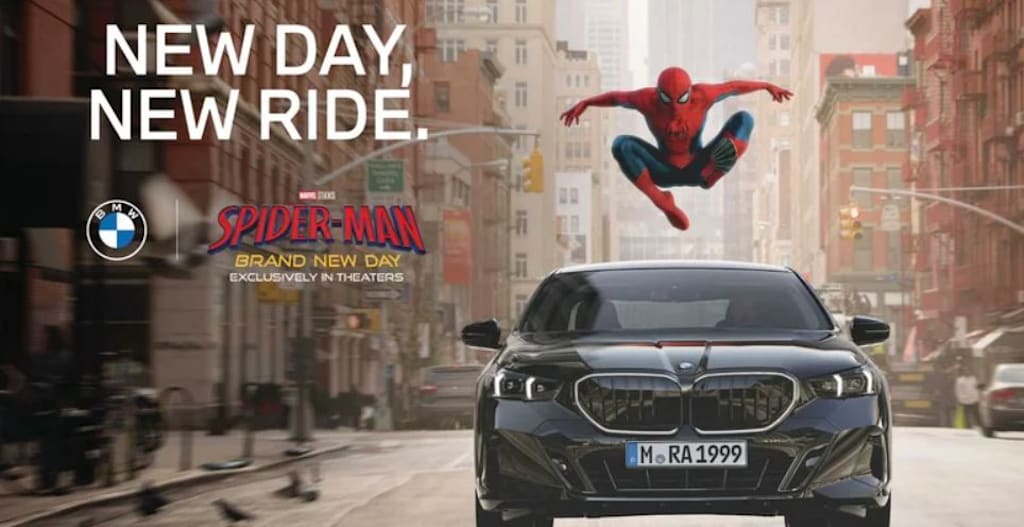
BMW is facing significant consumer backlash after launching a global cross-promotion for Spider-Man: Brand New Day that displays movie advertisements directly on vehicle dashboards. Beginning July 27 and running through August 10 in over 70 countries, the campaign shows a Spider-Man-themed banner upon vehicle startup. When tapped, it triggers what BMW describes as a “festive animation” featuring synchronized audio, ambient lighting, and footage of Spider-Man interacting with the BMW iX3 Flow—a special e-ink concept vehicle developed in collaboration with Sony and Marvel. While framed as a celebratory brand partnership, many owners view it as an unwelcome intrusion into a space they paid a premium to keep ad-free.
The core of the controversy lies in the contradiction between BMW’s messaging and user experience. The company insists the animation is “only visible to drivers who proactively initiate it,” yet numerous owners report the promotional banner appearing automatically at ignition without opt-in. This discrepancy has fueled accusations of deceptive design, especially given the vehicle’s price point: the BMW iX3 starts at $61,500, positioning it firmly in the luxury segment where buyers expect discretion, not commercial content. Critics argue that while ad-supported models make sense for budget devices like Kindles, they violate the implicit contract of premium automotive ownership where the cabin is considered a private, personalized sanctuary.
This incident is particularly damaging because it directly contradicts past executive assurances. In 2023, Stephan Durach, BMW’s Senior Vice President for Connected Company Development, explicitly rejected the idea of selling dashboard ad space: “To say I'm selling the screen to play a commercial I don't see it. It's a private space.” His statement was widely cited as evidence of BMW’s commitment to user-centric design. Now, that promise appears broken, eroding trust among customers who believed such boundaries were non-negotiable.
The backlash also revives memories of BMW’s ill-fated heated seat subscription debacle, in which the company charged monthly fees to unlock hardware already installed in vehicles. That move sparked global outrage and was quickly reversed, but it left a lasting stain on BMW’s reputation for customer respect. The Spider-Man promotion feels like a repetition of the same error: treating owners not as valued clients but as monetizable touchpoints. Even if the ad is technically skippable, its automatic appearance signals a shift toward normalizing in-car advertising, a trend many luxury buyers actively chose BMW to avoid.
BMW’s defense that this is part of a “broader brand partnership” misses the emotional nuance of the complaint. Owners aren’t opposed to collaborations per se; they object to unsolicited commercial content in a high-cost, intimate environment. A festive animation might delight some, but when imposed without clear, upfront consent, it reads as entitlement rather than engagement. The fact that it promotes another corporation’s IP (Sony/Marvel) further complicates matters, making the cabin feel less like personal property and more like rented billboard space.
As connected cars become increasingly software-defined, automakers face a critical choice: prioritize short-term revenue streams or preserve long-term brand equity rooted in trust. BMW’s current approach risks conflating innovation with exploitation. If luxury is defined by respect for the user’s autonomy and privacy, then even well-intentioned promotions must be truly optional, not merely labeled as such while functioning as defaults.
For now, the campaign ends on August 10, but the damage may linger. Customers are watching closely to see whether BMW treats this as a learning moment or just another data point in its monetization strategy. In an era where digital experiences define brand loyalty, the difference between a delightful surprise and an annoying ad often comes down to one thing: consent. And right now, too many BMW drivers feel theirs was assumed, not granted.
About the Creator
Mark Lim
Hi I am mark an automotive student and a car, tech and food enthusiast ! Im gonna try and post daily & hope you enjoy what I write and do share my page with people you know. I would gladly appreciate it! Cheers
Enjoyed the story? Support the Creator.
Subscribe for free to receive all their stories in your feed.
Comments
There are no comments for this story
Be the first to respond and start the conversation.