
Bahrain GP in Malaysia: A History of F1’s Geographical Naming Anomalies
As the 2026 Bahrain Grand Prix prepares to take place at Sepang due to regional conflict, we look back at the other times Formula 1 has staged races under names that didn’t match their actual location.

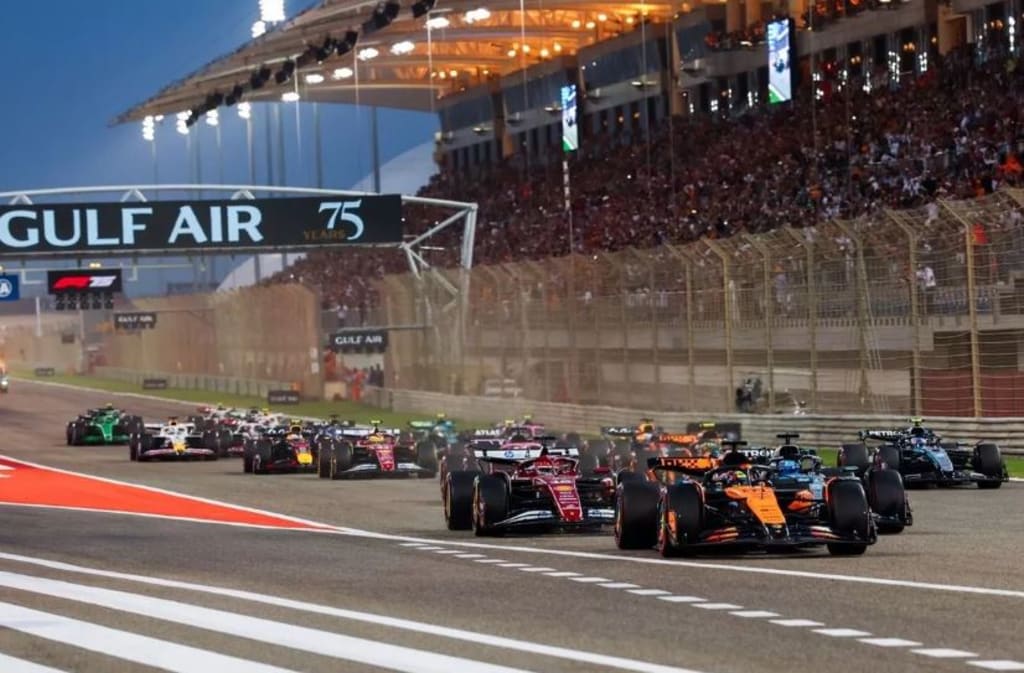
The confirmation that Formula 1’s return to Malaysia in 2026 will be branded as the Bahrain Grand Prix has sparked a mixture of amusement and confusion across the paddock. The ongoing conflict involving the US, Israel, and Iran has rendered Bahrain unsafe for hosting, yet the nation retains the naming rights to its slot on the calendar. Consequently, the Sepang International Circuit, Malaysia’s iconic Hermann Tilke-designed venue located next to Kuala Lumpur International Airport, will host a race bearing another country's name. While this specific geopolitical workaround is unprecedented, it is far from the first time F1 has decoupled a Grand Prix title from its physical geography. Throughout its history, commercial rights, safety bans, and calendar logistics have frequently created similar anomalies.
The San Marino Grand Prix: Italy’s Second Identity
The most famous example of geographical mislabeling is undoubtedly the San Marino Grand Prix. Held from 1981 to 2006, the race took place at the Autodromo Internazionale Enzo e Dino Ferrari in Imola, Italy, but was named after the tiny landlocked republic of San Marino located nearby. The distinction was born of necessity: Imola had hosted the Italian Grand Prix in 1980 while Monza underwent refurbishment, but when Monza returned in 1981, F1 needed a different name to accommodate two Italian rounds on the same calendar.
The circuit’s identity has proven remarkably fluid. When Imola returned to the schedule during the pandemic-affected 2020 season, it was rebranded once again as the Emilia Romagna Grand Prix, referencing the broader Italian region rather than a neighboring microstate. To date, Imola holds the unique distinction of hosting F1 races under three different national or regional titles: Italian, San Marino, and Emilia Romagna.
The Luxembourg Grand Prix: Germany’s Border Proxy
In the 1990s, the Nürburgring hosted F1 races under the banner of a country with no suitable track of its own. Luxembourg possesses only one permanent circuit, primarily used for driver training and never built to F1 standards. Yet, for 1997 and 1998, the Nürburgring round located roughly 80km from the Luxembourg border was designated the Luxembourg Grand Prix.
This arrangement emerged from Germany’s F1 boom during Michael Schumacher’s rise. From 1995, Germany hosted two championship rounds: Hockenheim retained the German GP title, while the Nürburgring initially used the European GP designation. When Jerez claimed the European GP naming rights for 1997, the Nürburgring adopted Luxembourg’s name as a placeholder until it could reclaim the European GP moniker in 1999. For two years, fans attended a "Luxembourg" race deep in the German Eifel mountains.
The Swiss Grand Prix: Racing Across Borders After Tragedy
Switzerland’s relationship with F1 naming is rooted in tragedy. After hosting championship rounds at Bremgarten from 1950–1954, the nation banned circuit racing following the 1955 Le Mans disaster. Motor racing wouldn’t return to Swiss soil until Formula E visited Zurich in 2018. However, the Swiss GP name lived on abroad.
A non-championship race was held at Dijon, France, under the Swiss GP title in 1975, and the event gained full points-paying status upon its return in 1982. It was at this French-hosted "Swiss" Grand Prix that Keke Rosberg secured the sole victory of his championship-winning Williams campaign. Notably, Switzerland lifted its motorsport ban entirely earlier this year, potentially opening the door for future domestic events, though the historical precedent of cross-border branding remains a poignant reminder of how safety regulations reshaped the calendar.
The 2016 European Grand Prix: Baku’s Continental Misnomer
The most recent anomaly occurred in 2016 when F1 debuted on the streets of Baku, Azerbaijan, but branded the event as the European Grand Prix. Although Azerbaijan is transcontinental, Baku lies east of the Greater Caucasus Mountains and is geographically and culturally aligned with Asia. The decision felt particularly jarring given that previous European GPs had been held at traditionally European venues like Donington Park, Jerez, Valencia, and the Nürburgring.
The naming was widely viewed as a transitional compromise while F1 established its presence in the Caspian region. By 2017, the race adopted the Azerbaijan Grand Prix title it retains today, correcting the geographical dissonance. Unlike the 2026 Bahrain/Malaysia situation, which stems from force majeure, the Baku case reflected commercial caution that was quickly abandoned once the market proved viable.
Why 2026 Is Different
While these historical precedents provide context, the 2026 Bahrain-Malaysia arrangement differs fundamentally in motivation. Previous renamings were driven by calendar logistics (San Marino), commercial placeholders (Luxembourg, Baku), or regulatory workarounds (Switzerland). This year’s change is purely reactive, a direct consequence of active conflict making the original host nation inaccessible.
It also raises novel questions about sporting integrity and fan experience. Sepang is a beloved circuit with its own rich history; asking Malaysian fans to celebrate a Bahraini-branded event creates an emotional disconnect that previous anomalies didn’t quite replicate. Nevertheless, as F1 navigates an increasingly volatile geopolitical landscape, the 2026 race may prove less an oddity and more a template for how the sport adapts when stability can no longer be assumed.
About the Creator
Mark Lim
Hi I am mark an automotive student and a car, tech and food enthusiast ! Im gonna try and post daily & hope you enjoy what I write and do share my page with people you know. I would gladly appreciate it! Cheers
Enjoyed the story? Support the Creator.
Subscribe for free to receive all their stories in your feed.
Comments
There are no comments for this story
Be the first to respond and start the conversation.