
Avatr Has 687 Stores, Falling Sales, and a Cash Clock It Can’t Stop
The premium EV brand sold about 6 cars per store per month this year. Its next IPO filing may decide how much time it has left.
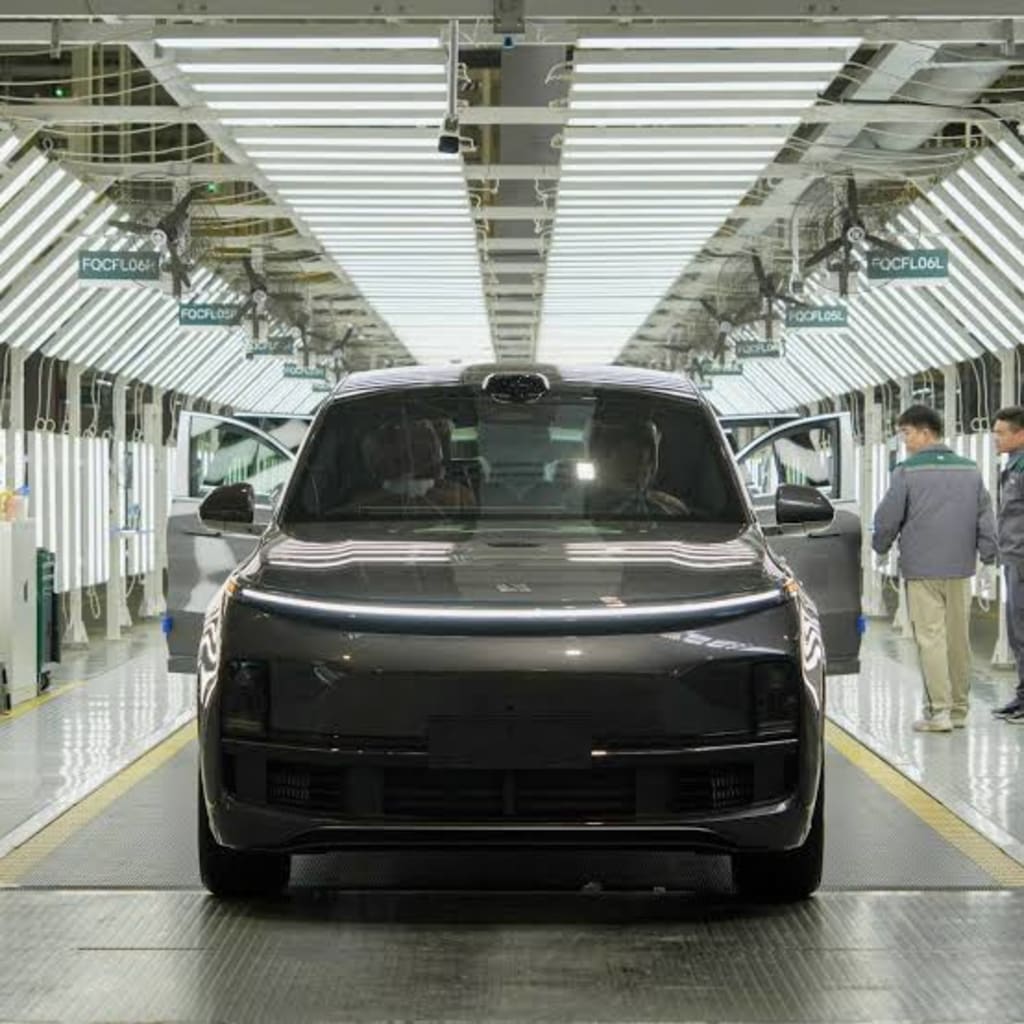
Avatr’s sales curve turned sharply in 2026.
In 2025, monthly sales hovered around 10,000 units: above 12,000 at the high end, above 7,000 at the low end. In 2026, the range collapsed. The best month reached 6,912 units. The worst fell to 2,065. From January to September 2026, Avatr sold 39,157 vehicles. In the September comparison table, that nine-month total would rank 12th among automakers, only slightly above Changan Qiyuan.
A sales decline is not unusual for a young premium brand. The pressure comes from the cost structure Avatr built before the decline. Its store network, brand spending, and organization were set for a larger volume. When volume falls, those costs do not fall with it. The real question is how long the cash lasts.
The arithmetic of 6.3 vehicles per store per month
Avatr had 687 stores at the end of 2025, according to its prospectus. Divide the 39,157 units sold in the first nine months of 2026 by 687 stores. The result is about 57 vehicles per store over nine months, or roughly 6.3 vehicles per store per month.
That number has to be read against store economics. A rough estimate puts the breakeven point for a mall-based experience store at about 10 vehicles a month. Larger stores with delivery, service, and more staff need more. At 6.3 units, the average Avatr store sits below the low end of that range.
Avatr is still expanding upward. Reports say the company plans to open SI 2.0 flagship stores of more than 5,000 square meters in more than 20 core cities this year. Flagship stores carry brand value: display, experience, delivery, and regional reach. They cannot be judged only by unit sales per month. But their capital expenditure and operating costs are fixed. When monthly sales per store are 6.3 units, adding flagship stores turns the network from a sales multiplier into a fixed-cost multiplier.
Last year Avatr sent five vehicles to Antarctica for winter testing. The spend may serve technical image and premium positioning. It also shows the shape of the cost base: built around a brand story, not around the current sales volume. At higher volume, those costs are spread thin. At lower volume, they press on cash flow.
The cash buffer is thinner than the sales number suggests
Cash shows the pressure more directly than deliveries.
Avatr’s cash and cash equivalents fell from RMB 19.323 billion at the end of 2024 to RMB 9.687 billion at the end of 2025, then to RMB 6.249 billion by the end of April 2026. In less than a year and a half, about RMB 13 billion disappeared. At the end of 2025, the asset-liability ratio reached 80.3%. The current ratio was 0.6. The quick ratio was 0.5. Short-term liquidity has little room left.
Losses add to the pressure. From 2023 to 2025, Avatr’s cumulative net loss was about RMB 11.2 billion. In 2025, revenue rose to RMB 25.6 billion, but the net loss was still RMB 3.489 billion. Avatr has revenue. It has not crossed the breakeven line. For a premium EV brand, early losses are not surprising. The problem is speed: whether the loss narrows faster than cash leaves the company.
The first nine months of 2026 do not give a comfortable answer. If monthly sales stay near 4,000 units, store costs, staff, marketing, R&D, and channel upgrades will not fall in proportion. The cash buffer will shrink faster. The cash math leaves little room for trial and error. Avatr is not out of money. It is running through money while self-funding remains unstable.
One number cuts against the pessimism
Avatr’s operating cash flow turned positive in 2024 and 2025: RMB 1.755 billion and RMB 2.315 billion, respectively. In years with adequate sales, daily operations did not necessarily burn cash. The loss came largely from investment spending, amortization of earlier channel and R&D outlays, and the cost of building a premium brand. Positive operating cash flow means that at a certain sales scale, Avatr can cover daily operating expenses from operations.
That makes 2026 the test. Can operating cash flow stay positive when sales fall? If monthly volume stays at 4,000 units and store efficiency keeps sliding, operating cash flow will likely come under pressure again. The cash reserve then stops being a buffer and starts being a countdown.
The position is unstable because it depends on the IPO. Three things hold the short-term line: RMB 6.249 billion in cash, shareholder credit support, and the ability to generate positive operating cash flow at normal sales levels. The thickness of that buffer depends on whether the Hong Kong listing is completed before cash hits a critical point.
Who funds Avatr: shareholders and the next IPO
Avatr has not yet built the self-funding capacity to cover its losses. Changan Automobile has contributed more than RMB 7 billion across financing rounds. Total financing is close to RMB 20 billion. Changan Chairman Zhu Huarong has publicly promised money, people, and technology. That backing is Avatr’s most direct credit support.
Shareholder support has limits. Changan is also pushing a RMB 5.267 billion private placement and must fund other new-energy units, including Deepal. CATL and other strategic shareholders bring value, but strategic money also has boundaries. It cannot fill a hole that keeps widening with falling sales.
The Hong Kong IPO is the next handoff. Avatr filed again on June 30, 2026, with a reported target of about USD 1 billion. If the listing succeeds, Avatr gets equity capital that can support several years of operations and reduces its dependence on shareholder injections. If the IPO is delayed or the raise is much smaller, cash pressure becomes visible quickly.
Avatr has a story, shareholders, and products. The story needs money to continue. Whether the money arrives depends on whether public-market investors will pay for this stage of the premiumization plan.
Why merging the dealer network with Changan is unlikely now
From a store-efficiency view, merging Avatr’s dealer network with Changan’s looks logical. Changan has a mature channel, lower customer-acquisition costs, and broader regional coverage. A merger could raise output per store and spread channel costs.
Avatr and Changan have chosen a different route: shared back-end work, separate front-end stores. In April 2026, Changan announced that Avatr and Deepal would operate with front-end independence and back-end sharing. Zhu Huarong framed it as three unchanged elements: brand operation, channel operating model, and user service. The shared work sits in product development, supply chain, and manufacturing. The target is to cut public costs by 20% to 30%, not to put Avatr stores into Changan’s dealer system.
Brand positioning constrains the choice. Avatr carries Changan’s premiumization task, with prices spanning roughly RMB 200,000 to RMB 700,000. Merging channels with Changan’s main brand or Deepal could dilute premium positioning and service standards. A channel is not only a place to sell cars. It is part of the brand premium. A merger may improve short-term efficiency and discount brand equity over time.
Avatr has chosen the harder path: cut costs in the middle and back office, keep the front-end channel independent. The cost of that choice is that front-end store efficiency must recover through Avatr’s own sales. Sales are the least certain variable right now.
The cash clock
Avatr is not at the point of immediate rupture. It has RMB 6.249 billion in cash, shareholder backing, and a business that generated positive operating cash flow at normal sales levels. It also faces a sales collapse, store economics below breakeven, and a cash reserve that has lost about RMB 13 billion in less than a year and a half.
The short-term buffer depends on the IPO. The medium-term test is whether Avatr can move from external funding to self-funding. The long-term test is whether store efficiency and sales recover. Neither curve has turned yet.
Avatr’s problem is not one bad month or one weak store. Its channel costs, brand spending, and organization were sized for a higher sales volume. Actual sales have fallen below the level that cost structure can comfortably carry. The 6.3 vehicles per store per month figure is a sharp entry point. Behind it sits a mismatch between a premium channel model and current scale.
How long can Avatr’s cash last? The answer depends less on the sales number alone than on whether external funding arrives faster than cash leaves. A successful IPO buys time to adjust channels, cut costs, and wait for a new product cycle. A blocked IPO turns cash pressure from a financial statement item into an operating reality.
Avatr has cards to play. The next filing will show whether the buffer arrived before the cash did.
About the Creator
Jin
Writer of reamstories
https://reamstories.com/jin
Enjoyed the story? Support the Creator.
Subscribe for free to receive all their stories in your feed. You could also become a paid subscriber, letting them know you appreciate their work.
Comments
There are no comments for this story
Be the first to respond and start the conversation.