
Automakers have suffered under CATL for years. Xiaomi and Li Auto just bought a way out.
The RMB 4.35 billion bet on Sunwoda is less about owning a battery plant. It is about gaining the power to switch suppliers when CATL says no.
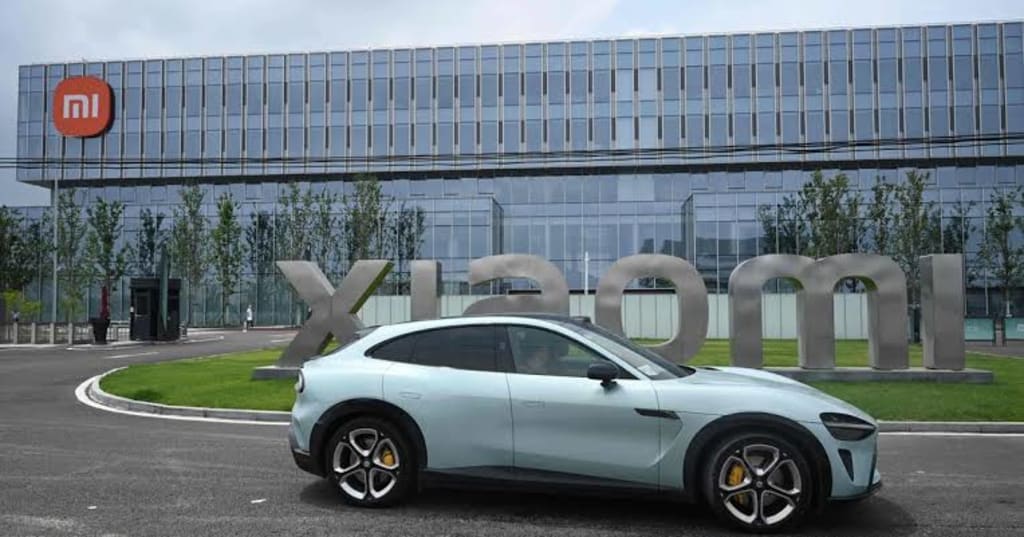
Li Auto put in RMB 2.65 billion. Xiaomi followed with RMB 1.7 billion. One after the other, they became the second- and third-largest shareholders of Sunwoda Power. Li Auto holds 8.32%. Xiaomi holds 5.34%. Together, 13.66%.
If you look only at the equity stakes, these do look like two ordinary industrial investments. There is no controlling stake, no majority of board seats, and no direct ability to decide how Sunwoda Power is run. But wind the timeline back a year. In 2023, CATL rolled out a “lithium rebate” program to some automakers, settling part of its battery supply at RMB 200,000 per ton of lithium carbonate. The price did come down. The condition was that automakers commit about 80% of their battery purchases over the next three years to CATL.
That 80% figure explains the automakers’ problem better than any equity ratio. When a supplier has technology, capacity, and safety credibility all at once, the question automakers face is not “should we buy?” It is “can we afford not to buy?” The money Li Auto and Xiaomi each put in is not buying board seats at Sunwoda. They are buying a second answer to that capability question.
The second-supplier trap: a name on the list does not create a second path
Automakers have been looking for a “second supplier,” but many second suppliers are fake.
A car model needs 10,000 battery packs a month. The first supplier takes 9,500. The second supplier gets 500. An order of 500 cannot support a production line, let alone a team that develops next-generation cells alongside the automaker. This kind of second supplier ensures there is another name on the supply list, but it does not change the first supplier’s position. When the automaker finally gets to the point where it can negotiate price, it still dares not shift a large order over, because the second supplier has no capacity to take it.
What if two suppliers get 60% and 40% respectively? Then the situation changes. If the first supplier will not budge on price, the automaker can tilt next month’s allocation toward the second. If the first supplier is tight on capacity, the second has an existing line to take the order. If both offer similar specifications, the automaker can compare cost, yield, and delivery speed. A second supplier creates switchability. Backup alone does not. Without real allocation, there is no real capacity. Without real capacity, there is no real bargaining power.
So to judge whether an automaker’s second-supplier strategy is real, do not look at how many framework agreements it has signed. Look at whether it dares to give a main model, a real trim, and a sufficiently large share of purchases to a second supplier.
Xiaomi and Li Auto: two different paths
Xiaomi takes the product-definition path. Take the “Dragon Armor Battery” as an example. If you look only at the cells, it does not fully belong to Xiaomi. The Pengcheng N70 uses Sunwoda’s lithium iron phosphate cells; the N90 Max and N70 Max use CALB’s ternary lithium cells. But at the launch event, Xiaomi talks about the Dragon Armor Battery. Xiaomi is responsible for battery pack design and development, participates in cell design, and manages everything from raw materials and cell manufacturing through to vehicle assembly. What buyers ultimately encounter is Xiaomi’s range figures and Xiaomi’s safety tests. They do not go around talking about CALB and Sunwoda every day.
This is the same logic Xiaomi has used in phones for years. The screen, camera sensor, memory chip, and battery in a Xiaomi phone come from different suppliers, but nobody calls it a Samsung phone, a Sony phone, or a Sunwoda phone. What decides how these parts are combined, how much the product sells for, and who is responsible when something goes wrong is still Xiaomi. Whether Xiaomi manufactures the cells itself is no longer the most critical question in this structure. The cell maker handles production. Xiaomi defines the product, sets the standards, packages the technology, and ultimately uses its own brand to bear the explanation and after-sales responsibility.
Li Auto goes heavier. Li Auto and Sunwoda Power jointly established Shandong Li Auto Battery Co., Ltd., with each side holding 50%. Li Auto leads the research and development of underlying cell materials, formulations, and systems, then hands manufacturing to Sunwoda. Battery packs are produced by the joint-venture plant or by Li Auto’s own plant. In September 2026, Li Auto put in another RMB 2.65 billion to become a shareholder of Sunwoda Power. The 2025 Li Auto i6 used CATL and Sunwoda. By the 2026 i6, both battery assemblies were still produced by the Li Auto–Sunwoda joint venture, while the cell manufacturers became Sunwoda and CALB. The new-generation Li Auto L8 has switched entirely to Sunwoda cells, and CATL has exited that model’s supply list.
A supplier that once trailed CATL has now taken, on a main model, the entire share CATL would have been expected to get. The second supplier becomes the first supplier, even the sole supplier. But Li Auto has not stopped working with CATL. At the same time it set up the Sunwoda joint venture, Li Auto also signed a five-year strategic cooperation agreement with CATL. High-end models continue to use CATL for technology, safety credibility, and capacity; other models bring in Sunwoda and CALB. “De-CATLization” does not mean removing CATL from the supply list. It means giving automakers the ability to hand a car model, a trim, or a next-generation battery project to another company.
Why invest when Sunwoda is in trouble
Sunwoda Power is not a risk-free supplier. At the end of 2025, Geely’s Weirui sued Sunwoda Power over alleged cell quality issues, seeking RMB 2.314 billion in damages. The two sides later reached a settlement. Sunwoda Power had to pay the remaining RMB 608 million, and battery pack replacement costs incurred after 2025 would also be shared according to the agreement. Financially, Sunwoda Power’s 2025 revenue was about RMB 20.093 billion, with a net loss of RMB 3.169 billion. In the first half of 2026, revenue was RMB 15.529 billion, and it was still losing RMB 324 million. By the end of June this year, it had RMB 68.15 billion in total assets and RMB 57.24 billion in total liabilities.
By the simplest purchasing logic, a battery maker that has just gone through a quality claim and a huge loss should see automakers reduce cooperation and look for replacement suppliers. Li Auto was the first to put in RMB 2.65 billion, becoming Sunwoda Power’s second-largest shareholder. Less than two months later, Xiaomi put in RMB 1.7 billion and became the third-largest shareholder.
RMB 4.35 billion may be just a few large orders in front of CATL. In front of Sunwoda Power, which has just suffered a huge loss and a quality dispute, it is something else. A second supplier that only fills gaps can be bought from off the shelf; if something goes wrong, the automaker can switch. A second supplier that can truly carry weight needs to build production lines, develop ahead of the vehicle model, accept the automaker’s material system and quality standards, and continue supplying repair batteries for the same car years later. Without stable orders, it dares not expand capacity. Without automaker involvement in quality management, it will struggle to catch up with CATL on safety credibility. Without capital support, it cannot afford the cost of taking a new cell from R&D to mass production. What Li Auto and Xiaomi are giving goes beyond money. They are also giving vehicle models, production-line expectations, and quality-management involvement.
Li Auto holds 8.32%; Xiaomi holds 5.34%. Li Auto has also set up a 50-50 battery company with Sunwoda. What material system Li Auto’s next-generation self-developed battery uses, what specifications Xiaomi’s next-generation cells use, and whose production line gets priority will all directly affect Sunwoda Power’s revenue. This kind of binding is harder for another customer to replace than a procurement contract.
Bargaining power without control: two tests
Many people understand supply-chain bargaining power as building your own plant, putting your name on everything from the factory building to the equipment, and ideally buying the battery maker outright with a stake above 50%. A more practical test has two questions:
First, would the supplier suffer if it lost you?
Second, if you reject a supplier, do you have another product you can put into a vehicle immediately?
If Li Auto or Xiaomi walks away alone, Sunwoda may lose an important customer. If both walk away, Sunwoda also loses the joint-venture plant, the self-developed battery project, Pengcheng series orders, and future model planning. If Sunwoda fails to deliver as required, Li Auto still has CATL and CALB; Xiaomi still has CATL, FinDreams, and CALB.
Both tests are necessary. With only the first, the automaker is unilaterally dependent on the supplier. With only the second, the supplier can be replaced at any time, and the automaker cannot get deep development support. Only when both hold true is there a switchable supply-chain structure. No matter how high Li Auto and Xiaomi’s share of purchases from CATL may be, they can hardly influence CATL’s overall arrangements. At Sunwoda, the two companies can provide both capital and projects that keep batteries going into vehicles. Not having control does not mean having no bargaining power. Bargaining power comes from the combination of orders, joint development, joint-venture plants, product definition, and brand responsibility. Equity is only one item in that combination.
The three-step path for automakers: Li Auto and Xiaomi have reached step three
Facing a leader like CATL, with its scale, technology, and customer advantages, automakers have three steps they can take.
Step one: add a second supplier to the supply list and avoid a single supplier. Many automakers are doing this, but most remain at “a name on the list.”
Step two: give the second supplier real vehicle models and a sufficiently large share of purchases, so it has the ability to build production lines and order switching becomes possible. Without a real allocation like 40%, the second supplier is just a spare tire.
Step three: the automaker defines the battery system itself, then uses joint-venture plants and equity to pull the supplier into its own product system. The cell maker handles production; the automaker takes back technical standards, product naming, and after-sales responsibility.
Li Auto uses a joint-venture plant, self-developed batteries, and RMB 2.65 billion to pull Sunwoda into its manufacturing system. Xiaomi uses the Dragon Armor Battery, vehicle orders, and RMB 1.7 billion to pull Sunwoda into its product system. The two companies reach step three in different ways, but the result points in the same direction: CATL is still on the supply list, but it is no longer the only answer.
CATL’s technology, capacity, and safety credibility remain strong and will not be replaced in the short term. What has changed is that automakers are beginning to have the ability to hand a car model, a trim, or a next-generation battery project to someone else. As long as that switching capability exists, CATL’s bargaining position with automakers will change.
Automakers still need CATL. They now also have a way to need it less.
About the Creator
Jin
Writer of reamstories
https://reamstories.com/jin
Enjoyed the story? Support the Creator.
Subscribe for free to receive all their stories in your feed. You could also become a paid subscriber, letting them know you appreciate their work.
Comments
There are no comments for this story
Be the first to respond and start the conversation.