
Australia's Best-Kept Automotive Secret: The Family That Built 800 Sports Cars From Fibreglass
Most people outside Australia have never heard of Bolwell. That is their loss because the story of this Melbourne family and their hand-built sports cars is one of the most remarkable in automotive history.

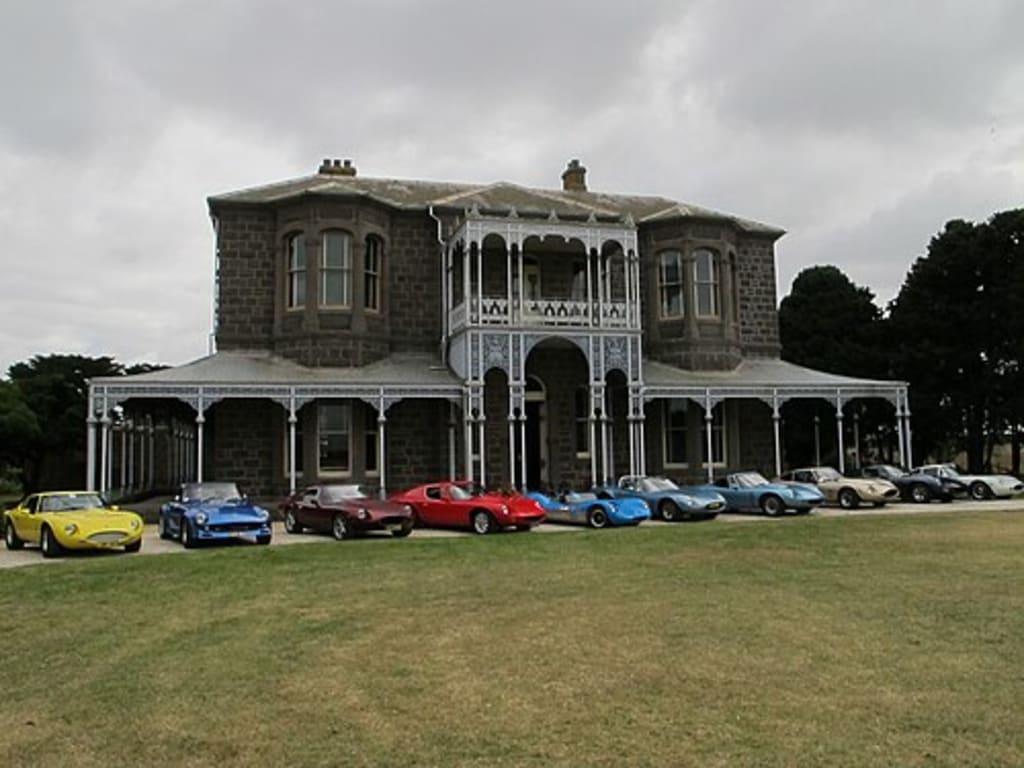
If you asked most car enthusiasts to name the great sports car manufacturers, the list would come quickly: Ferrari, Porsche, Lotus, Aston Martin, McLaren. Nobody would say Bolwell. Virtually nobody outside Australia has heard of them. And that is, genuinely, a shame.
Bolwell Corporation is a Melbourne-based company that has been building fibreglass sports cars since 1962. It is still a family business. It has produced around 800 cars across six decades. Its most famous model, the Nagari, is regarded by those who know it as one of the finest sports cars ever built in the Southern Hemisphere. And the story of how it got here, from a small fibreglass bodywork operation to a manufacturer producing carbon-Kevlar tub supercars with Chevrolet V8 engines, is the kind of story that the automotive world would celebrate loudly if it had happened in Europe.
From Fibreglass Bodies to Their Own Cars
Bolwell began, as several great small manufacturers have, by making components for other people. The company was founded in 1962 to produce fibreglass car bodies for other Australian automotive operations. Fibreglass was, at the time, a genuinely revolutionary material for small-scale car manufacturing, lightweight, mouldable, resistant to rust, and practical for a company that could not justify the tooling costs of steel bodywork.
It did not take long for the Bolwell family to decide they could build their own cars.
The Mk IV was the first commercial model that a kit car offered in two forms, a coupé with gull wing doors and an open sports car. Over 200 were produced between 1962 and 1964. That is a remarkable number for a small Australian manufacturer in that era, and it established immediately that there was a market for what Bolwell was doing.
The Mk V followed between 1964 and 1966, using mostly Holden components; 75 coupés were produced. The Mk VI, built in 1968, was a one-off mid-engined sports racing car. The Mk VII ran from 1967 to 1971, with 400 examples produced mostly as kits but also in fully built form. By the time the later Mk VII cars were rolling out, they featured Nagari dashboards, Nagari seats, Nagari pedal boxes, and Nagari-style rear suspension. The shadow of what was coming was already visible.
What was coming was the Nagari.
The Nagari: Australia's Answer to the Lotus Elan
The Mk VIII, known universally as the Bolwell Nagari, arrived in 1970 and remains the car that defines the company's legacy. It was powered by a Ford V8 engine, fully built in the Bolwell factory rather than sold as a kit, and offered initially as a coupé before a convertible variant became available in 1972. Production ceased in 1974 with 100 coupés and 18 convertibles completed.
Those are small numbers by any global standard. But the Nagari was not competing on volume. It was competing on character.
The car was lightweight, thanks to the fibreglass body construction that had been Bolwell's founding expertise. It was fast, thanks to the Ford V8 sitting up front. And it was genuinely beautiful, a low-slung, purposeful sports car with proportions that looked at home on a racetrack without looking out of place on a suburban street. In a country that had never produced a truly world-class sports car, the Nagari was something different: a machine that could be spoken about in the same breath as the cars it was designed to compete with internationally.
The name itself carries weight. Nagari is an Aboriginal Australian word, a connection to the land the car was built in, given to a machine that in many ways embodied what Australian manufacturing could achieve when it was given the right combination of ambition, expertise, and freedom from corporate constraint.
The Mk IX Ikara: The Rarest of All
After the Nagari production ended in 1974, Bolwell continued working. The Mk IX Ikara, conceived in 1979, was a mid-engined kit sports car powered by a 1600cc Volkswagen Golf four-cylinder engine. It used a space frame chassis and fibreglass body panels, no doors, pure sports car in the most stripped-back sense.
Only 12 examples were ever produced. Of those, eleven survive. One car number 9 is missing.
There is something almost mythological about that detail. A production run of 12 cars, one of which has simply vanished into automotive history. The eleven survivors are known, tracked, and documented by enthusiasts who understand what they represent. Car number 9 is out there somewhere, presumably, in a garage or a barn or a private collection, unrecognised or forgotten. It is the kind of detail that makes automotive historians slightly obsessive.
The Ikara's appearance in 1979 marked what would become a long pause in Bolwell's car production. The company did not stop existing; it continued as a composite manufacturing business, applying its fibreglass and advanced materials expertise to industrial and commercial applications. But the sports cars were on hold.
For nearly three decades.
The Return: The Mk X Nagari
In March 2008, at the Melbourne Motor Show, Bolwell unveiled the Mk X, a new Nagari for a new era. Production began in 2009. The car was a statement of intent: Bolwell had not gone away, had not forgotten what it was, and was ready to build sports cars again.
The modern incarnation of the company has pushed the technology significantly further than the original Nagari could have imagined. The Nagari 500, released in 2019, uses a carbon/Kevlar tub, the same construction philosophy used in Formula One and high-end supercar manufacturing. The engine is a mid-mounted Chevrolet LS3 V8, one of the most proven and respected performance engines in contemporary motorsport and road car use. The transmission is an Audi six-speed transaxle.
This is not a nostalgic recreation or a tribute act. It is a modern high-performance sports car built by a company that has been refining its composite manufacturing expertise for six decades and is applying that expertise to a machine that competes, in terms of engineering quality and performance, with products from manufacturers that command vastly greater resources and recognition.
The company remains family-owned. Founder Campbell Bolwell is still active in designing and building cars. The current operation is managed by Vaughan Bolwell. The Bolwell name on the door means the same thing it has always meant: a family, in Melbourne, building sports cars the way they believe sports cars should be built.
Bolwell's importance
The global automotive industry tends to overlook what happens outside its established centres of gravity, Maranello, Stuttgart, Coventry, and Wolfsburg. The assumption, often unconscious, is that great cars come from great automotive nations with centuries of heritage and massive industrial infrastructure.
Bolwell is a rebuttal to that assumption. It is proof that a family operation in Melbourne, working with fibreglass and later carbon fibre and Kevlar, with Ford V8s and Holden components and Chevrolet engines and Audi gearboxes, can produce sports cars that are worthy of the name in every sense that matters.
Eight hundred cars across sixty years. Five commercial models. One missing Ikara. One iconic Nagari. One family that has never stopped.
That is not a footnote in automotive history. That is a story worth knowing.
About the Creator
Mark Lim
Hi I am mark an automotive student and a car, tech and food enthusiast ! Im gonna try and post daily & hope you enjoy what I write and do share my page with people you know. I would gladly appreciate it! Cheers
Enjoyed the story? Support the Creator.
Subscribe for free to receive all their stories in your feed.
Comments
There are no comments for this story
Be the first to respond and start the conversation.