
2027 Mitsubishi Pajero: The Legend Is Back!
First Look: Everything You Need to Know About the New Pajero

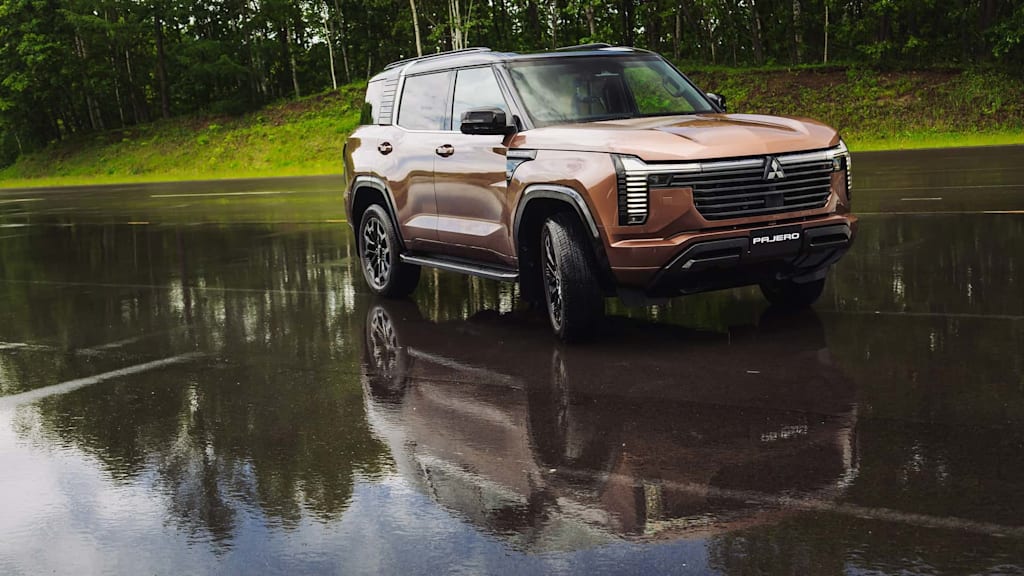
The Mitsubishi Pajero is back after a five-year hiatus, returning as a completely redesigned next-generation model. The Pajero story began in 1982 and, over four generations, the model became one of the most important vehicles in Mitsubishi's history, with more than 3.29 million units produced and a presence in more than 170 countries and regions.
However, after production of the fourth-generation Pajero ended in 2021, the legendary nameplate disappeared from the automotive world for several years. Now, Mitsubishi has brought it back with an all-new Pajero, unveiled globally on September 2, 2026.
The new Pajero is not simply an updated version of its predecessor. With a ladder-frame chassis, Super Select 4WD-II, S-AWC, a 2.4-liter turbo-diesel engine and seven driving modes, the new model aims to preserve its off-road capabilities while taking comfort and technology to a much higher level.
2027 Mitsubishi Pajero: General Overview
The design of the new Pajero establishes a clear connection between Mitsubishi's past and its future. The company combines the upright and rugged proportions associated with the original Pajero with modern design elements.
At the front, T-shaped LED headlights, a wide horizontal grille and muscular fenders give the SUV a strong and imposing appearance. The C-pillar features a design inspired by the roll-bar structure of the first-generation Pajero, while the hexagonal rear design pays tribute to the externally mounted spare wheel found on earlier Pajero models.
Inside, the new Pajero is dramatically more modern than its predecessor. The horizontally oriented dashboard, two large digital displays and the Multi-Meter system reinterpret the traditional three-gauge layout found in older Pajero models.
The Multi-Meter can display information such as altitude, compass direction, temperature, body inclination angles and data related to the AYC system.
The SUV also features a 14.3-inch infotainment display, wireless smartphone connectivity, a 3D Multi Around Monitor, Mitsubishi's MI-PILOT driver-assistance system and a 12-speaker Dynamic Sound Yamaha Ultimate audio system.
Dimensions
The new Pajero measures 4,920 mm in length, 1,925 mm in width and 1,910 mm in height. Its wheelbase measures 2,870 mm, while ground clearance stands at 230 mm.
The vehicle is designed to accommodate both five- and seven-seat configurations. In the seven-seat layout, Mitsubishi has focused on providing a more practical third row for adult passengers. The second row can also slide by 150 mm to improve passenger and cargo flexibility.
2027 Mitsubishi Pajero Engine Options
The first engine officially announced for the new Pajero is a 2.4-liter turbo-diesel unit.
The engine uses a variable-geometry turbocharger (VGT) and produces a maximum of 480 Nm of torque. It is paired with a newly developed eight-speed automatic transmission.
Mitsubishi has focused on delivering strong and controlled torque from low engine speeds, an approach that should benefit the vehicle both in everyday driving and under demanding off-road conditions.
One of the most interesting aspects of the new engine is that Mitsubishi has moved away from the large-displacement diesel engines associated with older Pajero generations. Instead, it aims to deliver strong torque and efficiency from a smaller engine.
Depending on the market, the torque output may be adjusted to 470 Nm.
Will a Hybrid Pajero Be Available?
Yes, but not at launch.
Mitsubishi has confirmed that a hybrid powertrain will be introduced for the Pajero by 2030. This means the diesel engine will be the main powertrain during the initial launch period, while electrification is expected to become part of the lineup in the following years.
This will be particularly important in markets such as Europe, where increasingly strict emissions regulations are shaping the future of large SUVs.
Off-Road Performance: Is the New Pajero a True Off-Roader?
This is arguably the most important aspect of the new Pajero.
Rather than adopting the unibody architecture used by most modern SUVs, Mitsubishi has equipped the new model with a high-strength ladder-frame chassis.
The structure has also been reinforced to improve torsional and bending rigidity.
The suspension setup consists of independent double wishbones at the front and a five-link rigid axle at the rear.
This combination makes the new Pajero much more than a stylish urban SUV. It has been engineered to tackle serious off-road conditions.
Super Select 4WD-II
One of the biggest strengths of the Pajero is Mitsubishi's Super Select 4WD-II system.
The system provides four main drivetrain modes:
2H: Rear-wheel drive
4H: Full-time four-wheel drive
4HLc: Locked center differential
4LLc: Low-range gearing with a locked center differential
The availability of the 4LLc low-range mode is particularly significant because it demonstrates that the new Pajero remains a serious off-road vehicle.
The S-AWC system also integrates Active Yaw Control, traction control, stability control and ABS. Instead of simply sending power to all four wheels, the system continuously manages how much traction each wheel can use.
Seven Driving Modes
The new Pajero offers seven driving modes.
In addition to Normal and Eco modes for everyday driving, the system includes:
Gravel
Snow
Mud
Sand
Rock
These modes adjust the engine, transmission, traction and stability systems according to different terrain conditions.
Off-Road Geometry
The new Pajero has 230 mm of ground clearance.
Its approach angle is 30.4 degrees, the breakover angle is 22.6 degrees and the departure angle is 25.8 degrees.
These figures reinforce the idea that the new Pajero is not simply a large lifestyle SUV. The combination of 4LLc low-range gearing, a ladder-frame chassis and 230 mm of ground clearance gives it serious off-road potential.
What About On-Road Performance?
One of the biggest compromises with previous generations of the Pajero was the balance between off-road capability and on-road comfort.
With the new model, Mitsubishi is trying to change that equation.
The company has placed considerable emphasis on suspension geometry, body mounting and sound insulation. Improving what Mitsubishi describes as "off-road comfort" was one of the key objectives during development.
The independent front suspension should provide more natural steering responses, while the five-link rear axle is designed to deliver a balance between off-road capability and road manners.
For highway driving, the MI-PILOT system adds adaptive cruise control and lane-centering assistance, reducing driver workload during longer journeys.
In short, the new Pajero's goal is clear:
A 4x4 that is comfortable enough for everyday urban driving but capable enough to leave the pavement when the weekend arrives.
Who Are the 2027 Mitsubishi Pajero's Rivals?
The positioning of the new Pajero puts it into a highly competitive segment.
Its most important rivals are likely to include:
Toyota Land Cruiser Prado
Ford Everest
Isuzu MU-X
Land Rover Discovery
The Toyota Land Cruiser Prado, in particular, will be one of the Pajero's most important competitors.
The Prado has established itself as a benchmark in the body-on-frame SUV segment, combining a rugged four-wheel-drive system with modern hybrid technology, advanced driver assistance and a more premium interior.
The new Pajero will fight back with its 480 Nm diesel engine, Super Select 4WD-II and S-AWC technology.
One of the key differences lies in Mitsubishi's approach to four-wheel drive. The Pajero retains a more traditional and driver-oriented 4x4 system that allows it to transition between everyday road driving and demanding off-road conditions.
New Pajero vs. Old Pajero: What Has Changed?
The differences between the new Pajero and its predecessor go far beyond styling and technology. The biggest changes are found underneath the body.
1. A Return to a Ladder-Frame Chassis
The fourth-generation Pajero used Mitsubishi's monocoque/Rise-based construction, which had evolved from the architecture of previous generations.
The new Pajero takes a different approach by returning to a ladder-frame chassis.
This is a major change, particularly for heavy-duty off-road use, durability and chassis rigidity.
2. The 3.2-Liter Diesel Has Been Replaced by a 2.4-Liter
One of the most iconic engines associated with the Pajero was the 3.2-liter 4M41 DI-D diesel.
In its later European applications, the engine produced around 190 PS and 441 Nm of torque and was paired with a five-speed automatic transmission.
The new Pajero uses a smaller 2.4-liter turbo-diesel instead.
Despite the smaller displacement, torque increases to 480 Nm, while the transmission has been upgraded to an eight-speed automatic.
Rather than relying on a large engine, Mitsubishi is targeting a broader operating range and a more modern powertrain.
3. From Independent Rear Suspension to a Rigid Rear Axle
The fourth-generation Pajero used an independent suspension system at both ends.
The new model uses independent double wishbones at the front but switches to a five-link rigid rear axle.
This change indicates that Mitsubishi has moved the new Pajero closer to the traditional body-on-frame 4x4 philosophy.
4. A Huge Leap in Technology
The technological gap between the old Pajero and the new model is enormous.
The new Pajero features:
14.3-inch infotainment display
Digital Multi-Meter
3D surround-view camera system
MI-PILOT driver assistance
Advanced collision-avoidance systems
Eight airbags
SRS center airbag
Mitsubishi CONNECT
12-speaker Yamaha audio system
As a result, the new Pajero has a much more premium character than its predecessor.
Which Countries Will Get the 2027 Mitsubishi Pajero?
Mitsubishi's plans for the new Pajero are particularly important.
Production will take place in Thailand.
The first sales will begin in Thailand, followed by Japan and Australia. From fiscal year 2027 onward, Mitsubishi plans to expand the Pajero to approximately 100 countries.
The company has specifically identified the following regions:
ASEAN countries
Latin America
Middle East
This means the Pajero is returning as a truly global model.
However, there is an important detail to keep in mind: Mitsubishi has not yet published the complete list of all approximately 100 markets.
Therefore, it would be premature to say that Turkey is definitely included in the launch list.
The same applies to the United States, where Mitsubishi has not yet officially confirmed a new Pajero launch.
Depending on the market, the model could also be sold under the Montero name, as was the case with previous generations.
Can the New Pajero Preserve the Spirit of the Old One?
This may ultimately be the biggest test for the new Pajero.
Mitsubishi is not simply bringing back an old nameplate. It is also putting the Pajero's legendary off-road capability back at the center of the brand's SUV strategy.
The old Pajero was known for its durability, 3.2-liter diesel engine and Super Select four-wheel-drive system. The new model attempts to carry that legacy forward with a more modern platform.
The ladder-frame chassis, 480 Nm of torque, 4LLc low-range gearing, 230 mm of ground clearance and S-AWC system create a very promising package on paper.
But the new Pajero is also clearly different from its predecessor.
It is no longer designed purely as an off-road 4x4; it also wants to be a premium family SUV.
That is why the new model places much greater emphasis on quieter operation, technology, comfort and luxury.
Conclusion: The Pajero Is Back, But It Is a Different Pajero
The 2027 Mitsubishi Pajero is not simply a continuation of the old model.
The new generation attempts to combine the traditional Pajero off-road identity with the comfort, safety and technology expected from a modern SUV.
Its ladder-frame chassis, Super Select 4WD-II, S-AWC, 2.4-liter diesel engine producing 480 Nm, eight-speed automatic transmission and 230 mm of ground clearance demonstrate that Mitsubishi has not abandoned the Pajero's off-road credentials.
At the same time, the three-row seating, advanced infotainment system, driver-assistance technologies and improved insulation show that everyday family use has become a much bigger priority.
The old Pajero's character was defined by its 3.2-liter diesel engine, mechanical simplicity and rugged personality. The new model replaces that formula with a smaller but more modern diesel engine, electronically enhanced four-wheel-drive technology and a significantly more premium cabin.
In other words, Mitsubishi has not simply revived the Pajero.
It has adapted the Pajero's character for the automotive world of 2027.
And that comeback could mark the beginning of a very interesting rivalry in the off-road SUV segment, particularly against established names such as the Toyota Land Cruiser Prado.
About the Creator
Enjoyed the story? Support the Creator.
Subscribe for free to receive all their stories in your feed.
Comments
There are no comments for this story
Be the first to respond and start the conversation.