
2010 Toyota Corolla Altis 2.0V Review: The Sensible Choice That's Quietly Sporty
A facelift, a new CVT, and a cabin that punches above its class here's how the range-topping Altis actually drives


The Toyota Corolla Altis has never been the car people lust after at car meets. It's the car that gets bought, driven faithfully for a decade, and traded in without much sentimentality. The facelifted 2010 model, launched in Malaysia with a new ZR range of Dual VVT-i engines and a CVT gearbox across most of the lineup, isn't trying to change that fundamental identity. But the range-topping 2.0V variant makes a more convincing case than expected for why "sensible" doesn't have to mean "uninspiring."
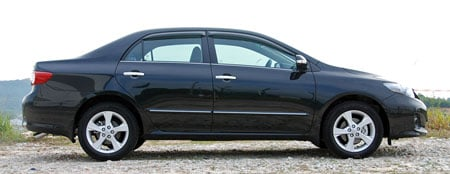
The Styling: A Junior Camry, And That's a Compliment
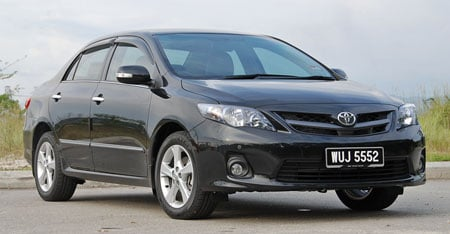
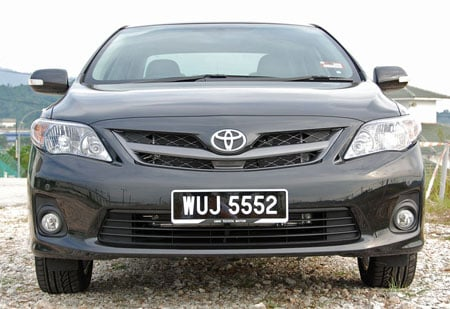
The facelift reworks the front end significantly, swapping the old car's fussy, sharp-nosed "U" shape grille for an "X" shape that mirrors the design language Toyota applied to the Camry facelift. The result is a wider-looking face that ditches some of the previous model's busier detailing. Given how popular the Camry is in this market, resembling a junior version of it is a smart positioning move rather than a lack of originality.
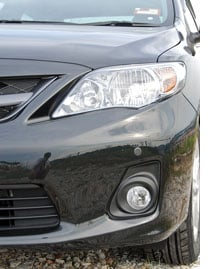
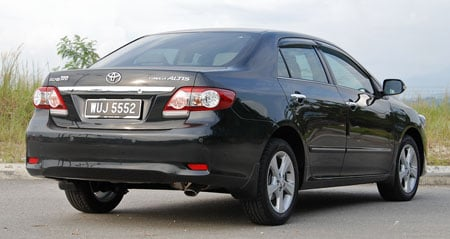
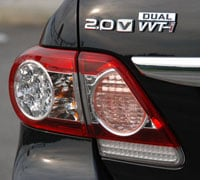
The HID headlamps get a "smoked" greyish-blue tint that looks good in person, even if it doesn't translate well in photographs. The tail lamps are a more mixed bag, functional in differentiating old from new, but carrying a slightly aftermarket aesthetic that doesn't quite match the quality elsewhere. Additional changes include a longer chrome strip above the number plate, a new bumper with horizontal reflectors, and a Dual VVT-i badge placed alongside the variant badge.
This won't convert anyone shopping for a Civic or Lancer on looks alone; those buyers were never the target anyway. For the broader market, the Altis reads as inoffensive at worst and genuinely a bit sporty at best in 2.0V trim, helped by a decent-looking 16-inch wheel design, even without a bodykit at launch.
The Cabin: Where the Altis Actually Impresses
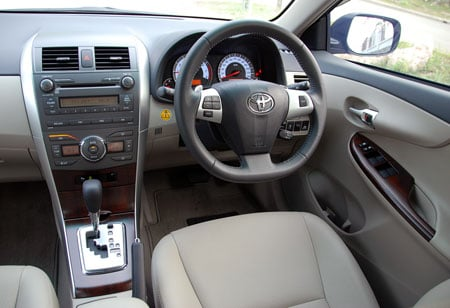
This is where the facelift earns its keep. Malaysian-spec cars get a light-coloured cabin across the board rather than the black interior some other markets receive on the 2.0V, a choice that creates a stronger impression of space and airiness the moment you step in.
The changes from the outgoing model are subtle but cumulatively effective. The grey soft plastics across the top of the dash and door mouldings are now a darker shade, and the faux wood trim has shifted to a tasteful dark wood with a matte finish, a clear improvement over the previous orangey, glossy wood trim, and a step up in perceived quality compared to rivals using plain silver plastic.
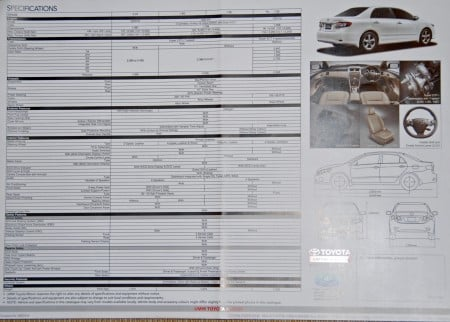
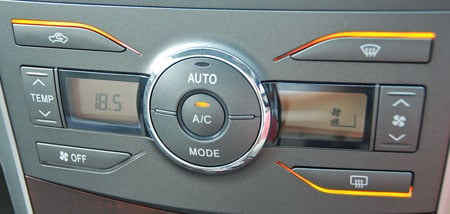
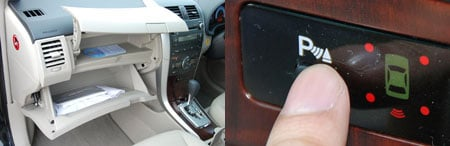
Build quality stands out as genuinely strong. Panel fit is excellent, buttons are tightly fitted with good tactile response, and the only blemish noted was a slightly imperfect fit on the second glove box, a minor complaint made almost moot by the fact that few rivals in this class even bother offering a second glove box at all. The layout and ergonomics are refreshingly straightforward, intuitive enough that even an unfamiliar driver could operate everything without hunting for controls.
The steering wheel, a three-spoke design exclusive to the 2.0V, is a particular highlight: good thickness, a slightly flattened bottom, perforated leather with contrasting stitching, and sensibly placed buttons. The trip meter toggle sits on the wheel itself, while cruise control gets its own stalk, a layout that rewards drivers who use the trip computer more than cruise control.
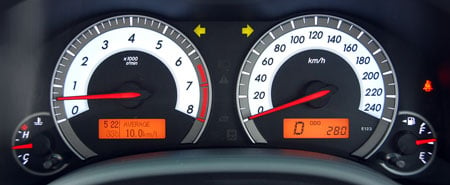
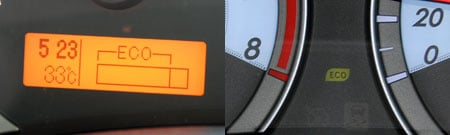
The Optitron gauges get a white ring with black numbering, improving both sportiness and legibility, and every model includes a green ECO light for light-throttle driving, with a more detailed ECO meter available through the trip computer.
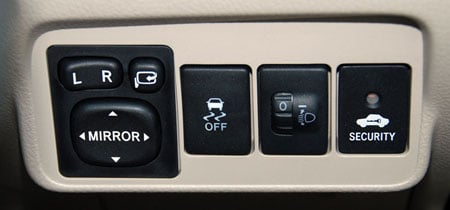
Smaller details round out a genuinely well-thought-out interior: generous storage throughout the centre console, illuminated vanity mirrors, a handy sliding armrest, and useful front parking sensors. The few criticisms are minor: the wing mirror controls are obscured by the steering wheel, and the driver's seat base could be longer, though the leather covers feel less slippery than the press cars driven previously at Sepang.
On the Road: Smooth, Quiet, and Surprisingly Convincing
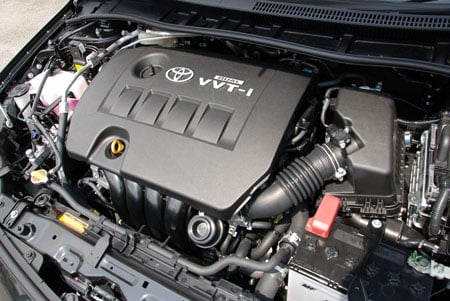
The new drivetrain is the Altis's strongest asset. The engine stays unobtrusive during normal driving, partly thanks to good insulation, partly because it simply doesn't need to work hard. True to Toyota form, throttle response is good, and there's plenty of usable torque despite unremarkable headline figures of 147 PS and 187 Nm. Getting up to highway speed and overtaking both feel effortless, aided by a CVT that operates with notable quietness.
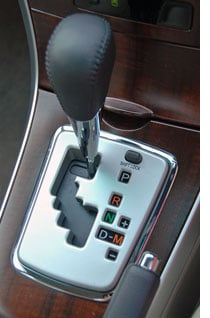
The Super CVT-i gearbox deserves particular praise for how convincingly it mimics a conventional automatic, likely convincing enough that many showroom test drivers wouldn't realize it's a stepless transmission unless told. Ease away from a stop, and you'll notice the tachometer and speedometer needles moving in tandem, conventional-automatic style. Floor it, and revs dip slightly after roughly 5,000 rpm before climbing again, deliberately engineered to simulate gear changes, even if those simulated "shifts" aren't perfectly clean.
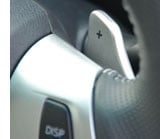
That engineered familiarity pairs with genuinely impressive refinement. Noise, vibration, and harshness levels are low enough that the engine ticks over at just 2,000 rpm during a 110 km/h cruise. The Nissan Sylphy offers similarly smooth and quiet characteristics, but lacks the Altis's convincing automatic-mimicking behaviour and manual mode, which the latter operated through paddle shifters that are larger, more substantial, and quicker-acting than the Honda Civic's equivalent system.
Where It Falls Short: Ride and Handling
The drivetrain impresses, but the chassis doesn't quite match it. The Altis's target market generally prefers comfort over outright dynamics, which is a reasonable design priority, but even within that brief, secondary ride comfort over rough roads leaves something to be desired. The suspension tends to deflect rather than properly absorb imperfections; while it's never harsh or loud, more road texture comes through than ideal for true comfort, and the car hops rather than glides over rumble strips and highway expansion joints.
That softer setup also means B-roaddriving isn't particularly fluid, with noticeable body roll through tighter corners. The steering feels good in the hands and is reasonably precise, but offers little genuine feedback. The Altis will respond if pushed, but it's clearly not built with enthusiastic driving in mind, and it's hard to imagine many owners deliberately testing the stability control system's limits.
The Verdict
The Altis reads as a genuinely mature car, and that's intended as a compliment rather than a criticism. It prioritizes refinement and comfort and largely delivers on both, with the low-speed ride quality being the clearest weak point. Toyota's goal of blending a plush, slightly upscale feel with a touch of sportiness in a C-segment package comes through clearly in the cabin execution.
Fuel economy was a mild disappointment. Driving smoothly with the ECO light active roughly 80% of the time yielded 11.2 km/l according to the trip computer, respectable, but not outstanding, given the promising drivetrain combination. It's worth noting the test car had just 70 km on the odometer at collection, so real-world economy may well improve as the engine loosens up. Other minor gripes include a fiddly key fob requiring firm, deliberate presses and an alarm that triggered too readily during a thunderstorm.
Overall, the Altis comes across as a genuinely satisfying car to own and live with day to day, even if it's not a car anyone will lust after. It's a brilliant tool, and for a significant portion of car buyers, that's precisely the role a car is meant to fill. The new blend of refinement, drivetrain performance, and traditional Toyota dependability helps the Altis stand out in a segment increasingly crowded with rivals chasing a "sporty" image instead.
Indicative on-the-road pricing with insurance: RM105,990 (1.6E), RM112,990 (1.8E), RM122,990 (1.8G), RM131,990 (2.0V).
About the Creator
Mark Lim
Hi I am mark an automotive student and a car, tech and food enthusiast ! Im gonna try and post daily & hope you enjoy what I write and do share my page with people you know. I would gladly appreciate it! Cheers
Enjoyed the story? Support the Creator.
Subscribe for free to receive all their stories in your feed.
Comments
There are no comments for this story
Be the first to respond and start the conversation.