
Why the Pink in The Grand Budapest Hotel Never Looks Cheap
Wes Anderson built a whole color system around a shade people call tacky, and turned it into a memory of a lost world.
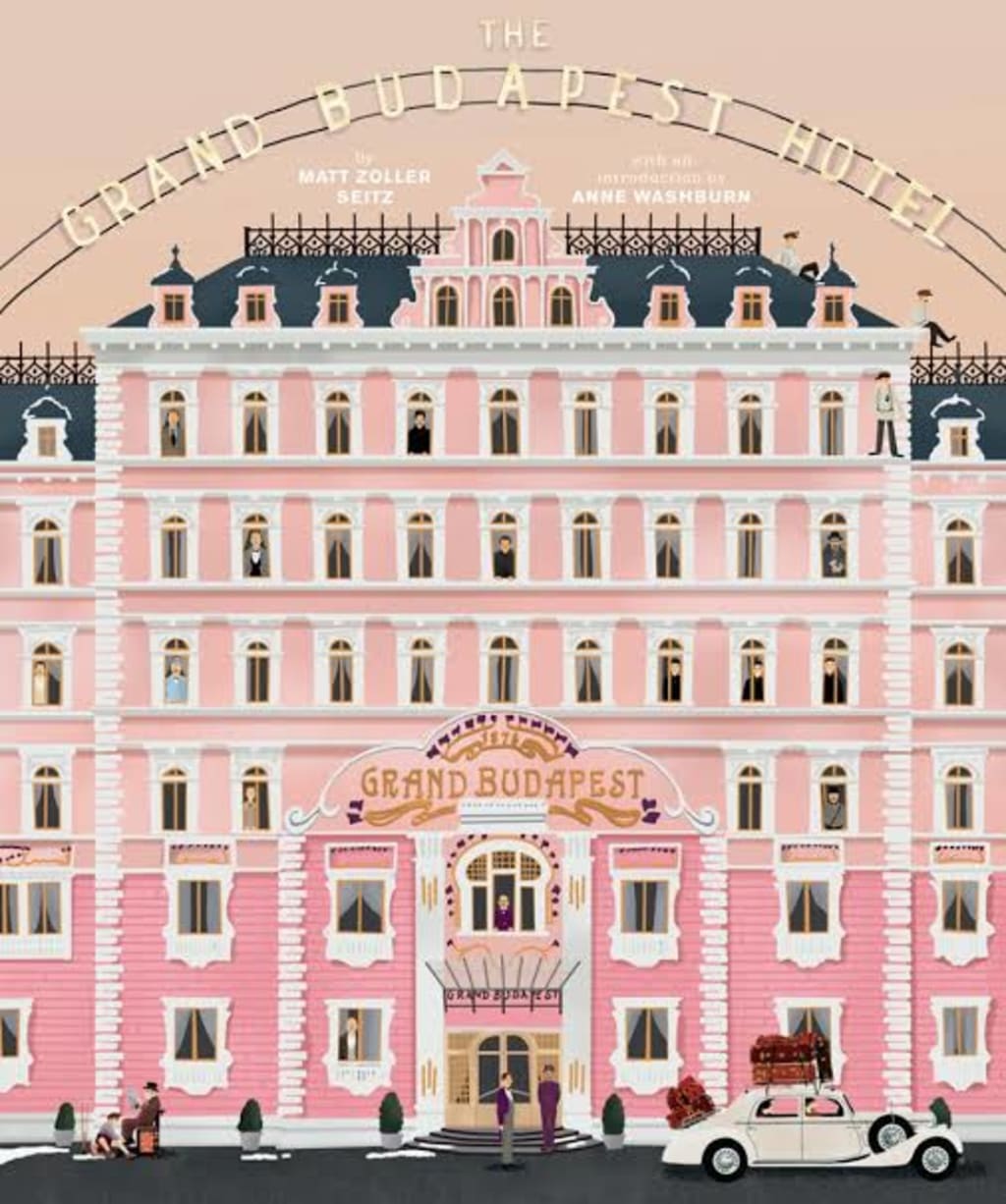
First shot: Gustave and Zero in the lobby. Pink walls. Purple uniform. Black bow tie. The elevator opens. People cross the carpet like ants in candy wrappers. No dialogue says old Europe. The color says it.
The Grand Budapest Hotel covers almost every frame in pink, and none of it looks cheap. The reason has little to do with pink itself.
Barbie uses plastic slides, fluorescent pools, bright cars. The saturation is high, the surface glossy. That pink wants to be seen as merchandise. The Grand Budapest Hotel uses old walls, frosting, faded postcards. The saturation is low, the tone grey and warm. It wraps around the eye instead of attacking it.
Two pink cars. One is dusty rose, old paint, as if it rolled out of the prewar years. The other is fluorescent, plastic, fresh from the shelf. Death-Barbie-pink lipstick reads bright at first, tiring at second. The pink on the Budapest wall reads old at first, then like time.
The film uses a whole range of pinks: smoky, salmon, pale brownish, rose grey, old-wall. The Mendl’s box is salmon. The string is powder blue. The uniform is pink-purple. The bow tie is black. The elevator, the phone booth, the subtitles: all carry pink. These tones differ in warmth, darkness, dirt, weight. Together they work like chamber music, not a megaphone.
Pink rarely stands alone. Powder-blue sky. Grey-blue mountains. Black banners. Black clothing. Black guns. Mint-green walls. Ginger-yellow carpet. During the prison break, tools hide in a pink cake box. Black shadows stretch across pink walls. Blue and pink dominate. Black and pink appear often. Black keeps the sweetness from floating away. Blue cools it. Green cuts it. Yellow warms it.
The frame becomes a macaron palette: pink, blue, green, yellow, black, purple, white. Each color holds its position. Nothing spills.
Wes Anderson also locks pink inside symmetry. The hotel facade is symmetrical. Windows align. The elevator is square. The phone booth is square. The cake box is square. Characters stand at the center. Pink sits inside geometry, packed into a delicate box. Order drains the frivolity and leaves a fragile beauty. It resembles old European etiquette: elegant, proper, dignified on the surface, crumbling underneath.
The neater the pink, the more it feels about to collapse.
That tension lives in the story. The Grand Budapest Hotel wraps war and death in sweetness. The pink belongs to memory, to the golden age the narrator recalls. Recollection filters it. Time softens it. Loss gives it a dreamlike light.
Mendl’s cake. Gustave’s perfume. Agatha’s birthmark. Zero and Agatha. The last decency of prewar Europe. Politeness. Dignity. Perfume. Poetry. Cake.
Then war arrives.
Gustave protects Zero on the train and is shot. Behind the elegant hotel is war. Beneath the laughter is massacre. The sweeter the pink, the colder the death. A cake box can hold escape tools. Behind the pink walls is the last decency before barbarism.
At the end, color drains from the image. Black and white. Pink gone. Blue gone. Green gone. Ginger yellow gone. Every tender color falls away.
The credits rise over black.
Pink stays in what came before.
The pink ribbon on Mendl’s box vanishes in the black-and-white frame.
That is all.
About the Creator
Jin
Writer of reamstories
https://reamstories.com/jin
Enjoyed the story? Support the Creator.
Subscribe for free to receive all their stories in your feed. You could also become a paid subscriber, letting them know you appreciate their work.
Comments
There are no comments for this story
Be the first to respond and start the conversation.