
Why Slow Travel Beats Checking Off Destinations — And Why 2026 Is the Perfect Year to Start
Slow travel reality
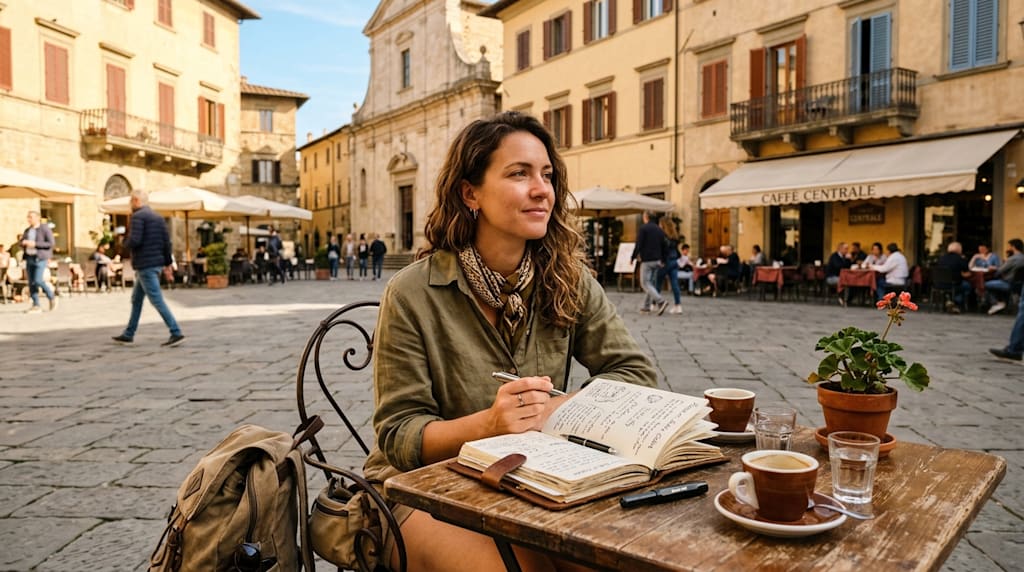
Three cities in ten days. Check. Forty-seven countries before forty. Check. The travel checklist mentality has defined how a generation approached exploring the world — and it's produced some of the most exhausting, photographically impressive, genuinely hollow experiences imaginable. Somewhere along the way, travel became about proving you'd been somewhere rather than actually being somewhere.
The antidote isn't a return to rare, once-in-a-lifetime trips. It's something structurally different: slow travel. And 2026 might be the year that more people finally make the switch.
The Cost of the Checkbox Approach
The logistics of checklist travel are genuinely stressful. You're perpetually in transit, perpetually disoriented, perpetually calculating how to maximise the limited time in each location. The excitement of arrival is systematically undercut by the knowledge that you have to leave again in forty-eight hours. Jet lag compounds. Souvenirs replace experiences. The pressure to document crowds out the capacity to actually notice.
There's a particular kind of exhaustion that comes from this style of travel — one that most people attribute to travel itself, when it's actually specific to this approach. I've spoken to people who returned from "dream trips" feeling like they needed a holiday to recover from their holiday. That's not travel fatigue. That's speed fatigue.
What Slow Travel Actually Means
Slow travel isn't necessarily about staying in one place for months or rejecting planes entirely. It's a structural orientation: the decision to spend enough time in a place to understand what makes it distinctive, rather than maximising the number of destinations visited.
In practice, this might mean spending three weeks in a single city rather than three days in three cities. It might mean returning to the same village four years running rather than chasing a new continent. It might mean taking the overnight train instead of the budget flight because the journey itself is part of the experience. The specifics vary; the underlying principle is constant. Depth over breadth.
The travel writer Pico Iyer has described how his most profound experiences came not from rushing toward new places but from learning to sit still in them. That advice sounds counterintuitive until you try it — and then it becomes obvious that rushing was the experiment and stillness is the answer.
Bhutan and the Slow Travel Proof of Concept
Bhutan has built its entire tourism model around this principle, and the results are instructive. The country limits visitors through a daily tariff, requires guided travel for most visitors, and charges significant fees that theoretically fund sustainable infrastructure. Whether or not you agree with every aspect of the Bhutanese model, the underlying philosophy is clear: presence is more valuable than volume.
The travellers who return from Bhutan consistently describe experiences that feel qualitatively different from their other trips. Not because the country is inherently more beautiful than others — though its landscapes are remarkable — but because the structure of the trip forces an attentiveness that rushed travel doesn't allow. You cannot consume Bhutan in a checklist manner. The format resists it.
Why 2026 Is the Inflection Point
Several forces are converging to make slow travel more accessible in 2026 than ever before.
Remote work normalisation has fundamentally changed the travel equation. When your income is location-independent, the pressure to compress travel into two weeks of annual leave disappears. You can spend a month in Lisbon and still maintain your income. The slow traveller and the digital nomad have more in common than either might admit.
Airbnb and the short-term rental ecosystem have matured to the point where living like a local in a foreign city is genuinely accessible, rather than a boutique option for wealthy travellers. Long-term stays come with discounts, and the platforms have added features specifically designed for remote workers: better wifi standards, longer-stay pricing, and verified review systems for work-friendly spaces.
Language translation apps have reached a quality threshold that removes one of the most persistent barriers to slow travel: the feeling that you can't function independently without speaking the local language. Google Translate and others can now handle real-time conversation translation, restaurant ordering, and navigation in most languages with reasonable accuracy.
The Emotional Dividend
Beyond logistics, something shifts when you travel slowly. The rushed traveller experiences a place. The slow traveller develops a relationship with it.
That relationship produces different memories: not of the Colosseum as a checkbox item but of the espresso bar two blocks from your rental where the owner learned your name by day four. Not of the Louvre as a highlights tour but of the afternoon you spent in a single gallery, sitting on a bench, watching how the light moved across a painting you hadn't heard of before. Not of a country as a cultural concept but as a collection of specific, irreplaceable moments.
These memories don't just feel better in the moment — they age better. Checklist travel produces photograph albums and good stories for dinner parties. Slow travel produces something rarer: experiences that genuinely changed how you see the world.
Conclusion
The checklist approach to travel served a purpose for a generation that grew up with limited vacation time and expensive, difficult-to-organise trips. That world has changed. In 2026, you have more capacity than ever to travel differently — to go slower, stay longer, and actually be present in the places you visit.
The question isn't whether slow travel is better. It almost always is. The question is whether you're willing to trade the dopamine hit of a new destination for the deeper satisfaction of actually knowing a place. The exchange rate is more favourable than you might think.
Start with one trip. Just one. Stay twice as long as feels comfortable. See half the sites. Talk to the people who live there. You might be surprised by how much you discover when you stop trying to see everything.
About the Creator
Enjoyed the story? Support the Creator.
Subscribe for free to receive all their stories in your feed.
Comments
There are no comments for this story
Be the first to respond and start the conversation.