


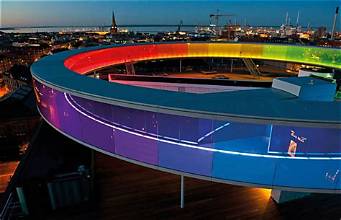
Situated in Aarhus, you can walk through a rainbow. The AroS Aarhus Art Museum has a technicolor halo. This is the creation of artist Olafur Eliasson’s artwork, Your Rainbow Panorama.
From the orange-yellow ports to the purple houses next door, the city as viewed through the shaded glass walls of the circular walkway is transformed into a new form of monochrome every few feet. The light coming in through the glass paints visitors in an equally strong light, making each person strolling through the 150-foot ring reflected in various colors.
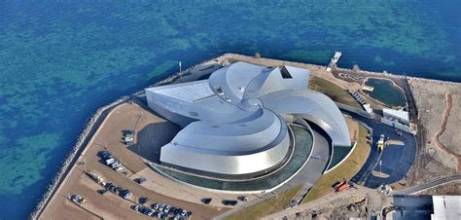
Situated in Kastrup, the Blue Planet is an aquarium resembling a swirl of metal tentacles. It is home to 20,000 fish and ocean creatures. The aquarium opened its doors in 2013. The futuristic Blue Planet features 3,000 of the animals that were in the old aquarium, along with 17,000 additional aquatic fauna, including hammerhead sharks, sea lions, and Europe's largest school of piranhas.
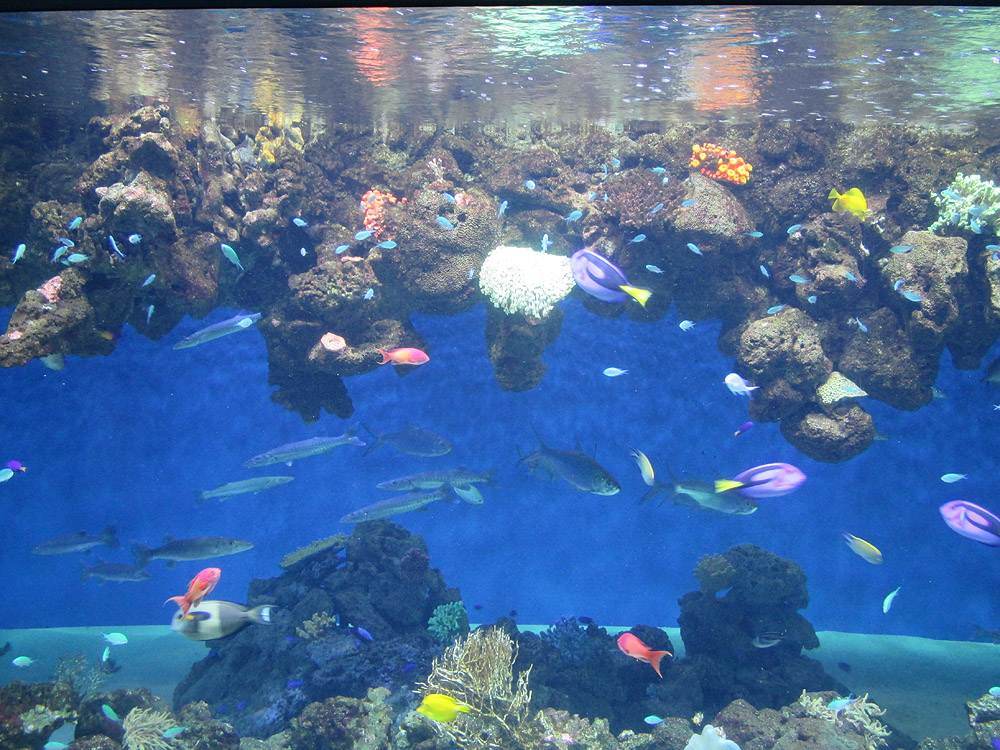
Ambient music accompanies walks down its hallways that have blue swaying lights to replicate the feeling of being underwater.
Located in Copenhagen, Cisternerne is an old subterranean reservoir that once supplied drinking water to the city from the 1850s to the 1930s. It was also the reflection pool for Frederiksberg Castle. In 1981, the cisterns were drained and covered.
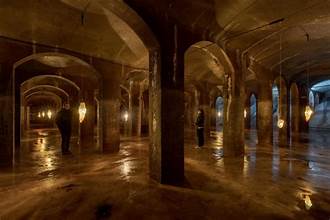
Afterward, they were used as an exhibition space for modern glass art until they were adopted by the Frederiksberg Museum. Today Cisternerne lies below Sondermarken Park and functions as a multimedia installation space. Two towering glass pyramids make the entrance and exit points. Underneath, impressive stalactites and stalagmites extend from floor to ceiling.
Artists make use of the unusual cavern setting to create impressive art. The dark series of tunnels are a great backdrop for light and video installations.
Situated in Klampenborg, Dyrehavsbakken ("The Animal Park's Hill") is the oldest amusement park in the world, opening in 1583. (pictured above)
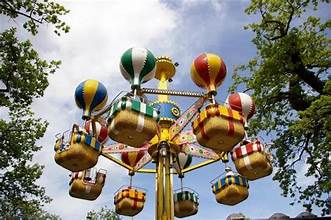
Bakken was a gathering place for those seeking clean water and beautiful scenery. Then, in 1669, King Frederick III closed the grounds to the public and began using them as the private royal hunting grounds. This remained the case until the park was reopened in 1756 by King Frederick V. After the reopening, performers and vendors came to greet visitors and see that they enjoyed the rides. Beyond the park, the old royal hunting grounds are full of wild deer, beautiful trees, and some of the only hills in Denmark.
Once you have enjoyed the rides and had fun, come back to the park in the late autumn when all the vendors have left. The gates are left open, and visitors can wander through the now quiet and empty amusement park and then go trekking into the autumnal forest looking for bucks and abandoned wooden structures.
In and around Copenhagen are what are known as the Forgotten Giants. Danish sculptor Thomas Dambo specialized in reclaiming and recycling materials. Using scrap wood collected from old demolished buildings and felled trees, he created sculptures placed off the beaten track, each accompanied by a poem engraved on a nearby stone. To make it more interesting, there is a “treasure map” of the area where “X” marks the spot where each giant can be found. Each giant is named after the volunteers who helped build it.
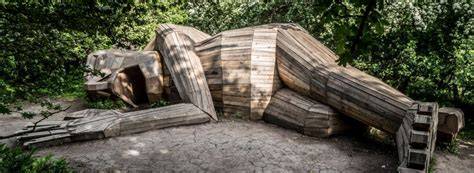
There is Sleeping Louis, a giant providing shelter for the homeless. This giant sculpture can be entered through his gaping mouth.
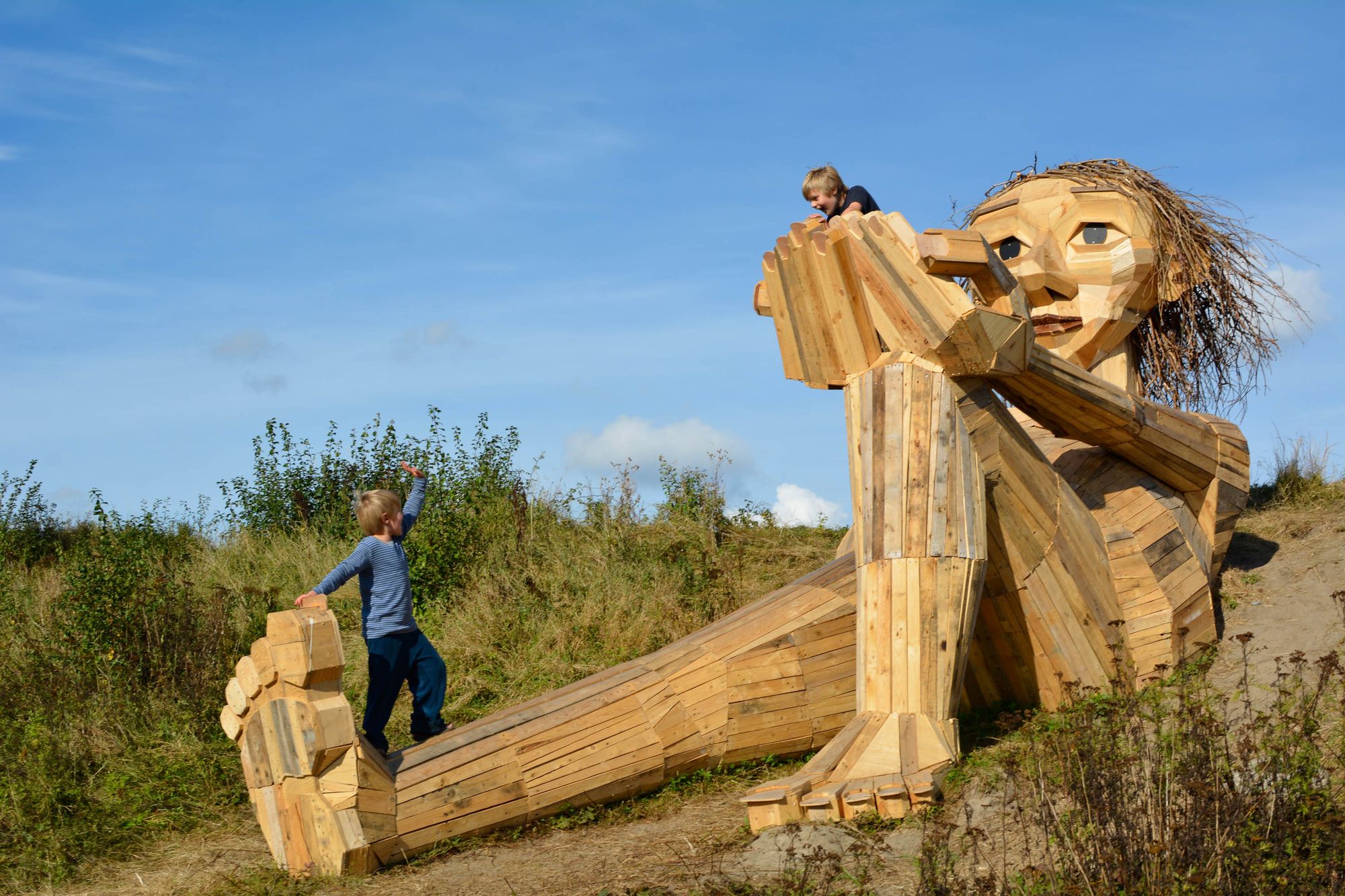
Hill Top Trine has hands doubling as an overlook for visitors to climb into and enjoy the view along with her.
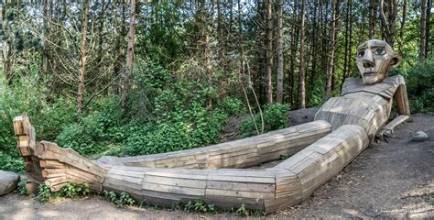
Thomas on the Mountain has such long legs that many people can sit here and relax.
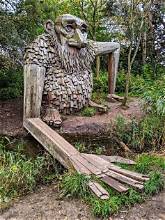
Teddy Friendly extends his arms to help people cross a stream.
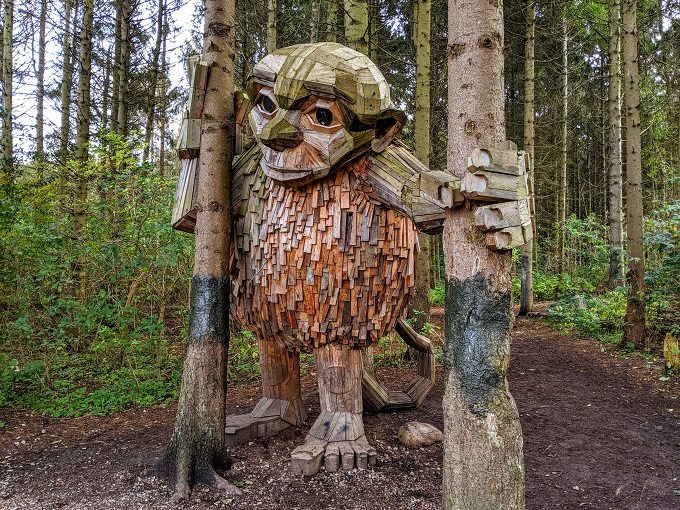
Little Tilde looks across a small lake and houses 28 built-in birdhouses.
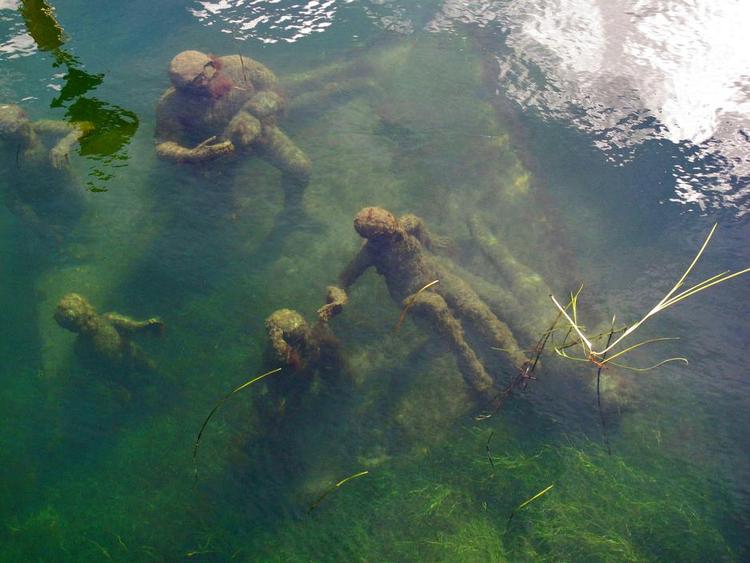
The Danish ballad, “Agnete og Havmanden,” tells the story of Agnete, who leaves her family to start a new life in the sea with a merman, for a while... Since 1992, an underwater sculpture by the Danish artist Suste Bonnén has brought the story from fantasy into reality under the Hojbro Bridge in central Copenhagen.
This underwater sculpture depicts the merman whom Agnete lived with benath the sea and the seven-mer children they had. Later, she returned to her life on land, leaving behind her underwater family, who now mourn her.
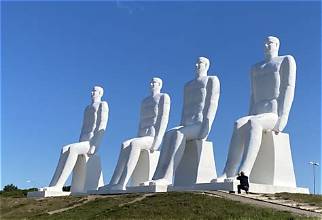
Situated in Esbjerg, the artwork that was unveiled in 1995, the quartet of sculptural titans known collectively as Man Meets the Sea is a timeless tribute to man's contemplative nature. It is the creation of the Danish sculptor and artist Svend Wiig Hansen, and is meant to have a universal appeal to represent all of man as opposed to any one ethnicity. These tall stark white statues are a sight to behold. They sit overlooking the North Sea.
Strange as it might seem, in Nykøbing Fårø, strange and occult objects were discovered in a forgotten room of a house.
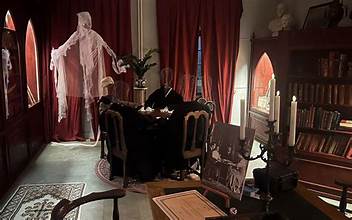
The Museum Obscurum is the curio cabinet of an eccentric 19th-century collector named Cornelius S.C. Rodder. This wealthy man started collecting anything and everything that captivated him, and after a visit to London, his interest turned towards the mysterious, the cryptozoological, and the occult.
His collection could be accessed through a secret entrance in his house where he kept a vampire skeleton, a collection of fairies, and other supernatural specimens. It wasn’t until 2017 that all this was rediscovered in a series of crates behind the locked door of a forgotten room.
The Museum Obscurum reconstructed Rodder’s home and displayed his strange and unusual collection in the study.
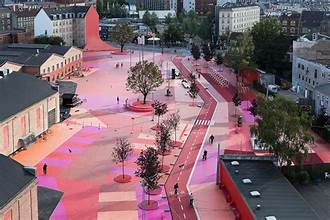
Situated in Copenhagen, Superkilen Park, which opened in 2012, has transformed a part of the city into a multicultural celebration. By mixing design elements from across the globe with futuristic high art touches, including a massive public thoroughfare that is completely covered in bright pink geometry.
It is located just north of the city center. The space has been divided into three different zones – the Red Square, the Black Market, and the Green Park. The main themes of each section are presented in a stark, high-art motif, making it all look like a psychedelic park of the future.
The sections of the park have benches, lamps, and features taken from more than 50 different countries. All together, Superkilen Park creates the sense of futuristic global culture mixing and colliding in one space.
About the Creator
Rasma Raisters
My passions are writing and creating poetry. I write for several sites online and have four themed blogs on Wordpress. Please follow me on Twitter.
Enjoyed the story? Support the Creator.
Subscribe for free to receive all their stories in your feed. You could also become a paid subscriber, letting them know you appreciate their work.
Comments
There are no comments for this story
Be the first to respond and start the conversation.