
Twenty-Four Hours in Baltimore, As I Would Have You Spend Them
In the Voice of Edgar Allan Poe

You have asked me, dear reader, how one ought to pass a day in Baltimore, the city that claimed me in life, and more permanently, in death. I confess I find the question amusing, for I was never a man who kept regular hours, nor one inclined toward sunlight when a good shadow was available. And yet, if you insist upon a schedule, I shall give you one. Follow me, if you dare, from the hour before dawn until the bells of Westminster toll again at midnight.
Before Dawn — The Hour of the Raven
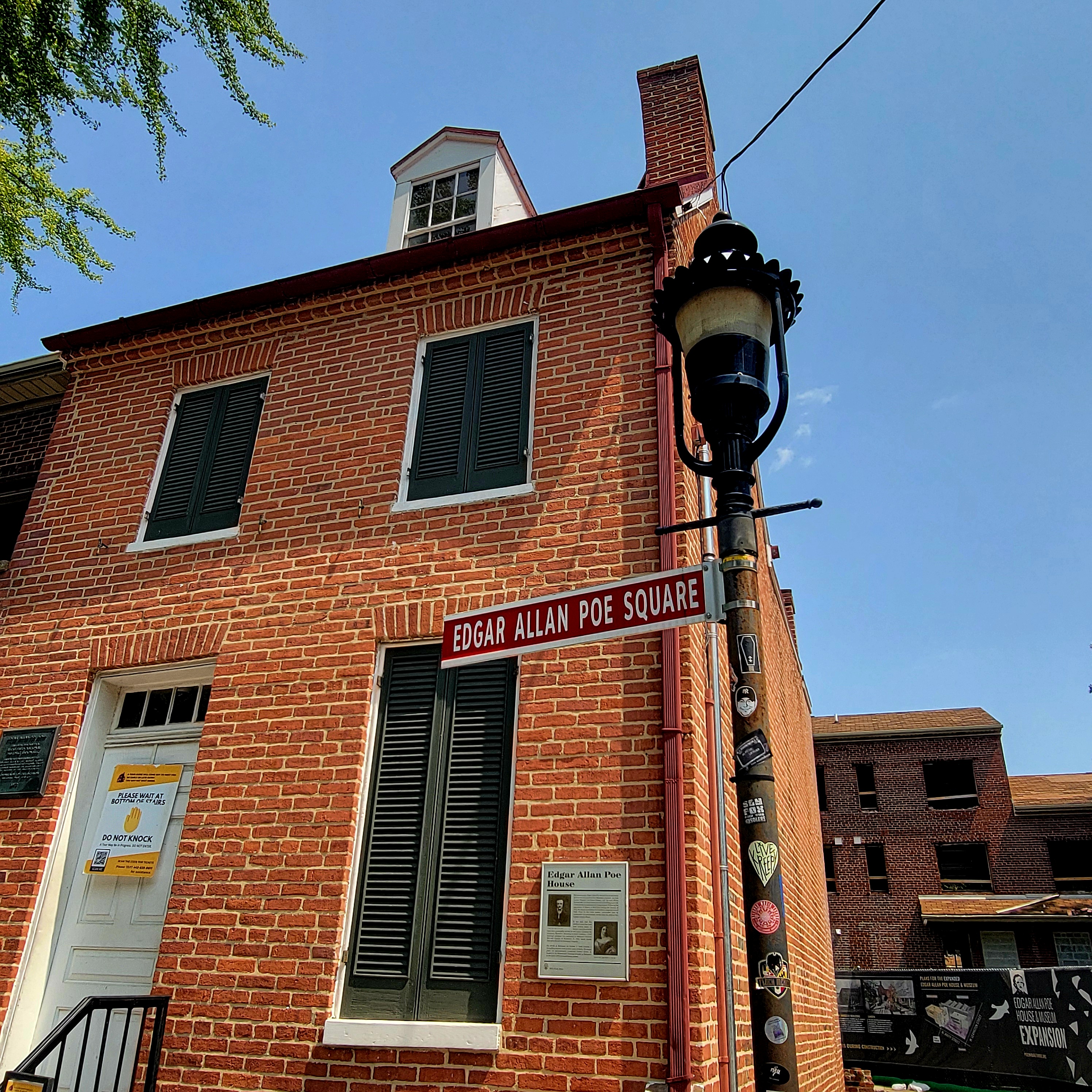
We begin, as all my best tales do, in darkness. There is a different quality to Baltimore before sunrise, a damp, close air that clings to Amity Street like a shroud that has not quite finished settling. I would have you stand outside the little brick rowhouse at 203 Amity Street, where I once lived cramped alongside my aunt Maria, my cousin (and later, my wife) Virginia, and my ailing grandmother. It is a modest house. Do not expect grandeur; expect instead the sort of poverty that sharpens a mind rather than dulling it.
Stand there a moment before the museum opens. Listen. The city has not yet woken. This is the hour I did my best and worst thinking, the hour when a man is alone enough with his thoughts that they begin to sound like company, or like a complaint, depending on the night.
Morning — Coffee, and the Weight of Ambition
When the sun finally troubles itself to rise, make your way toward the harbor, to any small coffeehouse that will have you. I am told there are dozens now, serving drinks with names I would not have recognized, involving foam shaped like leaves. Order something black and bitter. I never had patience for sweetness in the morning; sentiment is for the evening, when the guard is down.
Sip slowly. Read something, a newspaper, if you can still find one in print, or better yet, a slim volume of verse. I built my reputation, such as it was, on relentless, grinding literary labor: reviews, tales, poems, all written for wages too small to mention, in rooms too cold to be comfortable. If you wish to understand me, understand first that I was a working man of letters before I was anything resembling a legend. Baltimore in the morning has that same unglamorous industry to it still, people hurrying to labor, coffee in hand, dreams deferred to the evening hours.
Mid-Morning — The Poe House and Museum
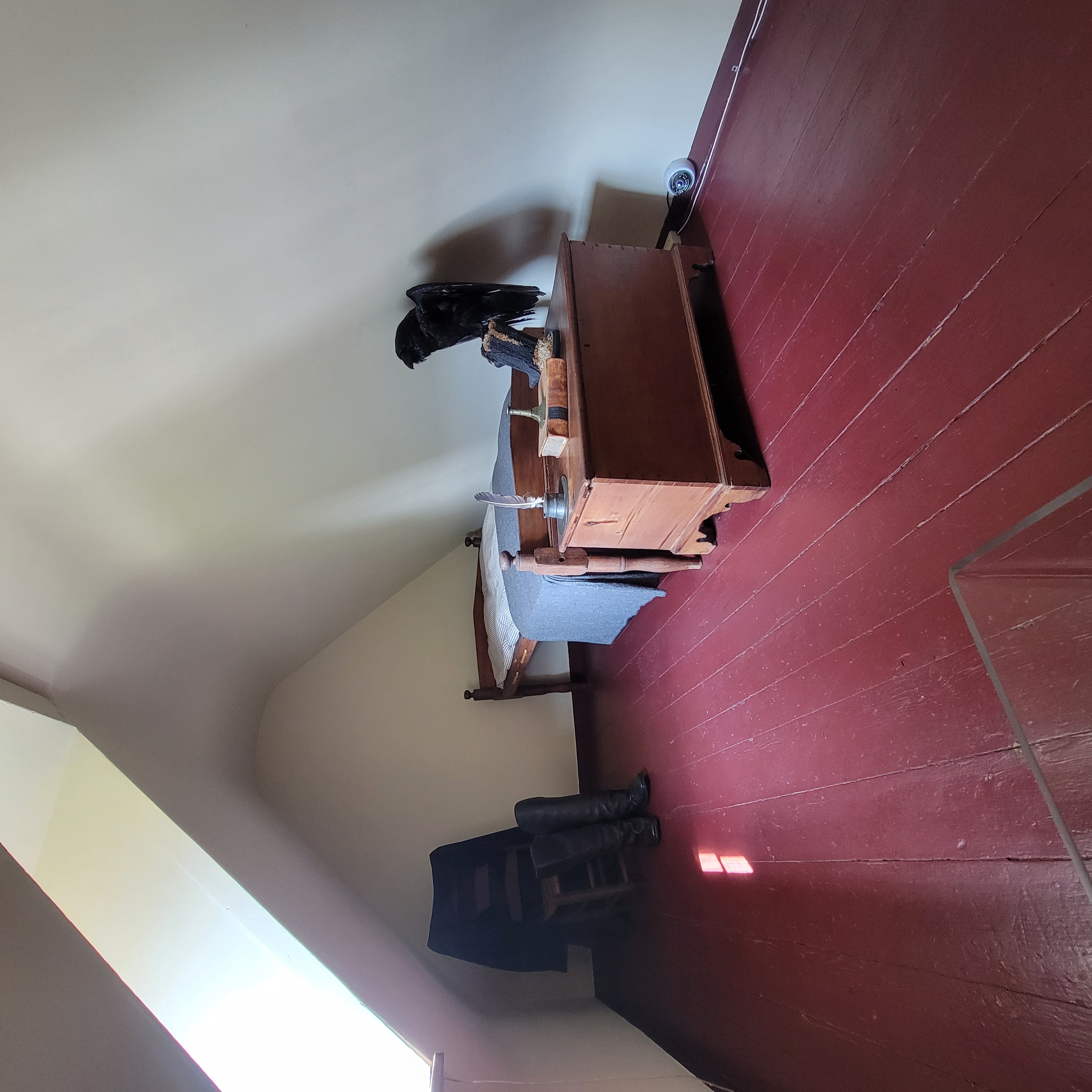
Now, to Amity Street in earnest. Let the museum's doors open to you. Inside, you will find my writing desk, smaller than you might expect, for I never needed much room in which to conjure horror, and rooms that held four people in a space that would today seem fit for one, and barely that.
Touch nothing you are not permitted to touch, but look closely. Look at the low ceilings, the narrow stair, the single window through which what little light we had came filtering in like a rumor. This is where I began drafting some of my earliest work, where Virginia and I first grew close before our eventual marriage, where the ordinary business of a struggling family unfolded beneath the same roof from which, later, extraordinary and terrible tales would emerge.
I want you to understand something the tour guides may gloss over: I was not always the gaunt, doom-laden figure of legend. I laughed here. I worked here. I loved here, in whatever broken and difficult way I was capable of loving. Do not let the popular imagination flatten me into nothing but gloom. A house tells you the truth a legend cannot.
Noon — Fell's Point and the Salt Air
By midday, walk east toward Fell's Point, where the cobblestones remember centuries of sailors, smugglers, and men of uncertain fortune, my kind of company, in truth. The harbor air carries salt and tar and the ghost of old rum. Find a tavern with dark wood and low light. The Horse You Came In On Saloon will do nicely, and it will tell you, with a wink, that it is the very place where I supposedly took my final drink before my mysterious collapse in the autumn of 1849. I neither confirm nor deny the tale. A writer of mysteries ought to leave at least one behind that is entirely his own.
Eat something plain and hearty. Crab, if you have the stomach for Maryland's obsession, though I confess I never much cared for the mess of shells and mallets. A man of letters prefers his meals as tidy as his sentences.
Afternoon — Wandering the Old Streets
The afternoon is for walking, and Baltimore rewards the walker who is patient with her. Wander without great purpose through the old downtown blocks, past buildings that have been renovated a dozen times over but still hold, somewhere in their bones, the likeness of the city I knew. This town was never wealthy in the way of Philadelphia or Boston, and I think that suited me. There is less pretense in a hungry city.
If your feet tire, rest in a park bench beneath one of the old shade trees, and consider this: I died here, at just forty years old, found delirious and in another man's clothes outside a public house on Lombard Street, unable to account for the days prior. The circumstances remain unresolved to this day: drink, disease, a rigged election scheme known as "cooping," rabies, none proven, all suspected. I leave you, as I left the coroner, with more questions than answers. It is, I think, a fitting mystery for the man who invented the detective story, only to become one himself.
Late Afternoon — Westminster Hall and Burying Ground
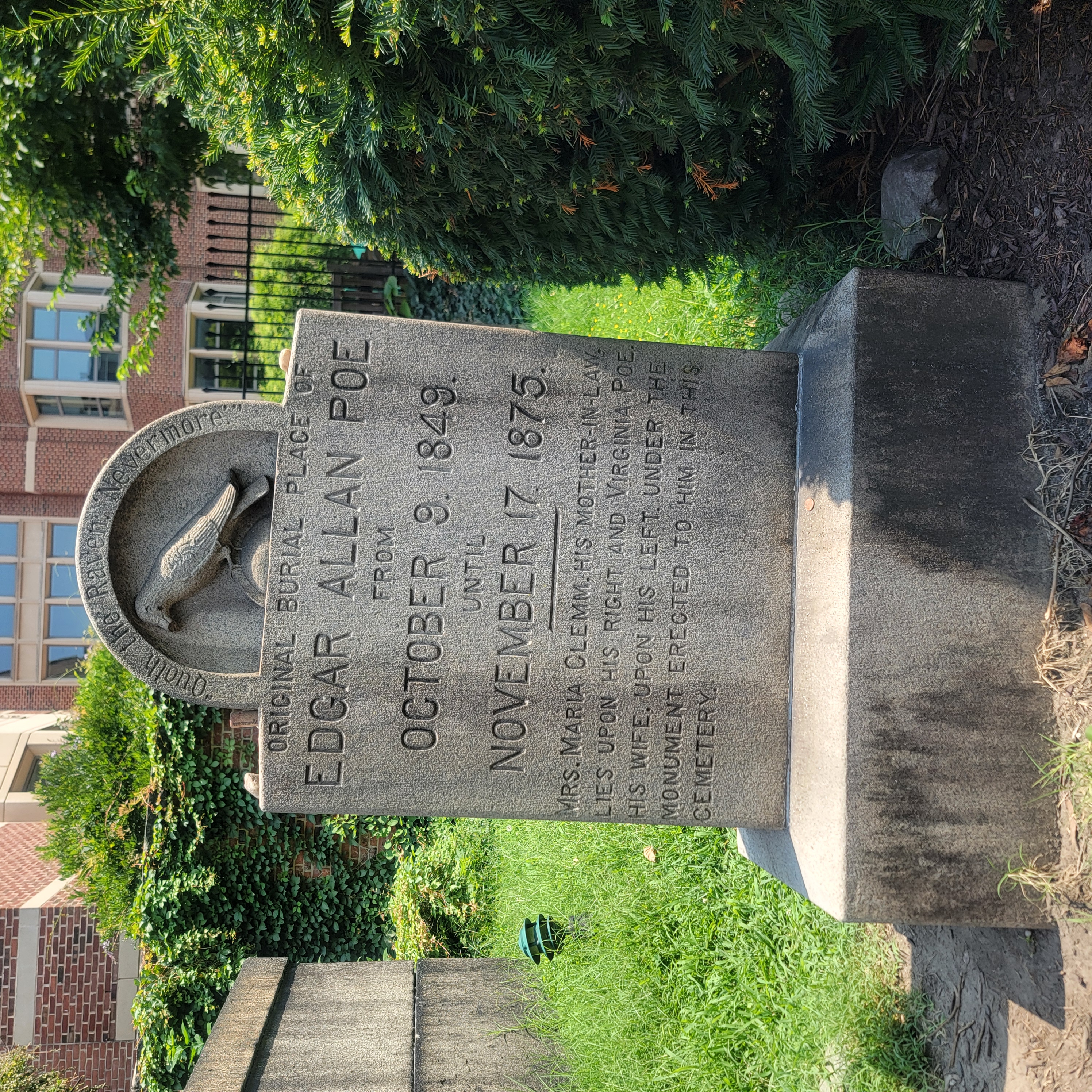
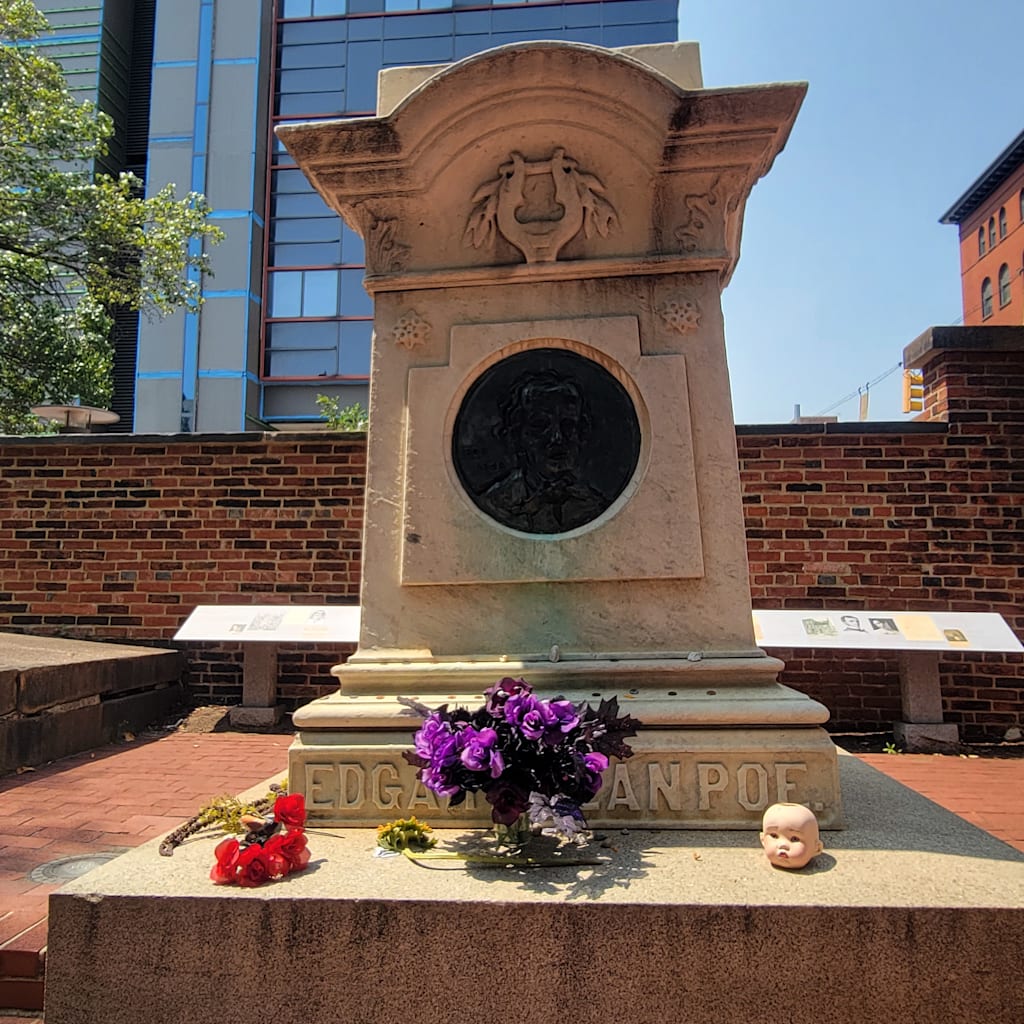
As the light begins to slant gold, make your way to the corner of Fayette and Greene Streets, to Westminster Hall and its ancient burying ground, older than the city's grander cemeteries, its headstones crooked like teeth in an old man's mouth. This is where you will find me, or what remains of the argument over where precisely I rest, since my body was moved once already, from an unmarked grave in the rear of the yard to the prominent monument near the street corner, decades after my death.
Stand before the monument. Note the medallion, my stern likeness cast in relief, and the raven perched nearby, someone's idea of a fitting tribute, though I might have preferred something less literal. For years, an unknown visitor left three roses and a half-bottle of cognac at this very spot every January, on the anniversary of my birth, a tradition maintained in secret from 1949 until it silently ceased sometime after 2009. No one ever caught him. I rather liked that. A mystery, again, refusing to resolve itself, which is, I think, the only honest way a mystery should end.
Walk the burying ground itself as dusk gathers. The catacombs beneath the hall, when open for tour, hold their own silent dread: narrow brick vaults where Baltimore's dead have rested since before this nation had settled on its final shape. It is not a place for the fainthearted, but then, neither was my writing, and you have come this far.
Evening — Supper and Story
As true dark falls, find a restaurant with candlelight, if such a thing still exists in your age of harsh electric bulbs. Order wine, though I counsel moderation, my own relationship with booze was complicated enough that I would not wish it repeated in my honor. Talk with your companions, if you have them, about fear, not the cheap fear of a startled scream, but the slow, creeping variety, the type that builds in a locked room, a beating heart beneath the house, a black cat's single white patch of fur. That is the fear I gave my life to crafting, sentence by careful sentence.
Midnight — The Bells Toll
And now, at last, return to Westminster Hall, or as near to it as you are permitted after dark. Stand outside the iron gate. Listen for the bells. There is something in Baltimore's night air, I felt it in life, and I daresay I feel it still, that makes the imagination restless. The gas lamps of my era are gone, replaced by cold white light, but the shadows they cast are, I think, exactly the same shadows I once knew.
This is where I leave you, dear traveler, at the gate of my own resting place, at the hour when all good tales either end or truly begin. Nevermore, perhaps, shall I walk these streets in the flesh, but you have walked them for me today, and in that, some small part of me stirs awake again.
Quoth the raven: come back and visit.
About the Creator
Tim Carmichael
Let your becoming be louder than your fear, and your smallest steps become the road you once thought impossible to walk. An Appalachian poet and cookbook author my book Beautiful and Brutal Things is on Amazon, Link 👇
Enjoyed the story? Support the Creator.
Subscribe for free to receive all their stories in your feed. You could also become a paid subscriber, letting them know you appreciate their work.
Comments
There are no comments for this story
Be the first to respond and start the conversation.