
Twenty-Four Hours Beneath the Vatican
The real Bible
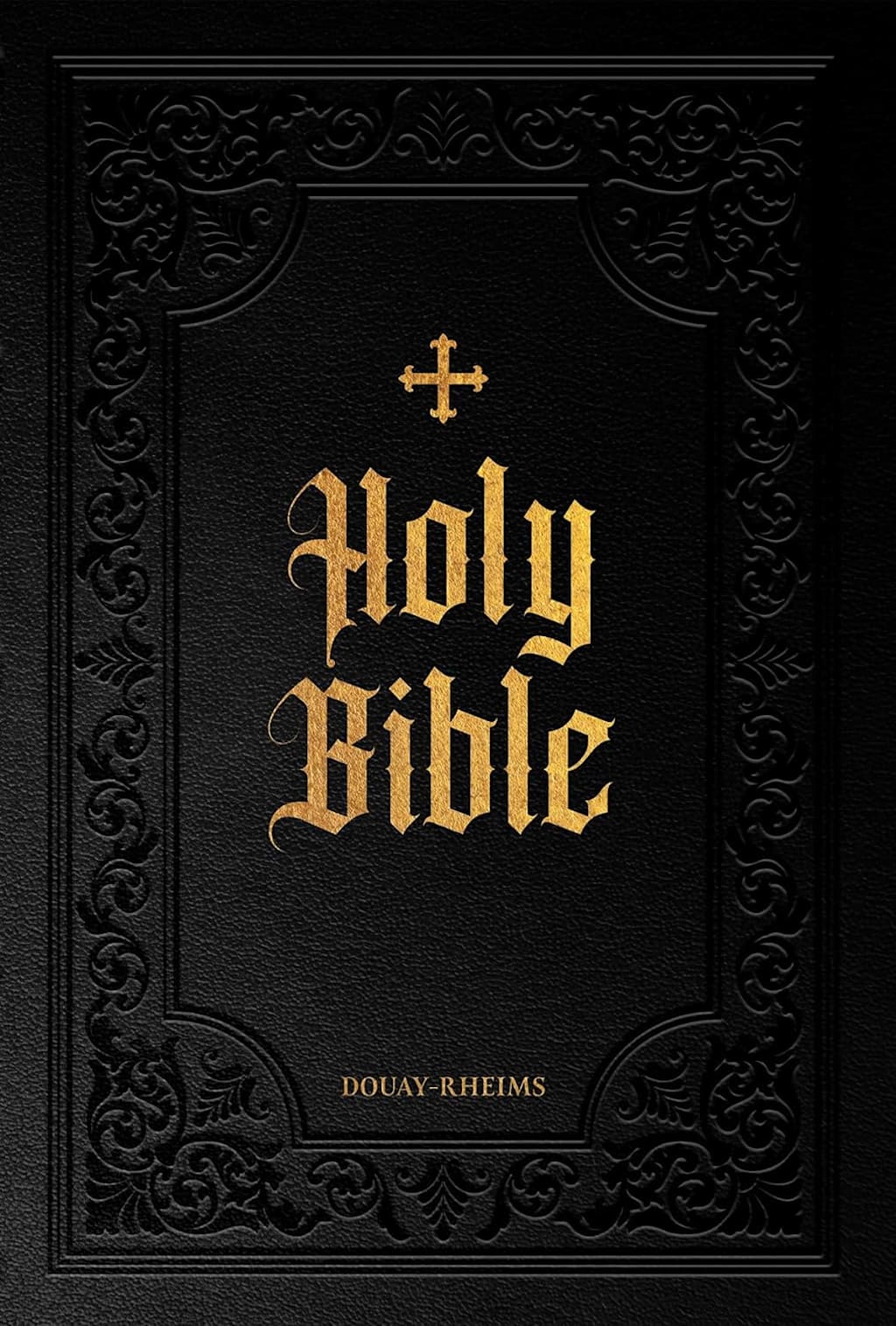
I had always wanted to go to Rome.
Not simply to visit it, but to breathe it in. I wanted to stand inside its ancient churches and walk where emperors, soldiers, artists, popes, merchants, and ordinary people had walked thousands of years before me. I wanted to see the Colosseum with my own eyes, wander through the remains of ancient Rome, admire Roman and Greek art, throw a coin into the Trevi Fountain, and stand beneath the magnificent dome of St. Peter’s Basilica.
But there was one place I wanted to see more than all the others.
The library of the Vatican.
Not the rooms tourists might glimpse. Not the collections described in guidebooks.
I dreamed about the hidden part.
The place beneath the Vatican where, in my imagination, centuries of human history were sleeping in darkness.
And somehow, impossibly, I had been given twenty-four hours there.
My agreement allowed me to enter once a year for twenty-four hours to conduct my studies. I could take almost nothing inside. No bags filled with personal belongings, no food, no unnecessary equipment.
There was one exception.
Coffee.
I was allowed a pot of coffee.
Gloves, however, were mandatory.
I walked down a long passageway until I reached a massive wooden door. It looked ancient, with enormous old hinges that seemed as though they had belonged there for centuries. But someone had installed a thoroughly modern security system beside it.
First came a digital code.
Then a fingerprint scan.
Finally, a scan of my eye.
I waited.
For one second, nothing happened.
Then I heard the lock release.
The enormous door slowly opened.
I stepped through.
And I was in heaven.
There were books everywhere.
Rows and rows of them disappeared into the distance. Thousands upon thousands of shelves surrounded me. Books, manuscripts, folders, boxes and papers occupied almost every available centimeter.
The air was cool and crisp, carefully controlled to protect everything stored there, but underneath it was the unmistakable smell of old books.
Anyone who loves books knows that smell.
Paper. Leather. Dust. Ink. Time.
I stood still and breathed it in.
I had heard stories that the Vatican's collections extended for kilometers. Standing there, I could believe almost anything. The passages seemed endless.
Some of the oldest books were enclosed inside enormous glass cases. Thermometers and other equipment monitored the environment around them, making sure temperature and humidity remained constant.
I walked slowly.
Very slowly.
I had twenty-four hours, and yet suddenly twenty-four hours seemed ridiculously short.
My purpose was not simply to admire the library. I had come looking for something.
An ancient Bible.
Not a modern translation. Not a printed edition produced during the last few centuries. I wanted to find an old manuscript, something that might take me as close as possible to the people who had first written and preserved those words.
I began reading the labels on the shelves, trying to understand how everything had been organized.
There had to be a system.
But I couldn't find it.
I looked at one shelf, then another, trying to discover a pattern in the numbers, letters and descriptions. Finally, I approached one of the security guards.
"How is everything organized?"
He looked at me.
I waited.
No answer.
Apparently, discovering the system was going to be part of my adventure.
So I kept walking.
Every few meters there was a table and chair where scholars could study the material. A handful of specialists were already working quietly. I assumed most of them worked for the Vatican or had received special permission to be there.
One person carefully examined a manuscript.
Another studied individual sheets of paper.
Others were scanning documents, preserving them digitally before age could claim what centuries had somehow spared.
I stopped just to watch them.
A piece of paper was placed beneath the scanner.
An image appeared.
Another tiny piece of history had been saved.
I shivered with excitement.
This was where I wanted to be.
This was where I belonged.
I didn't care that there were people down there who knew infinitely more than I did. They could probably read languages I couldn't even identify. They had spent their lives studying history, theology, ancient manuscripts and preservation.
I had curiosity.
Sometimes curiosity is enough to open the first door.
Two hours had passed.
I had barely made my way down the first long aisle.
And then I saw it.
At first, I didn't understand what I was looking at.
A huge book lay on an equally enormous table.
I stopped.
The book seemed almost as tall as I was.
Something about it pulled me toward it.
I stepped closer.
My heart began pounding.
Could this possibly be what I had been searching for?
I sat down.
For several moments, I simply stared at it.
The cover was old—extraordinarily old. Its surface had wrinkles and scars, almost like human skin that had survived a very long life.
My gloved hands hovered above it.
I was almost afraid to touch it.
Then, very gently, I placed my fingers on the cover.
Something changed.
Of course, perhaps nothing really changed around me.
Perhaps it was only me.
But suddenly the library seemed quieter.
The people disappeared from my awareness. The shelves disappeared. Rome disappeared.
Even time seemed to disappear.
I opened the book.
The writing was difficult to understand. The letters were unfamiliar, formed by a hand belonging to a human being who had lived unimaginably long ago.
I tried to picture that person.
Who had held the writing instrument?
Where had they been sitting?
What could they see from where they worked?
Did they know that someone might still read those words centuries later?
I began deciphering what I could.
One line.
Then another.
Slowly, painfully, word by word.
And with every sentence, I felt myself slipping backward through time.
The modern world vanished.
There were no airplanes above Rome. No cars outside. No phones. No internet. No electric lights.
There was only the story in front of me.
I could see ancient streets in my imagination. I could hear voices. I could picture people walking through dusty villages and crowded marketplaces. History was no longer something safely locked inside a textbook.
It was alive.
I kept reading.
I forgot my coffee.
I forgot to eat.
I forgot to stand up.
I even forgot that somewhere above me was the Rome I had dreamed of seeing—the Colosseum, the Trevi Fountain, St. Peter's Basilica and all those magnificent churches.
They would have to wait.
Because I had found something better.
I had found time.
At some point, someone touched my shoulder.
I jumped.
A security guard stood beside me.
"It's time."
I stared at him.
Time for what?
Then I understood.
My twenty-four hours were over.
"No," I said.
Surely he was mistaken.
I looked at the clock.
He wasn't.
Twenty-four hours had passed.
To me, they had felt like seconds.
I looked down at the enormous book.
After all those hours, after everything I had experienced, I had hardly made any progress at all.
There were still countless pages waiting for me.
And beyond this one book stood kilometers of shelves filled with millions more words, thoughts, secrets, histories and forgotten human voices.
I carefully closed the cover.
For a moment, my gloved hand rested on it.
Then I stood.
I walked back through the endless rows of books toward the enormous wooden door.
The security system released the lock, and the door opened.
Rome was waiting on the other side.
Next year I would return.
I already knew exactly where I would go.
Past the wooden door.
Past the guards.
Down the first aisle.
To the enormous table.
To the ancient book waiting there.
And then I would continue exactly where I had stopped.
On the next page.
About the Creator
Enjoyed the story? Support the Creator.
Subscribe for free to receive all their stories in your feed. You could also become a paid subscriber, letting them know you appreciate their work.
Comments
There are no comments for this story
Be the first to respond and start the conversation.