
The City Without a Sidewalk Sizzle
Shanghai has no hawker stalls, no plastic stools, no 3 a.m. noodle chaos. What it has instead is a masterclass in urban trade‑offs – and a version of "street food" you've never considered.
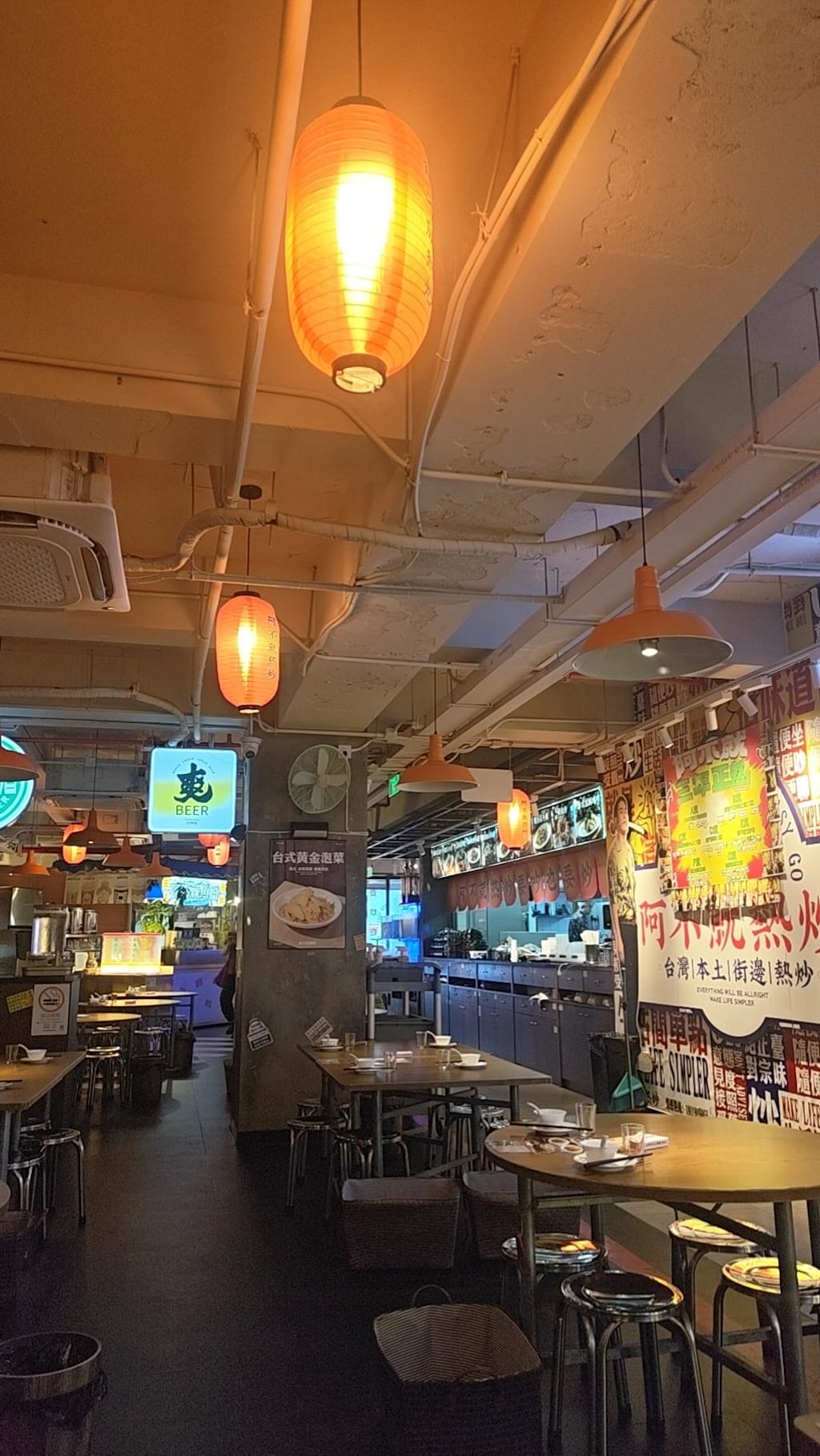
Saturday, 10 p.m. on Dingxi Road.
The pavement is clean. Three shared bikes lie tipped over against a flower bed. Under the streetlight, an old woman sits by an ATM booth, selling gardenias wrapped in old newspaper, five yuan a bunch. She doesn't call out. In half an hour, no one stops.
At the same hour in Nanjing's Sanqi Alley, the smoke from a fried‑noodle cart would drift up to second‑floor windows. In Chengdu's Yulin Road, plastic stools spill from shop fronts into the bicycle lane. Shanghai is different. Walk the entire length of Huaihai Middle Road – you see no pushcart, you smell no frying oil.
Shanghainese do eat late‑night snacks, but indoors. The Xiao Yang Sheng Jian sign stays lit until 1 a.m. FamilyMart's doorbell chimes every two minutes.
Why no carts?
In 2009, Shanghai implemented its city‑appearance and environmental‑hygiene responsibility system. Over the following decade, penalties for unlicensed street vending tightened year by year. A city‑management officer in Huangpu District once told a reporter: "After a complaint, we arrive within 15 minutes. We show up, the vendor leaves; we come back, they come back. After three rounds, they don't return."
Accommodation exists. Changli Road, Dingxi Road, and Daxue Road all have registered night‑market stalls. Each vendor holds a health certificate and a food‑business license, with at least 1.5 metres between stalls and oil‑proof mats on the ground. The problem: the cost and time to obtain these documents filter out most itinerant vendors. Those who remain are no longer "street carts" – they are "licensed temporary stall operators."
Residents themselves are picky.
Outside a wet market in Changning District, at the cooked‑food counter, a woman in pyjamas points at a tray of smoked fish and asks the vendor: "What time was this made?" "Eight this morning," he says. She leans in to read the production‑date label, then walks away without buying.
This gesture might seem fussy elsewhere; in Shanghai it is routine. Shanghainese have a habit – they ask for origin. Not just with street vendors; they flip over meat packages in supermarkets too. If something cannot tell you where it came from, when it was made, and what went into it, they don't put it in their mouths.
Street carts cannot answer those three questions. Where is that skewer's meat from? Unknown. How often is the frying oil changed? Unknown. Is the rinse water tap water? Unknown. Shanghainese do not swallow unknowns.
Too many alternatives.
A FamilyMart black‑pepper beef bento costs 12.8 yuan and takes two minutes in the microwave. A Lawson grilled‑chicken onigiri costs 6.5 yuan and needs no preparation. In central Shanghai, one of these 24‑hour stores appears roughly every 300 metres.
A programmer who leaves his office in Lujiazui at 10 p.m. passes a FamilyMart, a Lawson, and a 7‑Eleven on his way to the metro. He picks a bento, eats it at the high stool inside, and finishes in under eight minutes. If he insists on wok‑fried food, he walks another 200 metres to a Chaoshan congee place open until 3 a.m. The kitchen is open; he can see the cook's wok from the sidewalk.
If a street‑cart fried noodle still existed, it would cost about 15 yuan, more than the bento, with a wait and no seat. After that math, a cart is simply worse value – more money, longer wait, no seat.
There is another layer, hard to name, but it matters.
At the entrance of an old lane in Jing'an District, an elderly uncle passes a tourist holding a grilled skewer. He frowns – not because of the smell, which is mild – but because of the yellow‑brown grease stain on the vendor's glove, between his index and middle fingers. The uncle says nothing, takes a two‑step detour, and walks on.
The Shanghainese word qing shuang does not merely mean "clean." It includes decency, order, and not settling for less. A bowl of small wontons in a white porcelain bowl, with clear broth, dried shrimp and laver each in their place – that is qing shuang. Put the same wontons in a plastic bag, carry them while sipping the soup – that is not qing shuang.
Shanghainese are raised with one lesson: if you eat in public, sit down; do not eat while walking. Walking while eating looks sloppy. Street carts by nature imply "eat while walking" or "crouch and eat." That runs against the lived experience of most people in this city.
So they have found another way.
At the mouth of a lane, there is an old noodle shop called Lao Di Fang. It opens at 6 a.m. The owner remembers which regulars want their noodles firmer or softer. On the counter, freshly rolled wonton skins sit beside a basin of minced pork covered with a cheesecloth. No menu on the wall – regulars have it memorised. No tables outside. Those waiting line up against the wall, single file, not blocking the path.
This is Shanghai's version of yan huo qi (the buzz of daily life). It is found not on the road, but behind doors. Not on tricycles, but behind fixed stoves. It is built not on cheapness, but on the certainty that "you will come back tomorrow."
In recent years, Shanghai has piloted "outdoor seating" permits. Restaurants with storefronts may place two or three tables outside, provided they lay oil‑proof mats, leave the blind lane clear, and bring everything inside by 10 p.m. The city draws a clear line: outside is public passage, not to be occupied; inside is business space, allowed to be warm and lively.
Closing
One June morning, on Yuyuan Road. A rice‑ball stall sits by the side gate of a residential compound. No shouting. Only an A4‑sized price list taped to the counter. A city‑management van drives past – it does not stop.
The vendor comes at 6 a.m. and leaves at 9 a.m., three years running. He lays a grey felt mat on the ground. When packing up, he wipes the counter with a rag and takes all his rubbish away in his own bag. None of the neighbours has ever filed a complaint.
When he leaves, nothing is left on the ground. Not even a drop of oil.
About the Creator
Jin
Writer of reamstories
https://reamstories.com/jin
Enjoyed the story? Support the Creator.
Subscribe for free to receive all their stories in your feed. You could also become a paid subscriber, letting them know you appreciate their work.
Comments
There are no comments for this story
Be the first to respond and start the conversation.