volunteer travel
Volunteer travel trips give something more than just fond memories; tips and recommendations to give back while you Wander.
Breaking Global Travel Records. AI-Generated.
Travel has always inspired people to push boundaries. For centuries, explorers crossed oceans, deserts, and mountains in pursuit of discovery. Today, while modern transportation has made the world more accessible than ever, a new generation of adventurers continues to challenge the limits of what is possible. They are not searching for new continents or uncharted territories. Instead, they are breaking global travel records and proving that determination, planning, and curiosity can take a person farther than most would imagine.
By Evelyn Clede4 months ago in Wander
Why Slow Travel Is Replacing Bucket Lists for People Who Actually Want to Feel a Place
## The Shift Away from Collecting Places For years, travel has been sold like a checklist. Fifty countries. Twelve cities in ten days. The perfect itinerary packed with “must-sees” and photo stops that leave no room to breathe. But a lot of travellers are quietly rethinking that model now. The new aspiration is not to see more. It is to stay longer. Slow travel is becoming the answer for people who want more than evidence that they were somewhere. They want texture. Routine. Familiar faces. The café where the owner learns their order. The market stall where a simple conversation becomes the best part of the day. In other words, they want a place to stop performing itself and start revealing itself. That is why bucket-list travel is losing its shine. It gives you the headline version of a destination, but not the human one. ## What Changes When You Slow Down The biggest difference between fast travel and slow travel is not the number of days on the ground. It is the relationship you build with time. When you stay in one place for weeks instead of days, your brain stops treating it like a backdrop. You stop scanning for the next landmark and start noticing the rhythms that shape daily life. You learn when the baker opens. You know which street gets quiet after lunch. You recognise the local bus route, the afternoon wind, the way people greet each other at the corner shop. That familiarity changes how a place feels. It becomes less like a destination and more like a temporary life. And that shift matters because places are never just architecture or scenery. They are habits, weather, social rules, and unspoken codes. If you move too quickly, you miss all of it. You come home with photos, but not much sense of place. Slow travel gives you the chance to notice how a city or town actually works. It replaces consumption with attention. ## The Real Flex Is Belonging, Not Bragging There was a time when travel status was measured by how much ground you could cover. The more stamps, the better. The more airports, the more impressive. But that kind of travel often leaves people exhausted rather than enriched. What is changing now is the social currency of travel itself. Staying somewhere for a month, learning a few phrases, becoming a regular at the same neighbourhood café, or volunteering at a local project reads differently. It signals patience. Curiosity. Respect. That does not mean pretending to be a local, which is usually a cringe-worthy fantasy. It means allowing yourself to be a guest long enough to understand the place on its own terms. The new flex is not “I saw everything.” It is “I know how this place moves.” That takes time, humility, and a willingness to be less efficient. ## A Concrete Example: Lisbon Beyond the Postcard Take Lisbon, for example. A fast trip to Lisbon often looks like this: a couple of miradouros, a tram ride, pasteis de nata, a sunset photo, and maybe a rushed dinner in the city centre. You leave with a clear aesthetic memory, but mostly of the same sights everyone else posts. Stay a little longer and the city becomes more complicated in the best way. You might begin in one neighbourhood and slowly notice how the mood shifts from morning to evening. You learn that some cafés are social hubs, not just places to drink coffee. You find the quieter streets where the pace is different, where people actually live, shop, and argue about ordinary things. A longer stay might also take you beyond the city’s polished image. You start seeing how tourism pressures neighbourhoods, how locals adapt, and how culture persists even when a place is being marketed to outsiders. That is the difference between visiting a city and experiencing its reality. The point is not Lisbon specifically. The point is that every place has layers you cannot access on a weekend. ## Slow Travel Is Also More Ethical There is another reason slow travel is catching on: people are more aware of the cost of movement. A packed itinerary usually means more flights, more transfers, more emissions, and more pressure on the traveller to extract value from every hour. Slow travel reduces some of that intensity. Fewer transit days. Longer stays. More local spending rather than constant movement. More room to use public transport, walk, and settle in. Just as importantly, it can shift the emotional ethics of travel too. When you stay longer, you are less likely to treat a destination as a consumable object. You are more likely to support small businesses, return to the same places, and interact with a community over time rather than as a series of transactions. That does not make slow travel automatically virtuous. But it does make it more intentional. And intention is becoming a bigger part of how people define a good trip. ## The Emotional Payoff of Staying Put The real reason slow travel is replacing bucket lists is simpler than any trend analysis: it feels better. Fast travel can be thrilling, but it can also flatten experience. You are always arriving, always checking, always planning the next move. Slow travel gives you room to be surprised by ordinary life. A conversation that starts as small talk becomes a recommendation. A wrong turn becomes a favourite street. A rainy afternoon becomes a memory because you had nowhere urgent to be. That is where attachment begins. Not in the landmark itself, but in the moments around it. People do not remember a place only because they saw it. They remember how it felt to inhabit it, even briefly. The sound from the apartment below. The rhythm of the local shop. The stranger who became a familiar face. That is what turns travel from content into experience. ## The Future of Travel Is More Lived-In Bucket lists are not disappearing because people have stopped loving discovery. They are disappearing because discovery without depth is starting to feel hollow. More travellers want to come home with something that cannot be posted in a carousel. They want the subtle knowledge that comes from being somewhere long enough to understand its mood. They want to leave with a relationship, not just a receipt. Slow travel is not about moving less for the sake of it. It is about making movement meaningful. It is about letting a place change you before you rush away. And in a world obsessed with speed, that is a genuinely radical choice. The next time you plan a trip, ask a better question than “How much can I fit in?” Ask instead: “How long would I need to stay before this place starts to feel like something other than a destination?” That answer may change the way you travel forever.
By Mxolisi Makhubela5 months ago in Wander
Morocco Family Vacation
Morocco Family Vacation: A 14 Day Journey Through Morocco With Kids I remember the moment clearly. Sitting on the plane, watching my kids press their faces against the window, full of excitement, while I sat there quietly wondering if I had taken on too much.
By Ariel Cohen6 months ago in Wander
Is Ifrane Worth Visiting With Kids?
Is Ifrane Worth Visiting With Kids? A Mom’s Travel Experience When we planned our family trip to Morocco, Ifrane was not originally at the top of my list. Most people talk about Marrakech, the Sahara, or the coastal towns, but I kept seeing this small mountain city mentioned as something completely different. People called it “the Switzerland of Morocco,” which honestly made me curious but also a little unsure.
By Ariel Cohen6 months ago in Wander
Morocco Family Vacation
Morocco Family Vacation: A Family Trip to Morocco in 12 Days A family trip to Morocco is something that stays with you long after you return home. Before we went, I had a lot of questions as a mom. Would it be too tiring for the kids? Would the long drives work for a family? Would we actually enjoy moving between cities, desert, and mountains in just under two weeks?
By Ariel Cohen6 months ago in Wander
Morocco Family Vacation
Morocco Family Vacation: Is Morocco Good for Families and What Parents Should Know When I first planned a Morocco family vacation, I had so many questions running through my mind. I was traveling with my kids, and I wanted to be sure it was safe, comfortable, and worth the long journey. I found mixed answers online, so I decided to go and experience it myself and see what Morocco is really like for families.
By Ariel Cohen6 months ago in Wander
Is Morocco Vegan Friendly?
Is Morocco Vegan Friendly? A Mom’s Honest Travel Experience When we planned our family trip to Morocco, I had one concern that kept coming back to me. As a mom traveling with kids and trying to stick to a mostly plant-based diet, I kept wondering if Morocco would be vegan friendly.
By Ariel Cohen6 months ago in Wander
Is the Todgha Gorge Worth Visiting?
Is the Todgha Gorge Worth Visiting? A Mom’s Honest Experience Before our trip to Morocco, I kept seeing photos of towering canyon walls and tiny figures walking between them. That place was Todgha Gorge, and like many parents planning a family trip, I asked myself: Is it really worth the stop, especially with kids?
By Ariel Cohen6 months ago in Wander
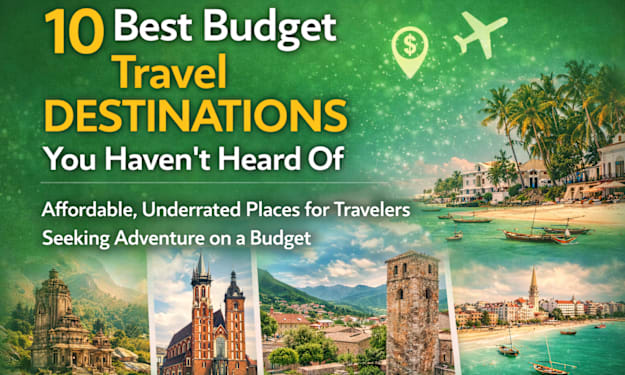
10 Best Budget Travel Destinations You Haven’t Heard Of
Traveling the world doesn’t always require a large budget. While popular destinations like Paris, Dubai, and New York often dominate travel lists, there are countless hidden gems across the globe that offer unforgettable experiences at a fraction of the cost. These lesser-known destinations combine affordability, beauty, culture, and adventure—without the crowds or high prices.
By Robert Redford7 months ago in Wander
The Haunted Mountain: The Unsolvable Riddle of the Dyatlov Pass Incident
The greatest fear is not the fear of what we know. It is the fear of what we cannot understand. Most stories about the wilderness are about survival, or about the simple, brutal power of nature. They are about avalanches, hypothermia, or predatory animals. They have clear beginnings, terrifying middles, and logical ends. We look at the data, we reconstruct the timeline, and we can say with certainty: *This is why they died.*
By Frank Massey 7 months ago in Wander