solo travel
You've got somewhere to go, but no one to go with; solo travel is the nexus of independence and opportunity.
Kew Gardens Tickets 2 for 1: Your Guide to Discounts, Kensington Palace Tickets & the Perfect Tour of London's Royal Oases. AI-Generated.
Kew Gardens Tickets 2 for 1: How a Simple Trick Doubled My London Trip As a travel expert, I'm always on the lookout for that one trick that turns a good trip into an unforgettable one. In London, that trick was a simple but magical phrase: kew gardens tickets 2 for 1. This wasn't just a discount; it was the key to a perfect itinerary that combined the best of nature and royal history without breaking my budget. This strategy allowed me to not only see the world-famous gardens but to expand my trip with another royal highlight.
By Paris Effelabout a year ago in Wander
Frozen in Time: The Haunting Discovery of George Mallory on Everest
On May 1, 1999, as American mountaineer Conrad Anker slowly ascended the treacherous North Face of Mount Everest, he noticed something peculiar on the icy slope—a flat, rock-like object jutting out of the snow. But this was no ordinary rock. To his astonishment, it was a human body—eerily well-preserved by the mountain’s brutal cold. Frozen in time, the body belonged to none other than George Mallory, the legendary British climber who had vanished 75 years earlier during a tragic expedition in 1924. Mallory and his climbing partner, Andrew "Sandy" Irvine, had disappeared just below the summit of Everest, and their fate had remained one of the most enduring mysteries in mountaineering history. The central question that haunted generations of climbers and historians alike was this: did they reach the summit before Sir Edmund Hillary and Tenzing Norgay famously did in 1953? If so, then Mallory and Irvine would have been the first humans to stand atop the world’s highest point—almost three decades earlier than previously believed. Mallory’s body, remarkably intact after more than seven decades in one of the world’s most unforgiving environments, offered both answers and more questions. Although his clothing was shredded by the relentless wind and the passage of time, his face, hands, and much of his body were preserved enough to offer a haunting glimpse into his final moments. His injuries were stark and unsettling: a broken leg, a fractured arm, and nearby, his ice axe—a silent witness to a violent fall. But what chilled even the most seasoned climbers was the position of his body. His uninjured leg was carefully placed over the broken one, suggesting that Mallory may have survived the fall—at least for a while. He might have lain there, conscious and fully aware, stranded on the icy slopes of Everest, waiting for a rescue he must have known would never come. That image—of a man frozen not just in ice but in the lonely grip of time and fate—was enough to send shivers down the spine of even the bravest explorers. And yet, despite this extraordinary discovery, the most vital clue remained elusive. The small Kodak camera that Mallory was known to have carried—a device that could potentially hold photographic evidence of their success on the summit—was nowhere to be found. Without it, the mystery persists: did Mallory and Irvine actually conquer Everest? Over the years, climbers and researchers have tried to reconstruct the final hours of Mallory and Irvine’s fateful climb. They were last seen by fellow team member Noel Odell on June 8, 1924, making what appeared to be good progress toward the summit. Then the clouds swallowed them whole. Speculation has ranged from a sudden storm to a fatal fall while descending. The discovery of Mallory’s body added important pieces to the puzzle, but not the solution. Even in death, Mallory has remained a symbol of human ambition, courage, and the relentless pursuit of dreams. Born in 1886, he was a man of intellect, a schoolteacher and war veteran, but his heart belonged to the mountains. When once asked why he wanted to climb Everest, his legendary response—“Because it’s there”—captured the spirit of an era where exploration was as much about self-discovery as geography. The 1999 Mallory and Irvine Research Expedition, which led to the discovery of his remains, was a culmination of years of planning and obsession with this mystery. Conrad Anker and his team braved perilous conditions to find traces of the 1924 expedition, hoping to shed light on one of the great what-ifs of the 20th century. Though the camera has never been found, the recovery of Mallory’s body brought a form of closure. It connected generations across time, binding the stories of those who risk everything for a goal greater than themselves. It reminded the world that Everest is not merely a mountain—it’s a monument to human will, sacrifice, and the longing to touch the sky. Today, George Mallory rests eternally on the slopes of the very peak he so dearly wished to conquer. He is not just a figure in a tragic tale but a towering symbol of the human spirit—a man who dared to dream beyond the limits of his time, whose footsteps in the snow may or may not have reached the summit, but whose legacy certainly did. Whether or not Mallory and Irvine were the first to summit Everest may remain unanswered forever. But in discovering his body, the world was given something perhaps even more profound—a tangible link to the golden age of exploration, a reminder of the risks dreamers take, and a silent, snowbound testimony to courage that defies time. As climbers continue to ascend Everest, many pass the spot where Mallory’s remains were found. Some leave a tribute, others say a silent prayer. All of them, however, climb with the knowledge that someone came before, not for glory, but for the pure and noble challenge of conquering the unknown. And in that, George Mallory succeeded.
By Ikram Ullahabout a year ago in Wander
Swat Valley,The Hidden Paradise of Pakistan
Nestled in the foothills of the Hindu Kush mountain range, Swat Valley—often referred to as the "Switzerland of Pakistan"—is one of the most captivating and scenic regions in South Asia. Located in the Khyber Pakhtunkhwa province, Swat is a destination that mesmerizes every visitor with its snow-capped mountains, crystal-clear rivers, lush green meadows, and vibrant local culture. But beyond its natural charm, Swat also holds deep historical and cultural significance that makes it much more than just a tourist’s dream.
By John Smith about a year ago in Wander
In the Lap of Mountains. AI-Generated.
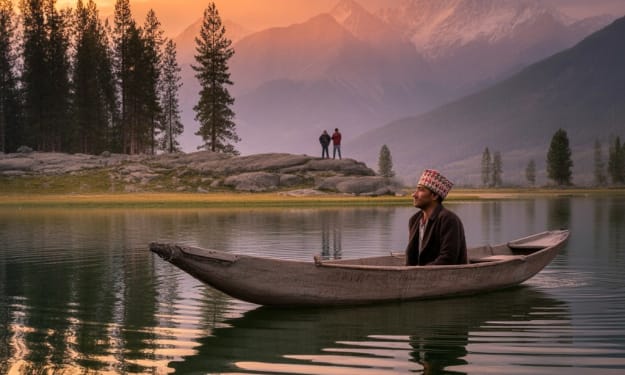
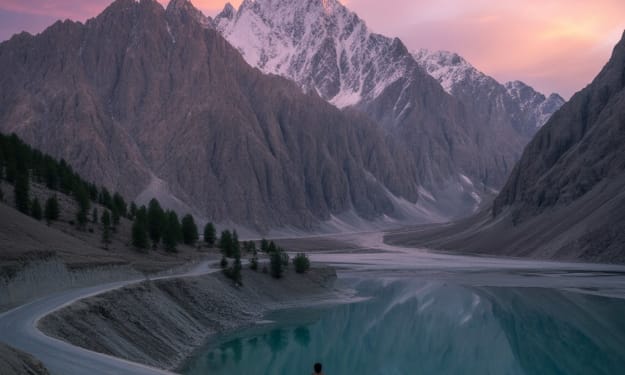
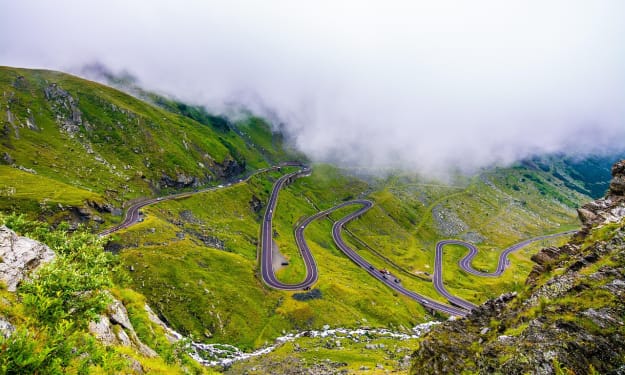
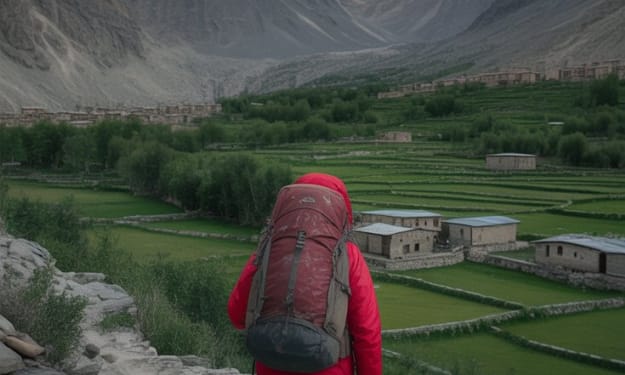
Pakistan — the very phrase brings to mind snow-capped peaks, crystal-clear lakes, ancient glaciers, lush green valleys, and roads that snake through some of the world’s most dramatic landscapes. This is a place where nature reigns supreme, and for travelers like me, it feels like a dreamland waiting to be explored.
By MUHAMMAD ARIF about a year ago in Wander
Murree Wandering, A Stroll Through the Queen of Hills. AI-Generated.
Nestled in the foothills of the Himalayas, Murree is not just a hill station; it’s an emotion for many of us who crave a quick escape from the suffocating city life. My recent wandering in Murree was not just another visit — it felt like a slow dance with the clouds, the chilly breeze playing with my hair, and pine needles crunching under my feet.
By MUHAMMAD ARIF about a year ago in Wander
Alone but Alive. AI-Generated.
"As the bus snaked its way through the rugged mountains of Northern Pakistan, I sat quietly by the window—alone, yet never more connected to myself. The journey wasn’t just about reaching Hunza, Skardu, or Fairy Meadows; it was about losing the noise of the world to hear my own voice again. Solo travel through the North is not just scenic, it’s soulful."
By John Smith about a year ago in Wander
Piece by Piece, Place by Place: A Journey That Changed Me. AI-Generated.
Born and raised in the warm, sea-kissed city of Jeddah, my life has always followed the rhythm of crashing waves and the call to prayer echoing through quiet streets. There’s a unique kind of peace you find here — a blend of tradition, stillness, and the slow beauty of seaside sunsets.
By Izzeddin Al Atariabout a year ago in Wander
Kew Gardens Tickets 2 for 1: My Secret London Hack for Kensington Palace Tickets 2 for 1 and Discount Tickets. AI-Generated.
The biggest mistake travelers make in London? Trying to do too much, too fast. The city is a glorious beast, and it can leave you exhausted and your wallet empty. Over the years, I've learned the secret isn't to see more, but to see smarter. My favorite strategy is smart bundling, a travel hack that feels like you’re getting Kew Gardens tickets 2 for 1 by combining it with another iconic location.
By Paris Effelabout a year ago in Wander
Everest Is Great, But Have You Met Gokyo? (She’s Prettier and Quieter). AI-Generated.
My First Trip to Gokyo: Love at First Hike Everyone talks about Everest. I get it—it’s tall, famous, and dramatic. But when I went on the Trek to Gokyo Valley for the first time, I realized something: Everest may be the star, but Gokyo is the whole show.
By Amble Himalayaabout a year ago in Wander
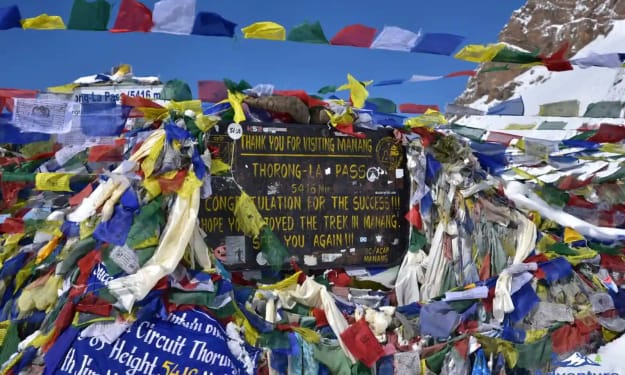
The Complete Annapurna Circuit Guide: Everything You Need Before Your First Step. AI-Generated.
If you’ve been googling the Annapurna Circuit and feel more confused than ready, you’re not alone. I was in the same boat—reading blog after blog, watching videos, and still unsure if I was prepared to walk over 150 km through the Himalayas. But after doing it myself, I can say it’s one of the best things I’ve ever done. And don’t worry, I’ve got your back (and your boots) with everything I learned.
By Kavish Chanabout a year ago in Wander