middle east
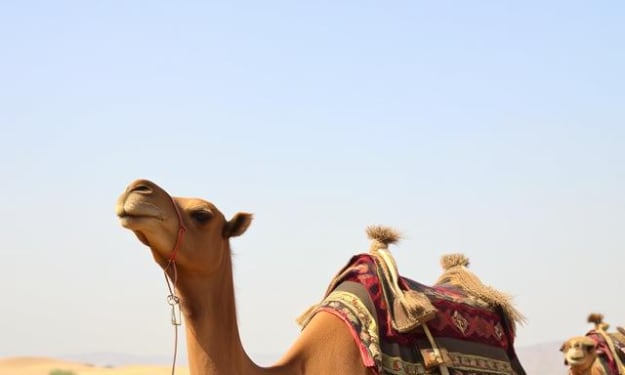
The Middle East may not have peace, but the region is perfect for travelers looking for gorgeous views, rich history, and cultural diversity.
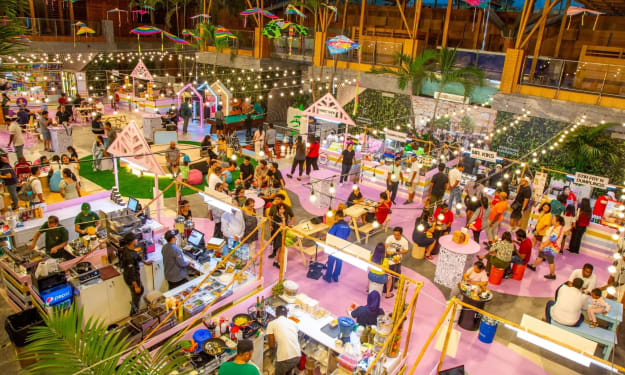
Food Shows Around the World: A Global Celebration of Culinary Delights
These events provide a platform for chefs, restaurateurs, food brands, and culinary experts to showcase their talents, introduce new products, and share gastronomic trends. From gourmet experiences to street food festivals, food shows around the world celebrate diverse cuisines and bring people together over their shared love for food.
By Avneet Singh2 years ago in Wander
The Quest for Immortality: Can Science Make Us Live Forever
Presently, we all know that humans can't be immortal, right? Well, futurist Ray Kurzweil says otherwise. He claims that achieving immortality might be closer than we think—possibly within the next 7 years. It sounds like something out of a sci-fi movie, but he and his team are pushing the boundaries of reality like expert yogis. Let’s break it down. Kurzweil suggests that we can attain immortality through a phenomenon he refers to as "The Singularity." This term describes the moment when artificial intelligence surpasses human control and reshapes society. Predicting exactly when this will happen is tricky, but Kurzweil envisions it occurring as early as 2030. He believes AI might be the key ingredient in making immortality a reality. Kurzweil imagines a future where tiny robots, called nanobots, work at the cellular level to repair damaged cells and tissues, keeping us youthful and disease-free. Why are his predictions gaining traction? Because he's been remarkably accurate in the past—86% of his forecasts have come true. ### Kurzweil’s Track Record Kurzweil, who became Google’s Director of Engineering in 2012, has been in the prediction game for decades. In 1990, he predicted that a computer would beat the world’s best chess player by 2000. It happened in 1997. He has now set 2045 as the target year for full immortality, with AI passing the famous Turing Test by 2029. He envisions a future where humans and machines merge to enhance our capabilities rather than fearing a robot uprising. According to him, this human-machine synthesis will make us better versions of ourselves. ### The Sci-Fi Connection The idea of nanobots fixing our bodies sounds like something out of science fiction. Remember "Star Trek"? Similar concepts have been explored there. However, not everyone is optimistic about Kurzweil’s bold predictions. Critics point out that global life expectancy has been declining in some regions and that unchecked AI could lead to catastrophic consequences. Even if true immortality isn’t achievable, advances in aging and health are already within reach. The emerging field of cellular programming is exploring ways to hack cells and potentially extend lifespans. ### Current Innovations Several companies are leading the charge. Google has launched a biotech firm, and tech moguls like Peter Thiel and Jeff Bezos are investing in cellular research. These efforts aim to discover cures for various diseases and slow the aging process. For instance, Elizabeth Parrish, the CEO of a biotech company, underwent a groundbreaking gene therapy procedure to reverse aging. At 44, her biological age was estimated to be 65. After the treatment, her biological age reversed to 45 and later, with no further intervention, was estimated to be around 30. While her methods have skeptics, the results are scientifically intriguing. ### Nature's Inspiration The quest for immortality isn’t new. Ancient myths, like the story of King Gilgamesh, reveal humanity's long-standing fascination with eternal life. Alchemists sought the Philosopher’s Stone, a mythical substance believed to grant immortality and transform base metals into gold. In modern times, scientists have turned to nature for answers. Take the "immortal jellyfish," for example. This creature can reverse its aging process, transforming back into a juvenile state when under stress. Although discovered in the 1990s, research into its unique abilities has been limited due to funding constraints. ### The Bigger Picture Medical advancements have already extended human lifespans dramatically. In pre-modern times, the average life expectancy was around 30 years. Today, it’s over 70, thanks to improved living standards and healthcare innovations. Imagine a future where immortality becomes possible. Birthdays would lose their traditional significance, and age would be just a number. People could pursue countless careers, explore endless hobbies, and become lifelong learners without the fear of running out of time. The stories we’d tell in this new era would be extraordinary. Picture a grandmother with centuries of experience, sharing wisdom and recipes from eras long past. In the journey of life, perhaps finding purpose is the true key to immortality. After all, as “The Curious Case of Benjamin Button” reminds us, meaning is what gives life its value.
By Nora Ariana2 years ago in Wander
Does Gen Z Like to Travel?
In recent years, the travel landscape has undergone significant changes, largely influenced by the preferences and behaviors of Generation Z (Gen Z), those born between 1997 and 2012. This generation is characterized by its unique approach to travel, shaped by technology, social media, and a desire for authentic experiences. As we delve into the question of whether Gen Z likes to travel, we will explore their motivations, preferences, and the types of experiences they seek.
By India Safaris2 years ago in Wander
The Lessons That I Derived from My Recent Wanderlust
The darkness that surrounds the storm is often the most turbulent period of hardships that embellish us into the trance of not knowing what to do. I learnt the lessons of patience, virtue and gratitude from the darkest periods of my life. Life has its ways of embracing us in its wisdom, staggering us into the whirlwinds of challenges and adversities, only to gift us with peonies of hope. Hope can metamorphose mountains of hatred into the galloping beauty of existence that showers us with the narrative of self-belief and confidence. It is often in a wanderlust away from our daily surroundings that we realize the wonder that the world we live in has to offer. Forgiveness after a storm is like accepting the catastrophe without denying the damage it has done. It is painful but necessary to survive, to thrive in our lives.
By Hridya Sharma2 years ago in Wander
Amusement Parks in Dubai: Why They Are Ahead of Their Time
The city has become a hub for some of the most advanced, innovative, and thrilling theme parks in the world. With a mix of indoor and outdoor attractions, world-class rides, state-of-the-art technology, and unforgettable experiences, Dubai’s amusement parks are truly ahead of their time.
By Avneet Singh2 years ago in Wander
How to Activate and Use Your eSIM While Abroad. AI-Generated.
Activating and using your eSIM while abroad is easy and convenient. After purchasing your eSIM online from a trusted provider like Holiday eSIM, simply scan the QR code provided to activate the eSIM on your smartphone. This eliminates the need for a physical SIM card.
By Cross T. Wrighter2 years ago in Wander
Changing the Narrative: Debunking Prejudice Against Female Solo Travellers In India
Changing the Narrative: Debunking Prejudice Against Female Solo Travellers In India Travelling alone in India can be quite challenging for women. They often face questions from strangers and encounter scepticism when they decide to embark on solo journeys. Many female solo travellers come from backgrounds where independent travel is uncommon, which leads them to defy familial and societal expectations to pursue their desire to explore the world on their terms.
By Hridya Sharma2 years ago in Wander