fact or fiction
Is it a fact or merely fiction? Fact or Fiction explores travel myths to help you avoid making that wrong turn.
Vanished Trails: The Trip That Left One Traveller Missing Without a Trace
Look, in a world where everyone’s Instagramming their “Eat, Pray, Love” moment, Mia Jensen was basically living the dream. She chucked her job, slung a backpack over her shoulder, and bounced off to see the wild, untouched bits of Himachal Pradesh—yeah, the India with the misty mountains and all that spiritual jazz.
By Sohanur Rahmanabout a year ago in Wander
Enter If You Dare: The Creepiest and Most Mysterious Places in the United States of America. Content Warning. AI-Generated.
The United States is filled with places that leave us puzzled. Some are awe-inspiring natural formations; others are eerie man-made relics shrouded in legend. A few may be haunted, some are tied to extraterrestrial theories, and others simply defy logical explanation. What’s undeniable is our fascination with the unknown mystery captures our imagination like nothing else.
By Kayiwa Sirajjeabout a year ago in Wander
"Places Around the World Where Time Stands Still"
Introduction There are places in the world where the relentless ticking of the clock seems to hush — where the air carries stories of centuries past, and every stone path feels like a portal into history. These are not your typical vacation spots; they are timeless travel destinations, havens for those who yearn to disconnect from modern chaos and reconnect with something older, deeper, and profoundly still.
By Shamshair Khan Hasan Zaiabout a year ago in Wander
"From Iceland to Indonesia: What Makes a Country Unique?"
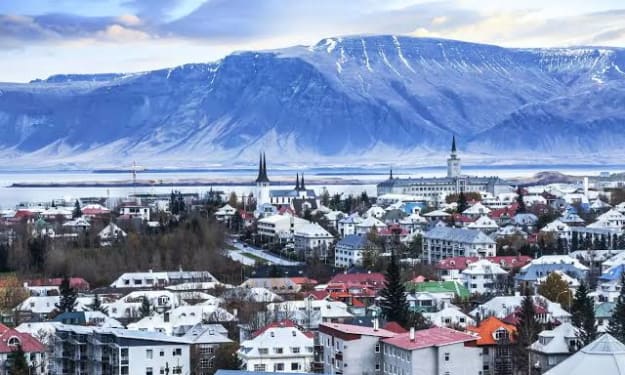
From Iceland to Indonesia: What Makes a Country Unique? What makes one country stand apart from another? It's more than just borders, flags, or famous landmarks. The uniqueness of a country lies in its unseen rituals, unspoken rules, and the heartbeat of its people. It’s in the way mornings begin, meals are shared, music is made, and memories are passed down. From Iceland’s ice-cloaked solitude to Indonesia’s tropical symphony of islands, each country carries a distinct flavor of life — a cultural fingerprint that no one else can copy. And when we stop to look beyond the surface, we begin to see that every nation offers a world entirely its own. Let’s journey across continents to uncover what makes a country truly one-of-a-kind. --- Iceland: Fire and Ice, and Fierce Individualism Perched near the Arctic Circle, Iceland is a land of extremes — volcanoes next to glaciers, geysers beside ice caves. But it’s the people, not just the scenery, that make Iceland unforgettable. With a population smaller than most cities, Icelanders have built a tight-knit, independent culture that values creativity and self-reliance. Everyone reads. Everyone writes. There's even a national tradition of gifting books on Christmas Eve and staying up all night reading. Iceland also boasts one of the highest levels of gender equality and environmental consciousness in the world. Here, being unique isn’t just accepted — it’s encouraged. It’s no wonder that a place with black sand beaches and northern lights also birthed some of the world’s most innovative music and literature. --- Indonesia: Unity in Diversity Now fly southeast — to a land of 17,000 islands, over 700 languages, and nearly 300 ethnic groups. Indonesia is chaos in the most beautiful sense. From the bustling streets of Jakarta to the serene temples of Bali and the untouched jungles of Kalimantan, no two corners of this country feel the same — yet there’s a powerful national motto that ties it all together: "Bhinneka Tunggal Ika" — Unity in Diversity. Indonesia’s uniqueness lies in its ability to hold contradictions and turn them into harmony. It’s a Muslim-majority country with strong Hindu, Christian, and Buddhist communities. It’s steeped in ancient traditions, yet racing toward tech innovation. Its food, dance, clothing, and spirituality are kaleidoscopic, layered, and rich. It is not one identity — it’s a mosaic of many. --- Ethiopia: The Beating Heart of Time Step into Ethiopia and you step into a different rhythm of time — literally. The country follows a 13-month calendar and measures hours differently from most of the world. But beyond timekeeping, Ethiopia stands out for being one of the few African countries that was never colonized. Its independence shines through its bold cultural pride, ancient Orthodox Christianity, and cuisine that’s as fiery as it is flavorful. From rock-hewn churches carved into cliffs to coffee ceremonies that take hours to complete, Ethiopia moves to its own steady, soulful beat. It’s a country where time slows down — not out of inefficiency, but out of reverence for ritual and connection. --- Japan: Tradition Wrapped in Technology No country blends ancient tradition with futuristic ambition quite like Japan. Where else can you find a Shinto shrine nestled beside a neon-lit skyscraper? Japan’s uniqueness is its duality — a nation that fiercely preserves its past while innovating for the future. Beyond the well-known symbols of sushi, samurai, and cherry blossoms lies a culture built on etiquette, detail, and subtlety. There’s deep beauty in the way Japanese society values harmony — not just in nature, but in relationships and design. Everything from a tea ceremony to a train schedule reflects precision, purpose, and respect. --- Mexico: A Living Tapestry of Heritage and Hope Mexico wears its heart on its sleeve. Its cities pulse with color, music, and flavor. Its past — from ancient Aztec and Maya civilizations to Spanish colonialism — is always present, not in textbooks, but in street art, festivals, and family traditions. But Mexico is not just heritage; it’s innovation. From contemporary architecture to world-class cuisine, the country constantly reinvents itself. What makes it unique is its emotional richness — how laughter and grief, protest and pride, often share the same space. Life in Mexico isn’t sanitized — it’s celebrated in all its messy, beautiful layers. --- What Uniqueness Really Means Every country has landmarks and tourist sites. But what really makes a place unique isn’t what’s on postcards — it’s what’s felt on the streets, heard in the marketplaces, and lived in the daily routines of its people. It’s the way a country reacts to joy, to crisis, to change. It’s in the lullabies sung to babies, the way elders are treated, the unspoken rules of social life. Uniqueness isn’t always loud. Sometimes, it’s in the quiet confidence of a tradition carried forward. Sometimes, it’s in how a country adapts without losing its core. And often, it’s in the small things — a gesture, a spice, a story — that no other place does quite the same. --- Final Thought: A World of Originals From Iceland to Indonesia, no two countries are alike — and that’s what makes this planet so endlessly worth exploring. Each nation holds something the others don’t, a singular lens through which to view the world. In an era where global trends often blur borders, the essence of what makes each country unique is more valuable than ever. So next time you look at a map, don’t just see lines. See identities. See stories. See a world not of sameness, but of spectacular difference — and take the time to learn what makes each country unlike anywhere else.
By World politics about a year ago in Wander
A poor man found a Treasure
A Poor Man Found a Treasure In a quiet village nestled between hills and dust roads, lived an old man named Rahim. He was known not for wealth or wisdom, but for his worn boots and calloused hands. Every morning before the sun rose, Rahim would walk to the edge of the village with a rusty shovel slung over his shoulder, digging aimlessly in the dry soil for work—or perhaps something more. Most people assumed he was looking for scrap metal. Others just called him a dreamer who’d lost touch with reality.
By Numan Ahmadabout a year ago in Wander
Puncak Bogor: A Refreshing Natural Paradise in the Highlands of West Java. AI-Generated.
Estled in the highlands of West Java, Puncak Bogor has long been a favorite destination for both local and international tourists. Located between Bogor and Cianjur, this mountainous area offers stunning natural beauty, cool fresh air, and a variety of attractions that make it a perfect escape from the hustle and bustle of urban life, especially for those coming from Jakarta.
By Vocalmedia Adeadifaabout a year ago in Wander
What is the Downside of Fiberglass Rebar?. Content Warning. AI-Generated.
When we talk about construction in India, bhaiya, sasta aur tikau chahiye! is a common phrase. We all want our buildings to be strong, affordable, and long-lasting. For decades, steel rebar has been the default choice in reinforcing concrete. But now, Fiberglass rebar—also called GFRP (Glass Fiber Reinforced Polymer)—is gaining popularity.
By Titan Technovatorsabout a year ago in Wander
The Best Restaurants and Eateries Near the Eiffel Tower: Delicious Dining with an Unmatched View. AI-Generated.
Exploring the beauty of the Eiffel Tower isn’t complete without tasting the local Parisian cuisine nearby. Fortunately, the area around this city icon is filled with restaurants and cafes that serve delicious dishes while offering spectacular views that make your dining experience even more memorable.
By Vocalmedia Adeadifaabout a year ago in Wander
The Eiffel Tower: An Unforgettable Architectural Masterpiece and Timeless Symbol of Paris. AI-Generated.
The Eiffel Tower is one of the most iconic architectural masterpieces in the world. Standing proudly in the heart of Paris since 1889, it was originally built as the entrance arch for the World's Fair (Exposition Universelle). Although it sparked controversy when first erected, today it has become a symbol of romance, beauty, and the enduring charm of France's capital.
By Vocalmedia Adeadifaabout a year ago in Wander
The Loneliness Epidemic: Why Are We More Connected But Feel More Alone?
Photo by Pawel Czerwinski on Unsplash In a world where we are more connected than ever, with instant access to friends, family, and even strangers at the click of a button, a paradox emerges: the loneliness epidemic. Despite the rise of social media, smartphones, and online communities, people across the globe are reporting increased feelings of isolation and loneliness. This contradiction begs the question: Why, in an age of unprecedented connectivity, do so many of us feel so alone?
By Manander Singhabout a year ago in Wander