fact or fiction
Is it a fact or merely fiction? Fact or Fiction explores travel myths to help you avoid making that wrong turn.
Most Rich and Powerful Family of Europe
The Wallenberg family is a secretive and influential family that has controlled Europe's economy for centuries. With a network worth over $700 billion, surpassing the combined net worth of Elon Musk, Warren Buffett, Mukesh Ambani, and Gautam Adani, they have built an empire that spans across industries, politics, and finance.
By Abira Sahi2 years ago in Wander
Why People are Leaving World's Richest Country?
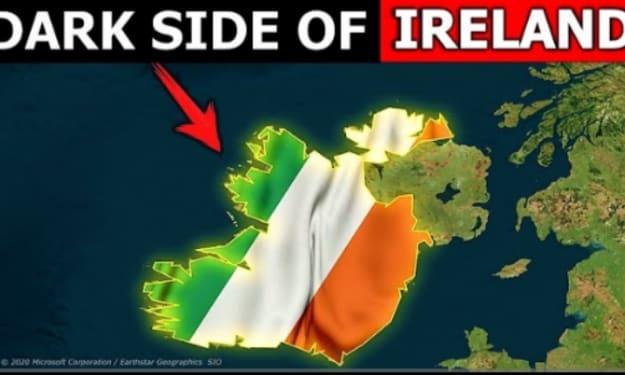
*Ireland's Economic Paradox: Why 70% of Young Citizens Want to Leave* Ireland, once one of Europe's poorest countries, has surprisingly become the world's richest nation. However, beneath the surface, a stark reality exists: 70% of Ireland's youth (18-24 years old) want to permanently leave their homeland. To understand this phenomenon, we must explore Ireland's remarkable economic transformation and the underlying issues that plague its citizens. *From Poverty to Prosperity* In the 19th century, Ireland faced devastating poverty, hunger, and death, particularly during the Irish Potato Famine (1845-1852), which claimed one million lives. After gaining independence from the British Empire in 1922, Ireland's fortunes remained stagnant until joining the European Economic Community in 1973. This move allowed Ireland to attract foreign businesses, leveraging low taxes and access to European markets. *The Celtic Tiger* Ireland's economy flourished, earning the nickname "Celtic Tiger." The financial crisis of 2008 briefly halted growth, but Ireland responded by reducing taxes to zero, attracting highly skilled workers and becoming Europe's Silicon Valley. *Discrepancy Between GDP and Standard of Living* Despite Ireland's impressive GDP, other statistics reveal a different story: 1. Average annual salary: lower than Scandinavian countries and equal to Netherlands, Belgium, and Austria, despite Ireland's higher GDP. 2. Household disposable income: 17th in the world, indicating a significant disparity between economic growth and citizens' standard of living. *Artificially Inflated GDP* Ireland's GDP is boosted by foreign companies' profits, which are largely repatriated, and employment of foreign workers in high-paying tech jobs. Meanwhile, most Irish citizens work in lower-paying agricultural, retail, and mining industries. *Challenges Facing Ireland* 1. *Housing crisis*: Poor policies and low supply have driven house prices up, making it difficult for citizens to afford housing. 2. *Overcrowded healthcare*: Doctors emigrate for better salaries, leaving remaining medical professionals overburdened and patients on lengthy waiting lists. *A Fragile Economic Model* Ireland's reliance on foreign investment and low taxes may not be sustainable. When taxes inevitably rise, foreign companies may depart, exposing Ireland's economic vulnerabilities. *Conclusion* Ireland's economic success story masks underlying issues. To ensure long-term prosperity, the country must focus on strengthening domestic industries and addressing housing, healthcare, and income disparities. *Sources:* [Insert sources cited in the video] *Related Content:* Explore similar economic paradoxes in Australia and Canada.
By Abira Sahi2 years ago in Wander
Why 70% of Spain is Completely Empty?
*Spain's Unique Population Pattern: A Complex Interplay of History, Politics, Geography, and Social Factors* Spain, the fourth-largest country in Europe, boasts a rich history, diverse geography, and a distinct population distribution. Approximately 70% of its territory is uninhabited, with 90% of the population concentrated in coastal areas and the central region around Madrid. *Historical Roots* Spain's population pattern is deeply influenced by its complex history. The Roman Empire's division into Eastern and Western halves weakened its control, paving the way for Germanic tribes and eventually the Muslim Empire to conquer the region. The Muslim rule lasted for 800 years, leaving a lasting impact on science, philosophy, and architecture. The Christian Reconquista and subsequent colonial empire also shaped Spain's demographics. *The Dark Years: Franco's Regime and Economic Consequences* General Francisco Franco's 30-year rule (1939-1975) had a devastating impact on Spain. The civil war claimed 500,000 lives, and Franco's protectionist policies isolated Spain from international trade. The agricultural industry collapsed, prompting mass migration from rural areas to cities. *Spanish Economic Miracle* Franco's eventual openness to international trade sparked the Spanish Economic Miracle. Trade with France, Germany, and England revitalized the economy, concentrating economic activity in urban areas. This led to a surge in migration from rural to urban centers. *Geographical Challenges* Spain's mountainous terrain, with six ranges, poses significant infrastructure development challenges. The northern region, Spanish Lap Land (Sirenia Cult Berica), remains largely uninhabited due to difficult terrain and lack of infrastructure. *Low Fertility Rate: A Demographic Concern* Spain's fertility rate is the lowest in Europe, with an average birth rate of 1.19 children per woman. This decline is attributed to delayed marriage, unstable employment, and single-person households. *Consequences and Future Implications* Spain's population pattern has significant implications: 1. Depopulation of rural areas 2. Aging population 3. Need for immigrants to sustain population growth 4. Pressure on social security and pension systems *Government Initiatives and Solutions* To address these challenges, the Spanish government must: 1. Provide benefits and grants to encourage higher fertility rates 2. Invest in rural infrastructure development 3. Promote economic growth and job creation in rural areas *Conclusion* Spain's unique population pattern is a complex interplay of historical, political, geographical, and social factors. Understanding these dynamics is crucial for addressing the country's demographic challenges and ensuring a sustainable future. *Sources:* [Insert sources cited in the video] *Related Content:*
By Abira Sahi2 years ago in Wander
Why Turkey's Geography is So special?
*Turkey: A Geographical Miracle Bridging Asia and Europe* Turkey's unique geography has made it a crucial crossroads between Asia and Europe, connecting the two continents. The modern Turkish state, confined to the Anatolian Peninsula, boasts an impressive history as a hub of power and trade. *Strategic Location* The Bosphorus Strait, linking the Black Sea to the Mediterranean, facilitated the rise of Istanbul, a city that has served as the capital of various empires, including the Greeks, Persians, Macedonians, Byzantines, and Ottomans. The Dardanelles Strait, another narrow passage, connects Anatolia to the Balkans, Southern Europe, and the Greek Islands. *Geological Wonders* The North Anatolian fault line, formed by the collision of Eurasian and Anatolian plates, created remarkable geographical features. The Pontic Mountain Range, with peaks reaching 4,000 meters, fosters fertile lands in northern Turkey. This region's climate, influenced by the Black Sea and Mediterranean, supports lush green landscapes, contrasting with the hot and dry southern regions. *Historical Significance* Anatolia's strategic location has made it a prized possession for empires throughout history. The Spartans, Burgis, Romans, and Ottomans all recognized its importance. The region's access to two seas facilitated trade, connecting the Persian Empire to Egypt and Mesopotamia. Alexander the Great's conquest of Anatolia led to the collapse of the Persian Empire. *The Taurus Mountain Range: Natural Protection and Challenge* The Taurus Mountains have shielded Anatolia from invaders, including the Mongols in the 13th century. However, this range also poses economic and infrastructural challenges, contributing to the eastern side's relative underdevelopment. *Kurdish Presence and Tensions* Turkey's eastern regions are home to a significant Kurdish population, with approximately 15% of Turkey's population identifying as Kurdish. The Kurdish people's desire for autonomy has led to militant organizations and conflicts with Turkey, Syria, Iraq, and Iran. *Rivers and Tensions* The Tigris and Euphrates rivers, originating in Turkey's mountains, flow into Syria, Iraq, and Iran. While historically significant for trade, these rivers now fuel tensions due to Turkey's dam-building projects. *Turkey's Modern Advantages and Challenges* Turkey's strategic location generates significant GDP through exports and control of the straits. However, sharing borders with eight countries, including Syria and Iraq, poses geopolitical challenges. *Conclusion* Turkey's geography has shaped its history, making it a vital connection between Asia and Europe. Understanding the complex interplay between geography, history, and politics provides valuable insights into the region's significance and ongoing tensions.
By Abira Sahi2 years ago in Wander
How One Scam Destroyed the Whole Country?
*The Lebanon Financial Crisis: A Tale of Corruption and Betrayal* Lebanon, once dubbed the "Switzerland of the Middle East," has been ravaged by a catastrophic financial crisis, leaving 80% of its population below the poverty line and eight in ten citizens unemployed. The country's inflation rate has skyrocketed to 171%, with its currency devaluing drastically from 1,500 Lebanese pounds per dollar to 15,000. *A History of Turmoil* Lebanon's woes began with the 1975 civil war, which lasted 15 years and claimed 500,000 lives. The Taif Agreement in 1989 brought temporary peace, but the country's infrastructure and economy were left shattered. To rebuild, Lebanon's leaders sought foreign loans, orchestrated by Riyad Salame, a former Merrill Lynch vice president who became governor of the Central Bank of Lebanon. *A Web of Deceit* Salame's strategy involved artificially stabilizing the currency and offering unusually high interest rates to attract foreign investors. This scheme, which promised returns of 8% and later 15%, drew in millions of dollars. However, the money was largely funnelled into the pockets of Salame and other government officials. *The Bubble Bursts* In 2019, concerns about the legitimacy of the banking system grew, and people began withdrawing their money. Banks imposed strict withdrawal limits, sparking widespread panic. The Lebanese pound plummeted, and foreign investors fled. The government was left unable to pay salaries or provide basic services. *Consequences of Corruption* Today, Lebanon faces unprecedented poverty, unemployment, and crime. The once-thriving tourism and banking sectors lie in ruins. Riyad Salame, the mastermind behind the scam, remains at large, with an estimated $300 million stashed in offshore accounts. *A Lesson in Accountability* The Lebanon crisis serves as a stark reminder of the devastating consequences of corruption. To prevent similar tragedies, it is crucial to educate future generations about the dangers of corruption and promote accountability. Sources: [Insert sources cited in the article]
By Abira Sahi2 years ago in Wander
This Country Should Have Been a Superpower
*The Rise and Fall of Argentina: A Cautionary Tale of Economic Mismanagement* Argentina, once considered a potential superpower, boasts an enviable geography and abundant natural resources. The Pampas region, one of the world's most fertile areas, coupled with a impressive river system and extensive coastline, positioned Argentina for greatness. However, despite these advantages, the country's economy has experienced repeated booms and busts, culminating in nine bankruptcies in the last century. *Early Success and Decline* In the early 20th century, Argentina's agricultural sector thrived, supplying food to a global market. European immigrants brought capital and expertise, transforming Buenos Aires into the "Paris of America." By 1920, Argentina's economy rivaled America's. However, the agricultural sector's dominance led to neglect of other industries, leaving the country vulnerable to global market fluctuations. The Great Depression of 1929 exposed Argentina's vulnerability, and the economy collapsed. *Nationalism and Protectionism* In 1940, General Juan Perón's military coup led to a shift towards nationalism and protectionism. Export restrictions and nationalization policies isolated Argentina from the global economy, discouraging foreign investment and stifling innovation. Successive governments continued these policies, perpetuating economic stagnation. *Inflation and Debt* To compensate for declining revenue, the government relied on printing money and borrowing from institutions like the IMF. This created a cycle of inflation, currency devaluation, and unaffordable projects. The 1990s saw a brief respite when the government pegged the peso to the dollar, but subsequent administrations reverted to populist policies, exacerbating the debt crisis. *Lessons from Argentina's Decline* 1. *Meritorious decision-making*: Argentina's leadership prioritized short-term gains over long-term planning, unlike America's visionary approach. 2. *Diversification*: Over-reliance on agriculture left Argentina vulnerable to global market fluctuations. 3. *Global integration*: Argentina's protectionist policies stifled innovation and foreign investment. 4. *Fiscal responsibility*: Uncontrolled spending and borrowing led to debt traps and inflation. *Revitalizing Argentina's Economy* To avoid another economic collapse, Argentina must: 1. *Control expenses*: Reduce spending and set realistic expectations. 2. *Open to global trade*: Embrace globalization and revolutionize the agricultural sector. 3. *Ensure political stability*: Attract investment by guaranteeing stability. Argentina's story serves as a cautionary tale for economists and politicians, highlighting the importance of prudent decision-making, diversification, and global integration.
By Abira Sahi2 years ago in Wander
How America's Geography made it a Superpower?
*The Geographical Advantages that Make the United States a Global Superpower* The United States of America stands as one of the most powerful nations in human history, boasting unparalleled control over global wealth and resources. Despite its relatively small population (5% of the world's total), America dominates 30% of global wealth and resources. Its impressive economic and military prowess is deeply rooted in its unique geography. *The Mighty Mississippi River System* The Mississippi River, the second-longest river in North America and fourth-longest globally, plays a pivotal role in America's success. Connecting 30 rivers and lakes, including the mighty Missouri River, this waterway spans 4,000 km and supports: 1. 1.2 million jobs 2. $345 billion in annual trade 3. 630 million tonnes of goods transported via ships The Mississippi's navigable waters enable effortless transportation, facilitating economic activity and cementing America's position as a global trade hub. *Agricultural Abundance* The Mississippi River's fertile irrigation land makes America: 1. The world's largest corn producer 2. Second-largest soybean producer 3. Fourth-largest wheat producer 92% of America's agricultural exports originate from this region, solidifying its status as a global agricultural powerhouse. *Strategic Coastline* America's 20,000 km coastline, the eighth-longest globally, provides: 1. Unimpeded access to the Pacific and Atlantic Oceans 2. Natural trade routes to Asia, Europe, and Africa 3. Protection from foreign invasion, with oceans serving as a buffer *Historical Invulnerability* America's distance from the rest of the world has historically made direct attacks challenging. The exception was Japan's attack on Pearl Harbor during World War II. *Potential Vulnerabilities* 1. Cuba's strategic location, potentially threatening American trade routes 2. North Korea and Russia's missile capabilities 3. China's growing presence in South America *Natural Resources* America boasts: 1. Vast gas and oil reserves, meeting 90% of its energy needs 2. World's fifth-largest gold reserves 3. Fourth-largest iron ore reserves *Conclusion* The United States' unique geography, particularly its river system and strategic coastline, has significantly contributed to its status as a global superpower. While social and cultural challenges persist, America's economic and military dominance remains unparalleled.
By Abira Sahi2 years ago in Wander
Why Ships don't Pass Under South America?
*The Drake Passage: The World's Most Treacherous Sea Route* Located between Antarctica and Cape Horn, the Drake Passage is a 620-mile stretch of water that has been avoided by mariners for thousands of years. This infamous passage is where the Pacific, Atlantic, and Southern Oceans converge, creating a perfect storm of treacherous conditions. *The Pirate Who Named the Passage* The passage is named after Francis Drake, a British pirate who navigated these waters in 1577. Drake's journey was commissioned by the British Empire to break Spanish control over South America. His voyage marked the first recorded passage through this treacherous area. *Why is the Drake Passage So Dangerous?* The convergence of cold Antarctic waters and warm Atlantic and Pacific waters creates: 1. *Powerful currents*: 200 million cubic yards of water flow per second, rivaling the Amazon River's flow. 2. *Massive waves*: Reaching 60-80 feet high, making navigation extremely hazardous. 3. *Cyclones*: Formed by the mixing of hot and cold water. 4. *Remote location*: Far from any rescue services, with Antarctica's icy landscape to the south. *A History of Exploration and Disaster* Notable explorers, including Captain Cook and Ernest Shackleton, have attempted to navigate the Drake Passage, often with disastrous consequences. 1. *Captain Cook's warning*: In the 1770s, Cook cautioned against exploring the Southern Continent due to the passage's dangers. 2. *Shackleton's ill-fated expedition*: In 1914, Shackleton's ship was destroyed, and his crew barely survived. 3. *Modern-day incidents*: Recent accidents, such as the 2012 Brazilian luxury cruise ship disaster, demonstrate the passage's ongoing hazards. *Alternative Routes* Despite modern technological advancements, mariners still prefer alternative routes, such as the Strait of Magellan, due to the Drake Passage's risks. *The Importance of the Drake Passage* This passage plays a critical role in global ocean circulation, as melted Antarctic ice flows into the world's oceans through this gap. *Conclusion* The Drake Passage remains one of the world's most formidable maritime challenges, a testament to nature's power and human vulnerability. As technology continues to evolve, this passage serves as a reminder of the limits of human exploration. *Sources:* [Insert sources cited in the article] *Related Content:*
By Abira Sahi2 years ago in Wander
What is Happening in the Red Sea?
*Global Trade Under Threat: Unrest in the Red Sea* A critical geopolitical hotspot, the Red Sea, is witnessing increased tensions, threatening global trade and stability. The conflict between Yemen's Houthi forces and international powers has resulted in missile and drone attacks on container ships, disrupting global supply chains. *Strategic Location* The Red Sea, particularly the Bab-el-Mandeb Strait, is a vital trade route connecting Asia, the Middle East, and Europe. 80% of global trade occurs via sea, with 30% of China's exports to Europe and North America passing through this chokepoint. *Escalating Conflict* Yemen's Houthi forces, backed by Iran, have targeted ships carrying Israeli flags or cargo, responding to Israel's actions in Gaza. The US and UK navies have retaliated with bombardments on Yemen. Recent attacks have: 1. Disrupted global oil and gas supplies (10% of the world's oil and 6% of natural gas pass through this region). 2. Caused shipping companies (including Denmark's Maersk Line, France's CMA CGM, and Germany's Hapag Lloyd) to suspend operations. 3. Led to increased insurance costs and potential losses for shipping companies. *International Response* The US has called for international cooperation to secure the Red Sea route, but responses have been mixed: 1. Britain has joined the US in operations against Yemeni terrorists. 2. France, Italy, and Spain have declined participation. 3. Egypt, Saudi Arabia, and the UAE remain neutral, despite economic interests. 4. China and Russia, with military bases in Djibouti, are observing silently. *Complicated Conflict* The conflict is complicated by: 1. Costly Western weapons vs. affordable Yemeni drones and missiles. 2. Political differences among international powers. 3. Competition for control of Yemen's vast oil reserves. *Potential Consequences* 1. Global economic instability. 2. Disrupted internet connectivity (Houthi forces have threatened to target underwater cables). 3. Escalating tensions in the Middle East. *Stay Informed* As the situation unfolds, stay updated on this critical geopolitical development. Subscribe to our channel for timely notifications and in-depth analysis. Sources:
By Abira Sahi2 years ago in Wander
Why Central Asia is so Big but so Unimportant?
*The Rise and Fall of Central Asia: A Tale of Geography, History, and Power Politics* Central Asia, comprising Kazakhstan, Uzbekistan, Kyrgyzstan, Turkmenistan, and Tajikistan, was once the epicenter of the ancient Silk Road, connecting China with the Middle East and Western Europe. This strategic location made it a coveted prize for empires, from the Mongols to the Persian Empire. However, despite its rich natural resources, Central Asia has become increasingly irrelevant to the world economy. *Geographical Challenges* Central Asia's landlocked geography, sandwiched between Russia, Iran, and China, poses significant obstacles: 1. *Limited agricultural potential*: 60% of the region is desert, with only 20-25% of land suitable for agriculture. 2. *Mountainous terrain*: The Altai Mountain Range restricts agricultural expansion. 3. *Dependence on two rivers*: The Amu Darya and Syr Darya rivers support the majority of the population. *Historical Factors* 1. *Turkic migration*: The region's inhabitants migrated from Siberia, Northern China, and East Asia around 4000 years ago. 2. *Muslim control*: The area came under Islamic rule in the 7th and 8th centuries. 3. *Mongol conquest*: Genghis Khan's empire dominated the region in the 13th and 14th centuries. 4. *Soviet Union*: The region was divided into five countries, with communist ideology clashing with local Muslim traditions. *Soviet Legacy* 1. *Cotton production*: The Soviet Union developed Central Asia into the world's largest cotton producer. 2. *Irrigation and environmental degradation*: Canal construction led to the desiccation of the Aral Sea, once the world's fourth-largest lake. *Post-Soviet Challenges* 1. *Economic instability*: The breakup of the Soviet Union led to industry destruction and economic struggles. 2. *Civil wars and political instability*: Conflicts in Tajikistan, Kyrgyzstan, and Uzbekistan plagued the region. 3. *Power politics*: Central Asia remains a pawn in the games of world powers, with Russia and China controlling natural gas exports. *Conclusion* Central Asia's geography, history, and current geopolitical dynamics have relegated it to a secondary role in global affairs. While its strategic location may once again become important, its prospects for resurgence seem distant. *Sources:* [Insert sources cited in the video] *Related Content:*
By Abira Sahi2 years ago in Wander
How Two Kids Hacked CIA and Leaked Everything?
*The Teenage Hackers Who Shook the CIA* In 2015, two teenage hackers, known by their internet names "Default" and "Cracker," made headlines for leaking thousands of classified documents from the CIA and FBI. Their actions exposed the US government's secret operations in the Middle East, Afghanistan, and South America, and revealed technologies capable of monitoring individuals worldwide. *The Masterminds Behind the Hack* Default, a 14-year-old from Virginia, began exploring hacking after playing Counter Strike. He joined Anonymous and later Anon Sec, honing his skills and adopting a pro-justice stance. Cracker, a 15-year-old from London, shared similar motivations. *The Leaks and Their Impact* The duo's group, Crackers with Attitude, hacked Intelligence Director James Clapper's email and social media. They then targeted CIA Head John Brennan, hacking his data and making a prank call. The leaked documents, published on WikiLeaks, revealed CIA involvement in foreign conflicts and human rights violations. *Consequences and Controversy* The CIA suffered $1.5 million in damages, and secret agents went underground. Default and Cracker were eventually caught after Cracker's careless revelation to friends led to his arrest. Default received a five-year prison sentence and a $5,000 fine, while Cracker faced a two-year sentence due to his age and UK residence. *The Ethics of Whistleblowing* This case raises questions about leaking classified information and government accountability. Edward Snowden's quote resonates: "One exposing a crime is treated as committing a crime." Were these teenagers heroes or criminals? Share your thoughts.
By Abira Sahi2 years ago in Wander
Scientist's Terrifying New Discoveries about Australia
*Unveiling Australia's Hidden Secrets: A Land of Mystery and Painful History* Australia, the world's sixth-largest country, harbors numerous enigmas and unsettling tales. Before the 17th century, Australia was a myth to the rest of the world, disconnected from global affairs. Even today, scientists continue to uncover secrets about this vast land. From the harsh geography to the painful history, Australia's story is complex and intriguing. *A Painful Past: The British Penal Colony and Aboriginal Genocide* 150 years ago, Australia's life expectancy was a mere 34 years. The country's harsh geography and British colonization contributed to this alarming statistic. In the 18th century, Australia served as a British penal colony, where criminals were sent as punishment. However, this dark history conceals the fact that Aboriginal Australians had inhabited the land for thousands of years, possessing a unique culture and peaceful existence. *European Discovery and Exploration* In 1606, Dutch explorer William Janszoon stumbled upon Australia while returning from Indonesia. This discovery sparked interest in the unknown continent. In 1642, Abel Tasman, sent by the Dutch East India Company, explored Australia, New Zealand, and Fiji. British explorer Captain James Cook followed in 1770, observing Aboriginal culture and reporting back to the British Empire. *The Dark Reality of Colonization* Between 1788 and 1868, the British brought 150,000 criminals to Australia, displacing and killing Aboriginal Australians. Diseases introduced by Europeans decimated the native population, reducing it by 90% over 100 years. Today, most Australians are descendants of European colonizers and convicts who mercilessly displaced the original inhabitants. *Recently Uncovered Mysteries* 1. *Mary Man Geo Glyph*: In 1998, a pilot discovered a massive geo glyph in a restricted area of Woomera. Despite 26 years of investigation, scientists remain baffled about its origins. 2. *Gimpy Gimpy Tree*: A poisonous plant found in Australian forests, its thorn can kill within days. No antidote has been discovered. 3. *Prehistoric Giants*: Fossils reveal kangaroos 20 feet tall and snakes 50 feet long once roamed Australia. 4. *Pine Gap Military Base*: A top-secret joint intelligence base between the US and Australia, playing a crucial role in global surveillance and military operations. *Conclusion* Australia's history and geography conceal numerous secrets and mysteries. From the painful tales of colonization to recently uncovered enigmas, this land remains a fascinating and complex nation. As scientists continue to unravel its secrets, Australia's story becomes increasingly captivating. *Recommended Playlist: Countries Geography* Explore more intriguing videos about countries' geography and facts on our playlist. *Share Your Thoughts*
By Abira Sahi2 years ago in Wander