europe
Whether embarking on a Eurotrip or a weekend jaunt to a foreign city, European travel requires some smart planning; you may know all the must-see landmarks, but we provide the hidden gems.
Rolling Suitcase Ban in Europe Coming Soon? Here's What You Need to Know, Plus 5 Alternatives to Use Instead
Recent headlines have stirred concern among travelers about a potential rolling suitcase ban in Europe. While the idea of banning wheeled luggage has gained attention, especially in historic cities like Venice and Dubrovnik, there is currently no official ban across Europe. Instead, some local governments are exploring ways to reduce noise and protect fragile infrastructure, leading to confusion and speculation. This article clarifies what’s happening, where travelers should be mindful, and what alternatives can help ease the journey.
By Total Apex Entertainment & Sportsabout a year ago in Wander
5 Halloween Festivals Around the World Everyone Who Loves Spooky Season Should Experience
Halloween isn’t just a modern celebration of costumes and candy—it’s a global phenomenon rooted in ancient rituals, folklore, and seasonal transitions. Across the world, cultures have preserved and evolved Halloween into epic festivals that honor the supernatural, the ancestral, and the downright bizarre. This list dives into five of the most extraordinary Halloween festivals on the planet, each one a pure expression of the season’s eerie essence.
By Total Apex Entertainment & Sportsabout a year ago in Wander
Getting Lost in Lisbon: The Magic of Wandering Without a Map
M Mehran The first rule of traveling, they say, is to always know where you’re going. Book your tickets early, plan your itinerary, mark every must-see on the map. But the best memories I’ve made while traveling didn’t come from careful planning. They came from getting lost. I learned that lesson in Lisbon. --- It was my second morning in the city, and I was supposed to meet a group tour near Rossio Square. I had every intention of being punctual, but a wrong turn led me down a narrow street, one of those cobblestoned lanes where laundry hung between pastel-colored buildings and the smell of bread drifted out from hidden bakeries. For a moment, I panicked. My phone battery was low, my Portuguese was nonexistent, and my tour group was probably already gathering without me. But then something shifted. I looked around and realized: this is why I travel. Not to check boxes on a list, but to stumble into streets that make me feel like I’ve stepped into someone else’s story. So I kept walking. --- Lisbon is a city that rewards wanderers. The sidewalks are mosaics of black and white stone, designed centuries ago by artisans who turned even ordinary pavements into works of art. The streets curve and climb unpredictably, each corner revealing something unexpected: a splash of street art, a hidden chapel, a doorway painted the color of saffron. I climbed one hill and found myself at a viewpoint I hadn’t read about in any guidebook. Below me, red-tiled rooftops spilled down toward the Tagus River, and in the distance, the Ponte 25 de Abril bridge arched across the water like a crimson ribbon. An old man stood nearby, strumming a guitar. A small group of locals had gathered to listen. No tour bus could have delivered me here at that exact moment. I felt like the city was letting me in on a secret. --- That day, I wandered for hours. I ducked into a bakery where the woman behind the counter insisted I try a pastel de nata still warm from the oven. I walked through an antique shop cluttered with forgotten treasures: maps with edges frayed, porcelain teacups that once belonged to someone’s grandmother, letters written in looping cursive. I even stumbled upon a tiny bookstore where the owner pressed a translated book of Portuguese poetry into my hands, saying, “For your journey.” By the time I finally checked my phone, the tour had long since ended. But I didn’t feel like I had missed out. Quite the opposite. I felt like I had traveled in the purest sense—immersed in a place, not just moving through it. --- There’s a freedom in traveling without a script. Of course, there are risks: you might get lost, you might waste time, you might never make it to the “must-see” attractions. But sometimes the risk is the reward. When you don’t know what’s coming next, you’re more open to noticing small details: the way sunlight spills across a tiled wall, the laughter of children chasing pigeons in a square, the quiet rhythm of a city going about its ordinary day. Wandering reminds us that travel isn’t only about places. It’s about presence. --- A few days later, I did make it to Rossio Square, this time on purpose. The group tour was fine—informative, organized, filled with postcard-perfect stops. But when the guide paused to give us free time, I slipped away again, choosing instead to follow the echo of fado music down a side street. I ended up in a small bar where a woman sang with such raw emotion that the entire room went silent. I didn’t understand the lyrics, but I understood the feeling—longing, joy, heartbreak, all tangled together. I ordered a glass of vinho verde, let the music wash over me, and thought: this is the Lisbon I will remember. --- Since that trip, I’ve carried the lesson of Lisbon with me wherever I go: leave room for wandering. In Tokyo, it led me to a family-owned noodle shop tucked beneath the train tracks, where the owner treated me like a regular. In Marrakech, it took me through a maze of alleys until I found a rooftop café overlooking the medina, where mint tea tasted sweeter because I hadn’t been looking for it. In Mexico City, it guided me into a courtyard filled with paper lanterns, where strangers invited me to dance. These moments never make it into the travel brochures. But they are the soul of travel. --- Wandering doesn’t mean being careless. It means being open. Open to wrong turns, to unexpected conversations, to the possibility that the best stories begin where the guidebook ends. When I think back on Lisbon now, I don’t remember the names of all the monuments. I remember the guitar music, the taste of that pastry, the kindness of a bookseller, the sound of fado on a quiet evening. I remember how it felt to be lost, and yet completely at home. And maybe that’s the real magic of travel: not just finding new places, but finding new versions of ourselves—ones that are braver, freer, and a little more willing to get lost.
By Muhammad Mehranabout a year ago in Wander
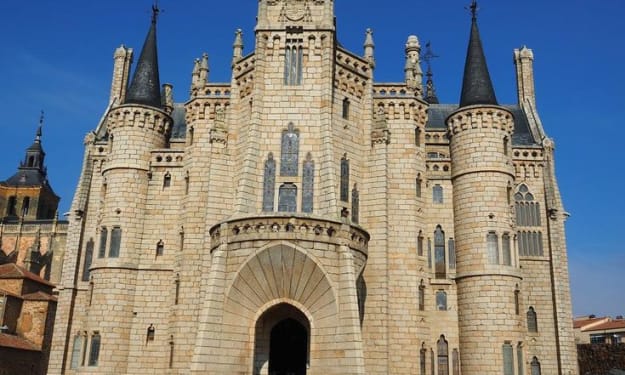
Strolling Through Beautiful Castles Spain
Alcazar of the Christian Kings is located in Cordoba. It sits next to the Guadalquivir River in the Old Town. The construction of the palace began with the orders of Alfonso XI in 1326, and it was right there where the Christian kings, Queen Isabella I of Castile and King Ferdinand II of Aragon, received Christopher Columbus before his journey. The palace has a Mudejar architectural style and beautiful gardens.
By Rasma Raistersabout a year ago in Wander
Strolling Through Beautiful Castles Malta
Casa Rocca Piccola is a 16th-century palace located on 74 Republic Street in Valletta, the capital city surrounds the palace. The castle was initially built in 1580 by the Knights of Malta for Admiral Don Pietro La Rocca. It was one of the first aristocratic residences constructed in the new city of Valletta after the Great Siege of 1565. It was designed in the Mannerist style by the Maltese architect Girolamo Cassar. The de Piro family has owned and lived in the palace since the early 17th century. The family’s private residence remains owned by the 9th Marquis de Piro, Nicholas de Piro. The highlights include the historic staterooms, dining rooms, libraries, costume museum, WWII shelters, trompe l’oeil paintings, crystal chandeliers, marble sculptures, and artifact collections spanning over 400 years of family history and Maltese nobility.
By Rasma Raistersabout a year ago in Wander
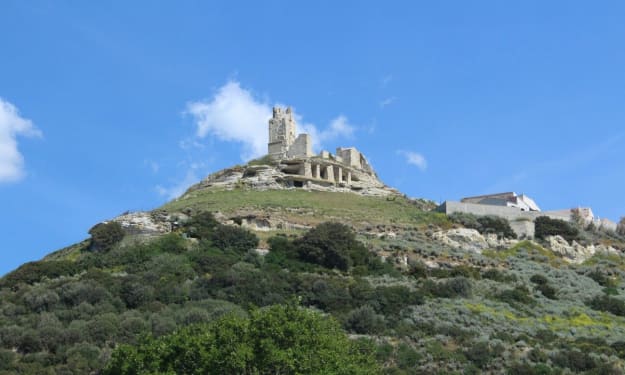
Strolling Through Beautiful Castles Sicily
Caccamo Castle sits on a hill in the Leonardo River Valley. Visitors enjoy seeing the Madonie Mountains. The castle was first a fortress and a lookout tower, then a castle and mansion. It was built in the medieval style with towers, deep moats, and a courtyard. Inside is a labyrinth of rooms and halls. It is an interesting place to visit in Northwest Sicily.
By Rasma Raistersabout a year ago in Wander
Fotografiska: A Museum With Cocktails
The first thought on my mind when I checked out Fotografiska Berlin was, Where has this been all my life? This place changed my perspective of standing quietly and staring at paintings until your feet hurt when visiting art museums. I have never thought that I would ever find a place where I could sip a cocktail while admiring the world-class art by some popular as well as emerging artists around the globe.
By Savings24X7about a year ago in Wander
Strolling Through Beautiful Castles Sardinia
Castello di Aquafredda is located about 4 km from the center of Siliqua. It is among the most famous castles in Sardinia. The other name for this castle is Castello del Conte Ugolino della Gherardesca. This name refers to the same Ugolino, the Tuscan count who is mentioned in the Divine Comedy by Dante. He resided in this castle for years. Aquafredda refers to the spring that flows from the rocks on the hillside of the castle. Castello di Aquafredda sits atop a hill of volcanic origin in Siliqua.
By Rasma Raistersabout a year ago in Wander
Stanislav Kondrashov on Norway’s Cliffside House
This house does not simply sit on a cliff. It becomes part of the cliff itself. The Storfjord Cliff House in Norway is not a simple cabin and not a luxury villa. It is something in between—an object of architecture that feels as if it has grown directly from the rock.
By Stanislav Kondrashov about a year ago in Wander