budget travel
If you budget wisely, your travel funds can go a long way, though not as far as you.
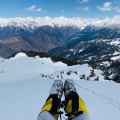
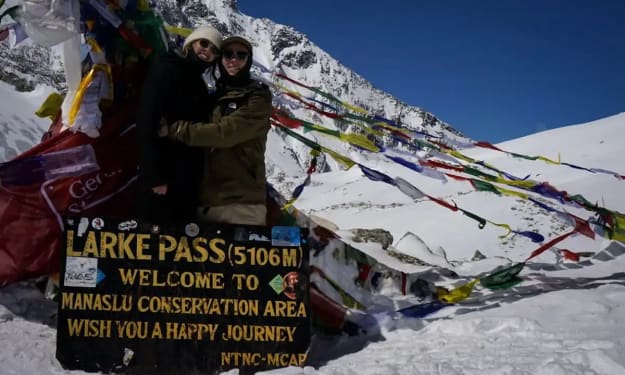
Worried About Time or Fitness? The Short Manaslu Circuit Trek is For You
When I first thought about trekking in Nepal, the full Manaslu Circuit felt too long and too tough. That’s when I learned about the short Manaslu circuit trek. It’s a shorter version of the classic trail, made for people like me who want the mountain views, the culture, and the adventure but without spending three weeks on the trail. Think of it as Manaslu Lite: same flavor, fewer calories on your legs.
By Sofia Jackson12 months ago in Wander
Alternatives to Venice 2025: Less Crowded Gems
Introduction If you’ve ever dreamed of visiting Venice, you probably imagined quiet canals, romantic gondola rides, and charming piazzas. The reality? Crowds, long lines, and steep prices. If you’re a traveler who values authentic experiences and fewer tourists, finding a destination that offers Venice’s magic — without the chaos — can feel impossible.
By Rayan Brook Vardy12 months ago in Wander
When the Road Became My Teacher
M Mehran Wandering began for me not as a choice, but as an accident. One train missed, one connection lost, and suddenly I was stranded in a town whose name I couldn’t pronounce. I could have panicked. Instead, I walked. That decision changed everything. The streets were narrow, cobblestones uneven under my shoes. A light rain had fallen, and the air smelled of wet earth and fresh bread drifting from a nearby bakery. I had no map, no plan—just time. For the first time in years, time belonged to me and me alone. As I wandered, I realized how much of life I had been rushing through. Normally, I would count the minutes, check my phone, calculate the fastest route. That day, I simply followed where the streets curved. Every turn revealed a surprise: an old fountain cracked with moss, a child chasing pigeons, an artist painting doorways in colors too bright for the gray sky. I stayed in that town until evening. No grand attractions, no famous monuments. Just life, ordinary and extraordinary, unfolding quietly. It was then I understood: to wander is to discover the beauty that doesn’t make it into guidebooks. From that day forward, I gave myself permission to get lost. And the more I wandered, the more the world opened itself. In the mountains, wandering meant surrendering to silence. The trail twisted endlessly upward, each step a negotiation between body and breath. When I finally stopped, lungs burning, I looked out over valleys spilling into infinity. The wind howled through the peaks like a hymn. There was no audience, no applause—only the raw reminder that nature is both vast and intimate, welcoming and humbling. By the sea, wandering meant listening. Waves thundered and retreated, a rhythm older than language. I walked barefoot along the shore until the horizon swallowed the sun. My footprints disappeared with each tide, teaching me that nothing we leave behind is permanent. And yet, the act of walking still mattered. In villages, wandering meant connection. An old man selling tea on a street corner told me his entire life story with just a smile and a handful of gestures. Children ran up to ask me where I came from, their laughter echoing long after they disappeared into alleyways. I learned that kindness travels farther than any currency, and that sometimes, being a stranger is the best way to feel at home. But wandering also taught me discomfort. Nights when the only shelter was a bench under flickering streetlights. Days when blisters throbbed with every step. Mornings when hunger gnawed louder than birdsong. Yet, those moments shaped me as much as the beauty did. Wander long enough, and you realize: the road is not here to serve you comfort. It is here to teach you resilience. One memory lingers most. I was in a remote town, walking aimlessly when I stumbled upon a festival. Lanterns floated into the sky, hundreds of tiny stars joining the night. Strangers handed me food, invited me into their dance. I didn’t know their songs, but I clapped and moved anyway. That night, surrounded by people I couldn’t understand yet somehow belonged to, I felt the essence of wandering: to lose yourself and find yourself at the same time. When I eventually returned home, friends asked me what I had gained. Souvenirs? Photos? Checkmarks on a list? I shook my head. Wandering had given me something subtler: a new way of seeing. Now, even in my own city, I wander. I take detours. I pause to notice the graffiti on a wall, the way shadows bend at dusk, the unexpected smile of a stranger. The world hasn’t changed—but I have. Because wandering isn’t about distance. It’s about presence. It’s about stepping off the straight line of expectations and allowing yourself to zigzag, to drift, to follow the pull of curiosity. It is less about where your feet go and more about what your heart discovers. And so, whenever life feels heavy or predictable, I lace up my shoes and walk—not toward a destination, but toward possibility. The road is still my teacher, reminding me that every step is both a question and an answer. To wander is to live twice: once in the body, and once in the soul.
By Muhammad Mehran12 months ago in Wander
The Compass of No Direction
M Mehran The first time I left home without a destination, my friends thought I was reckless. “What if you get lost?” they asked. I smiled, because that was exactly the point. I carried only a small backpack: a notebook, a pen, a water bottle, and enough clothes to last a few days. No GPS, no guidebook, no reservations. The world had become too planned, too predictable. I wanted to know what it felt like to let the road itself decide. The bus dropped me off in a town I couldn’t even pronounce. The station was crowded with people rushing toward somewhere. I, on the other hand, stepped out with no direction. It felt like floating in a river without trying to swim upstream. I wandered through markets where vendors shouted in a language I didn’t understand. The colors overwhelmed me—spices in pyramids of red, gold, and green; fabrics glowing like captured sunsets. A woman offered me fruit I had never seen before. Its skin was rough, its taste sweet with a hint of something wild. She laughed when I made a face, and in that moment we were friends. Later that day, I found myself at the edge of the town where hills rolled out like waves frozen in time. I started climbing. The path was uneven, but each step revealed more of the valley: rivers curling like silver threads, villages like toy models in the distance. When I reached the top, the wind roared against my face, as if congratulating me for daring to stand there. That night I stayed in a guesthouse run by an old couple. Their home smelled of wood smoke and fresh bread. They didn’t speak my language, but kindness doesn’t need translation. We ate together in silence, breaking bread and laughing at gestures. I scribbled in my notebook: The world is full of strangers who feel like family, if only we wander far enough to meet them. The days blurred after that. Each one became an improvisation. I hitchhiked with farmers on tractors, slept under skies heavy with stars, and followed dirt paths that ended at waterfalls hidden from maps. Sometimes, I walked for hours without meeting a soul. At first, that loneliness stung. But soon, it became a strange sort of companionship. When there’s no one else around, you begin to hear your own thoughts more clearly. One evening, as I wandered along a coastal road, the ocean spread out before me like a mirror cracked by waves. I met a fisherman repairing his nets. He spoke softly, his words broken by the sea breeze. “The fish don’t always come,” he said, “but the waiting teaches patience.” I thought about that long after I left. Maybe wandering was like fishing—uncertain, but always teaching. But wandering is not always romantic. There were mornings when my feet ached, when rain soaked through my clothes, when I longed for the comfort of knowing where I would sleep. I missed home-cooked meals. I missed warm showers. Yet, even in discomfort, I felt alive. Because every challenge was proof that I was still moving. One of the most memorable moments came in a forest where trees arched overhead like cathedral ceilings. Sunlight filtered through leaves, painting the ground in shifting mosaics. I walked until I stumbled on a clearing where a group of travelers had built a fire. They invited me to join. We shared stories that night—tales of love, heartbreak, and dreams. None of us knew if we’d ever meet again, but for those hours, we belonged to the same tribe: the tribe of wanderers. Eventually, I returned home. My friends asked, “What did you find?” I laughed, because the answer wasn’t something I could pack in a bag or show in a photo. I found that wandering is not about reaching places—it’s about stretching yourself. About learning that the world is bigger than your worries, wider than your fears, and kinder than the news will ever tell you. Now, I wander even in small ways. I take a different street on my walk home. I try food I can’t pronounce. I let conversations with strangers unfold. Because wandering doesn’t always mean leaving your country; sometimes it just means leaving your comfort zone. What I’ve learned is this: maps will tell you where to go, but wandering will tell you who you are. And every step into the unknown is a reminder that life is not meant to be traced like a blueprint—it is meant to be lived like an adventure. So pack light. Leave the itinerary behind. Let curiosity be your compass, and wonder be your guide. The world is waiting for your footprints in places you’ve never dreamed of.
By Muhammad Mehran12 months ago in Wander
The Call of the Unknown
M Mehran There is a moment, somewhere between the first step away from the familiar and the second step into the unknown, when the heart learns how to beat differently. It is not the fast rhythm of fear, nor the steady pulse of routine. It is something else—a rhythm born of possibility, of roads untaken, of skies uncharted. That moment is the essence of wandering. I first discovered it when I found myself lost, not in a forest or a city, but in life. My days had grown predictable, looped like a song on repeat. Wake, work, sleep. Everything measured, everything planned. Yet inside me was a restlessness I could not silence, a whisper that said: What if there is more? One morning, I listened. I packed a bag without much thought—just enough to keep me moving—and left my small apartment behind. I had no destination, no carefully mapped route. My only goal was to wander. The first hours were intoxicating. The city I thought I knew unfolded in unexpected ways when I stopped rushing. Streets I had walked a hundred times suddenly glowed with details: the painted shutters of a bakery I had never noticed, the mural hidden down a narrow alley, the way sunlight gathered like spilled gold on the cobblestones. By afternoon, I reached the edge of the city where the concrete thinned into fields. The air shifted. It was quieter, scented with grass and earth. I kept walking. And walking. At some point, the mind begins to loosen when the body moves without aim. Thoughts unravel like old knots, and what felt heavy inside becomes lighter. By evening, I reached a small village I had never seen before. Children played cricket in the street, their laughter chasing the ball farther than their feet could. A woman sitting on her porch waved at me as if I were expected. There was no question of belonging—I was simply another soul passing through. That night, I slept in a modest inn with peeling wallpaper and sheets that smelled faintly of lavender. I listened to the hum of crickets outside my window and thought: This is it. This is the life I wanted to feel. Days melted into weeks. I wandered through markets alive with spices and chatter, across bridges arched like the backs of old cats, and into forests that seemed to breathe. I shared bread with strangers who became friends for the length of a meal. I learned that conversations don’t need a common language, only patience and warmth. Once, while hiking through hills, I came across an old shepherd. His face was weathered like bark, his eyes the color of storm clouds. He offered me tea from a dented kettle, and we sat together in silence, watching sheep graze. Finally, he spoke: “The earth is wide, but the heart is wider when you walk it.” His words struck deep. Perhaps wandering wasn’t about escaping life—it was about expanding it. But not all days were romantic. Some were exhausting, marked by blisters and hunger, by rain that soaked through my clothes and left me shivering. There were moments I longed for the comfort of my bed, the certainty of hot showers, the predictability of routine. Yet even then, I felt alive. Because every discomfort meant I was moving, not standing still. One afternoon, in a seaside town, I found myself sitting on a pier, watching fishermen mend their nets. The sea was restless, throwing itself against the rocks with wild insistence. I thought of the life I had left behind—the clock ticking on my desk, the endless emails, the sameness of it all. For the first time, I didn’t feel guilty about leaving. I understood now: to wander is not to run away. It is to run toward something you didn’t know you needed. Months later, when I finally returned, my apartment felt smaller, though it hadn’t changed. My shoes were worn, my bag frayed, and my heart fuller than it had ever been. Friends asked me, “So, where did you go?” I never knew how to answer. I could list the places, the villages, the roads—but none of that captured the truth. Where did I go? I went outside myself. I went into the wide open. I went into the unknown, and came back with pieces of it stitched into my soul. Now, whenever life begins to feel heavy, I remind myself that wandering doesn’t always mean packing a bag. Sometimes it means taking the long way home, letting curiosity lead instead of obligation. It means saying yes to the unexpected, letting detours become destinations. Because the world is not a map to be checked off; it is a story to be lived. And the best chapters are written not when we plan every word, but when we surrender to the wild rhythm of wonder. So wander. Not because you are lost, but because the world is waiting for you to find it—one step, one story, one heartbeat at a time.
By Muhammad Mehran12 months ago in Wander
Rome vs Florence 2025: 7 Key Insights for History Buffs
Introduction If you’re a traveler with a passion for history, you know how tricky it can be to pick the perfect city that truly satisfies your curiosity. Italy offers two shining stars — Rome and Florence — both packed with centuries of art, culture, and monuments that shaped the world. But when time (and budget) is limited, which one should you choose?
By Rayan Brook Vardyabout a year ago in Wander
Top 15 Things to Do in Sri Lanka for an Unforgettable Vacation . AI-Generated.
1. Climb the Majestic Sigiriya Rock Fortress One of Sri Lanka’s most iconic landmarks, Sigiriya Rock Fortress, is a UNESCO World Heritage site. Rising nearly 200 meters above the plains, this ancient citadel offers breathtaking views, intricate frescoes, and remarkable history.
By Ramesh Razikabout a year ago in Wander