activities
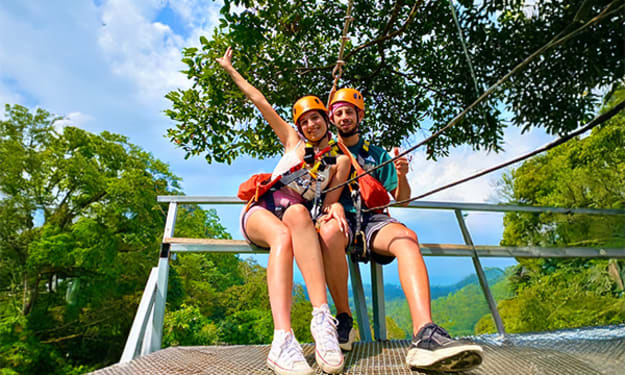
Whether you're a sight-seer, thrill seeker or beach lounger, activities to satisfy bucket lists of all kinds.
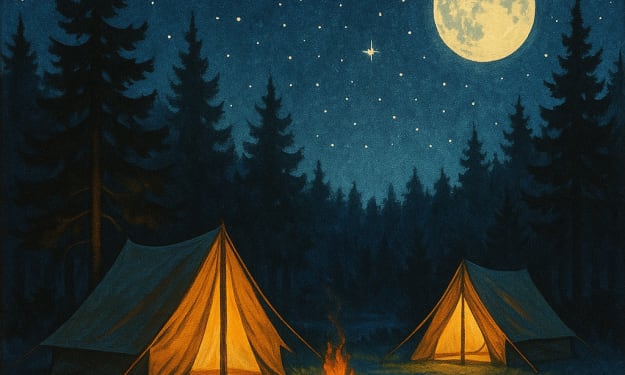
10 of the Best Tent Camping Spots You’ve Never Heard Of
The tent shivers in the night wind. Beyond its thin walls, you hear the ripple of a river, the distant cry of an owl, and the sigh of pines bending under the stars. It’s not a resort, not a crowded campground with neon lanterns and RVs stacked bumper to bumper. This is tent camping... raw, quiet, stripped-down Americana.
By The Iron Lighthouseabout a year ago in Wander
Eyewitness account of a football match
It was Friday. Today, a football match was going to be held between the teams of Pak Club and Government High School. After finishing Friday prayers, I reached the ground with my friends before the scheduled time. Students from local schools had gathered at the ground to watch the match and other football fans were also coming.
By Tasir ullahabout a year ago in Wander
Dubai and Sri Lanka Tour Packages – A Journey from Skyscrapers to Tropical Paradise
Introduction For travelers who crave both modern luxury and natural beauty, Dubai and Sri Lanka tour packages are the ultimate choice. Dubai is a futuristic city of innovation, while Sri Lanka is a tropical island filled with cultural treasures, golden beaches, and lush greenery. Together, they offer a perfectly balanced vacation where travelers can experience adventure, relaxation, and cultural discovery in one seamless journey.
By Arabiersindiaabout a year ago in Wander
How to Celebrate the Esala Perahera Festival Like a Local in Kandy
The Esala Perahera is one of the oldest cultural festivals in Sri Lanka. It takes place in Kandy during July or August. Many locals gather to honour the Sacred Tooth Relic of the Buddha. The festival lasts for about ten nights, and it ends with a grand procession featuring dancers, drummers, and elephants. If you want to take part like a local, preparation matters. Let us take a look at how to best experience the Esala Perahera like a local.
By Aurora Giannaabout a year ago in Wander
Trapped by a Monster of the Wild
2013, a story emerged from the rugged wilderness of Australia that sounded almost like a scene out of a survival thriller. Yet it was real, a chilling reminder of how unpredictable and merciless nature can be. A lone adventurer, seeking the peace and thrill of the open water in his kayak, found himself imprisoned on a remote island by one of nature’s most fearsome predators: a giant saltwater crocodile. This was not a brief encounter, not just a single moment of danger. Instead, it became a horrifying standoff that lasted nearly two full weeks—fourteen endless days and nights of fear, hunger, and the constant presence of death lurking just beyond the water’s edge. What started as a routine kayaking trip turned into a test of endurance, intelligence, and sheer willpower to survive. --- The Unexpected Encounter The kayaker, whose adventurous spirit had brought him into the wild waters, was navigating near a remote island when his peaceful journey was shattered. Out of nowhere, a massive saltwater crocodile appeared. These creatures, native to northern Australia, are the largest reptiles on Earth, capable of growing well over 20 feet long and weighing more than a ton. The crocodile that confronted him was enormous—so large that it dwarfed his eight-foot-long kayak. Twice the size of his vessel and armed with a terrifying power, the predator immediately asserted its dominance. Whenever the man attempted to push off from the island and paddle back into open water, the crocodile would surge forward, blocking his way, forcing him back onto shore. What may have seemed at first like a temporary inconvenience quickly became a nightmare. The crocodile wasn’t just passing through; it had decided to make the man its focus. Whether out of territorial instinct or predatory interest, the animal began a relentless vigil, waiting, watching, and ensuring that its human opponent remained stranded. --- A Prisoner on the Island For the kayaker, escape seemed impossible. Each attempt to slip past the crocodile was met with the same terrifying result: the beast would shadow his every move, using its immense size and strength to intimidate him into retreat. He knew that one wrong move, one miscalculation of distance or timing, could end in tragedy. The crocodile could overturn his kayak in an instant, dragging him into the water where survival would be unthinkable. And so, he became a prisoner. The small, desolate island, which at first had been a random stopping point, turned into his cage. For two long weeks, he lived in constant fear. Every sound in the brush, every ripple in the water, carried the possibility of an attack. His struggle was not just against the crocodile but also against the elements. Food was scarce, fresh water was limited, and the sun beat down mercilessly during the day while the nights brought chilling winds. The psychological torment was perhaps even worse than the physical hardship. To know that a predator was always nearby, watching, waiting, reduced every attempt at rest into an uneasy sleep filled with dread. --- Endurance, Patience, and Ingenuity In order to survive, the kayaker had to summon every ounce of resilience he had. Panic would have been fatal; rash decisions would have played directly into the crocodile’s advantage. Instead, he relied on patience, endurance, and ingenuity. He rationed whatever supplies he had carried in his kayak, supplemented with what little the island could provide. He used his knowledge of survival to collect rainwater and keep himself hydrated. Each day was a battle to maintain both his body and his spirit. Mentally, the challenge was immense. The awareness that the crocodile could strike at any moment kept him on constant alert. The thought of dying alone on a barren island haunted him. Yet he did not give up. Despite the fear gnawing at him, he held onto the hope that someone, someday, might notice his plight. --- The Rescue After nearly two harrowing weeks, when hope was wearing thin, a stroke of luck arrived. A local man, navigating nearby, noticed a flicker of light coming from the island. Curious, he approached. What he discovered was shocking: a weary, desperate kayaker stranded in isolation, with the shadow of a giant crocodile haunting the waters. The local immediately understood the severity of the situation. Without hesitation, he intervened. His presence and assistance broke the crocodile’s deadly grip over the island. Carefully and cautiously, he helped the stranded man to escape, guiding him away from the predator and back toward safety. For the kayaker, this moment was nothing short of miraculous. After enduring endless days of fear and uncertainty, after battling hunger, exhaustion, and despair, he was finally free. --- Reflections on a Close Call The story of this ordeal spread quickly, capturing attention around the world. It was more than just a tale of man versus beast—it was a testament to the fragile balance between humans and nature. Saltwater crocodiles have survived for millions of years as apex predators, perfectly adapted to their environment. To them, a lone human in a small kayak is no match. For the kayaker, the experience became a lesson in humility and respect. He had faced one of nature’s most formidable hunters and lived to tell the tale, not because he overpowered it, but because he endured long enough to be saved. His two-week struggle highlighted not only the dangers of venturing into wild and remote places but also the incredible resilience of the human spirit. To remain calm under such dire circumstances, to resist panic, and to survive with limited resources is no small feat. --- Conclusion The Australian kayaker’s terrifying encounter with a giant crocodile remains one of the most remarkable survival stories of recent years. For two long weeks, he was trapped on a lonely island, his life constantly threatened by a predator twice the size of his boat. Yet through patience, courage, and determination, he endured until rescue arrived. This story stands as a stark reminder: the wilderness, beautiful and alluring as it may be, is also home to dangers beyond imagination. And sometimes, the greatest triumph is not in conquering nature, but in surviving it.
By Ikram Ullahabout a year ago in Wander