
Nipah Klasik: Turning Swamp Land Into a Living Heritage
From Muddy Abandonment to Thriving Grove A Crop That Works With the Land Patience, Tradition, and the Art of Tapping Dry Season, Sweetest Sap A Harvest Beyond Yield Where the Grove Becomes a Table

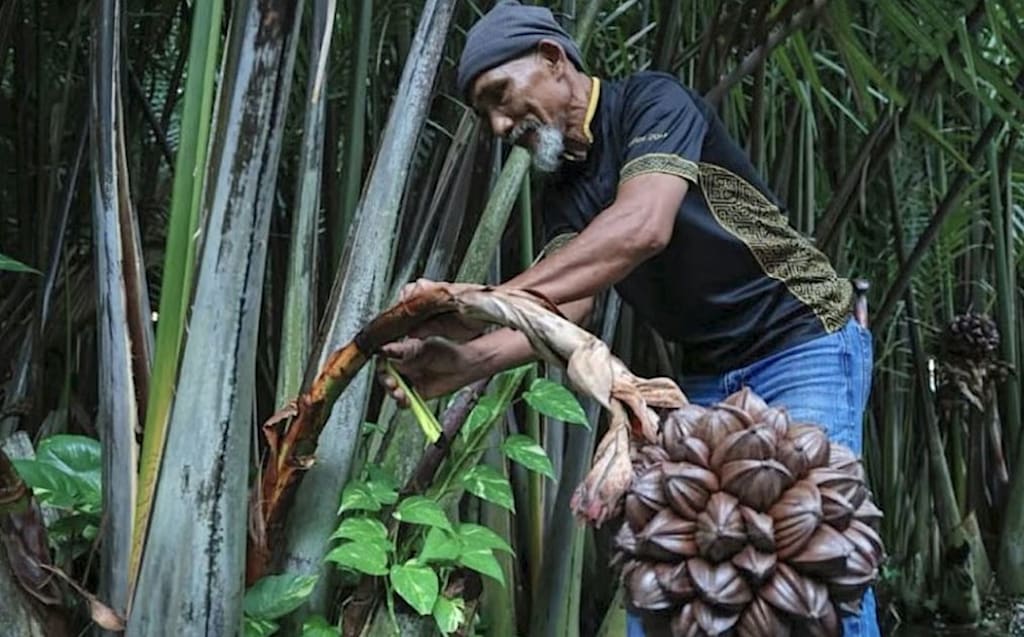
When Jamaludin Abd Rahman first surveyed the half‑hectare stretch of Kampung Bunga Emas Barat, he saw what others had missed: potential where most saw only mire. Deep, unstable mud had rendered the land all but useless to conventional farming, too soft for tractors, too boggy for paddies, too difficult to cultivate. Where others walked away, Jamaludin found a plant perfectly at home in waterlogged soil: the nipah palm. What began in 2019 as a modest planting of roughly 1,000 saplings has grown into a thriving grove of more than 5,000 palms and a remarkable family enterprise known as Nipah Klasik, where heritage, ecology, and livelihood grow together.
A Crop That Works With the Land
The nipah palm is no ordinary tree. Unlike crops that demand soil be drained, levelled, and reshaped, nipah thrives exactly where the ground is soft and wet. Its extensive root system binds loose earth together, stabilising banks, reducing erosion, and holding the landscape in place, turning a site once prone to shifting mud into one that grows firmer with every year. Rather than fight the swamp, Jamaludin chose to embrace it, planting a species that belongs there. The result is not an engineered landscape forced into submission, but a living system that improves the very ground it stands on.
Patience, Tradition, and the Art of Tapping
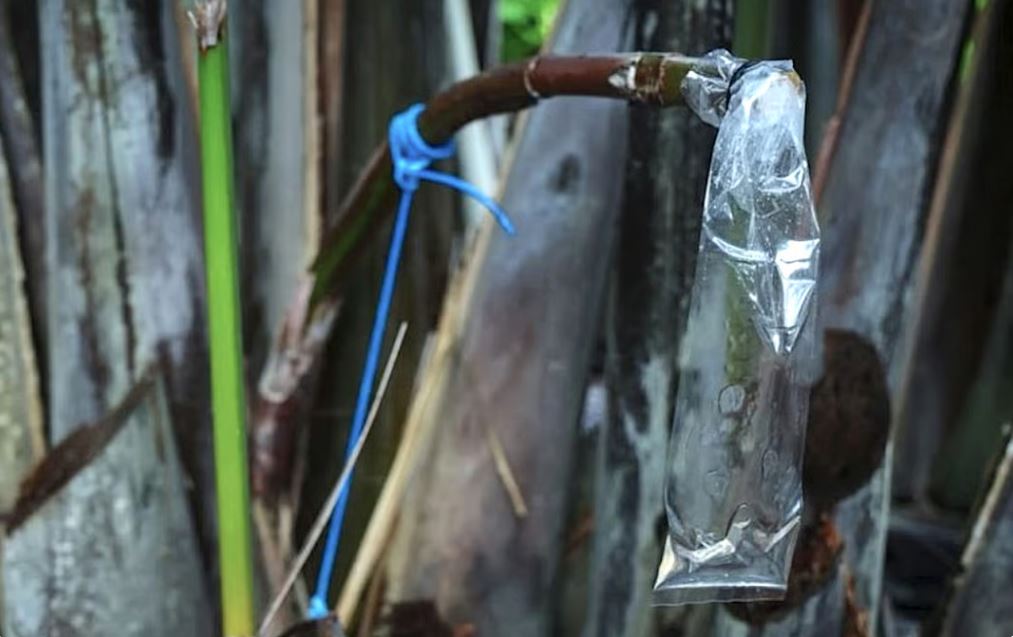
Nipah demands more than space; it demands time. The palms take roughly five years to mature before they yield their first drop of sap, and extracting that sweet liquid is an art increasingly forgotten. Jamaludin uses techniques passed down through generations: carefully preparing each flower stalk, twisting and wrapping it, then tapping it at rhythmic intervals that coax the sap gently without harming the tree. It is work that cannot be rushed or mechanised easily a quiet, skilled dialogue between farmer and plant easily. For Jamaludin, also an artist, this is not merely labour; it is craft, preserved and practised daily.
Dry Season, Sweetest Sap
Common wisdom might suggest sap flows most freely when rain falls heaviest, but nipah has its own rhythm. Jamaludin has found the opposite to be true: during the dry season, the sap runs clearer, sweeter, and more abundant. The palm’s deep roots reach far beneath the surface to draw moisture even when topsoil dries, making it resilient where other crops wither. This distinctive trait means harvests peak not when the skies open, but when they clear a reminder that nature’s patterns do not always follow what we expect.
A Harvest Beyond Yield
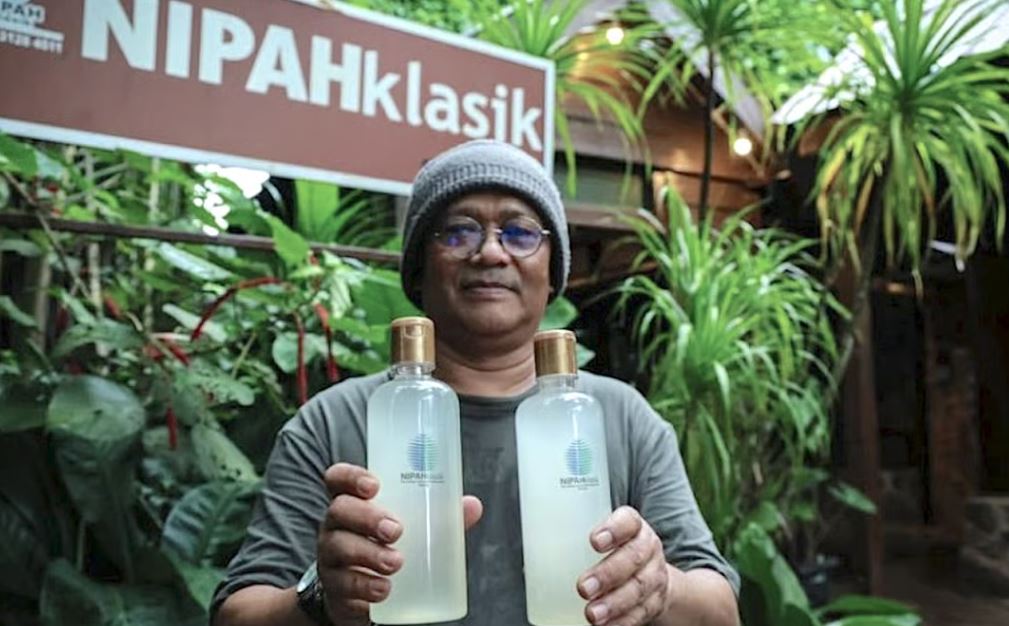
The benefits extend far beyond the sap itself. Nipah leaves have long served villagers as roofing material and wrapping for traditional cigarettes, while the sap transforms into refreshing drinks and tangy vinegar. The grove acts as a natural buffer during floods, slowing and absorbing rising waters, and provides habitat for birds and insects. What was once dismissed as wasteland now feeds people, protects the land, and revives practices that might otherwise vanish. For Jamaludin, this is the truest measure of success: not just income, but a landscape returned to purpose.
Where the Grove Becomes a Table
Today, visitors come to Nipah Klasik not just to taste, but to immerse themselves. The family‑run eatery sits within the plantation, where guests dine among the palms, sample fresh sap alongside popiah, keropok lekor, and fish otak‑otak, and watch live demonstrations of tapping. It is more than a meal it is an education. Jamaludin shows how land written off as useless can sustain food, culture, and community when matched to what it naturally supports. In doing so, he has turned a swamp into something rare and precious: a place where heritage grows, the environment heals, and people remember how to live in harmony with the land.
About the Creator
Mark Lim
Hi I am mark an automotive student and a car, tech and food enthusiast ! Im gonna try and post daily & hope you enjoy what I write and do share my page with people you know. I would gladly appreciate it! Cheers
Enjoyed the story? Support the Creator.
Subscribe for free to receive all their stories in your feed.
Comments
There are no comments for this story
Be the first to respond and start the conversation.