
Miracle on Everest: Sherpa Survives Six Days Alone in the Death Zone Without Food, Water, or Oxygen
A Survival Story That Defies All Odds
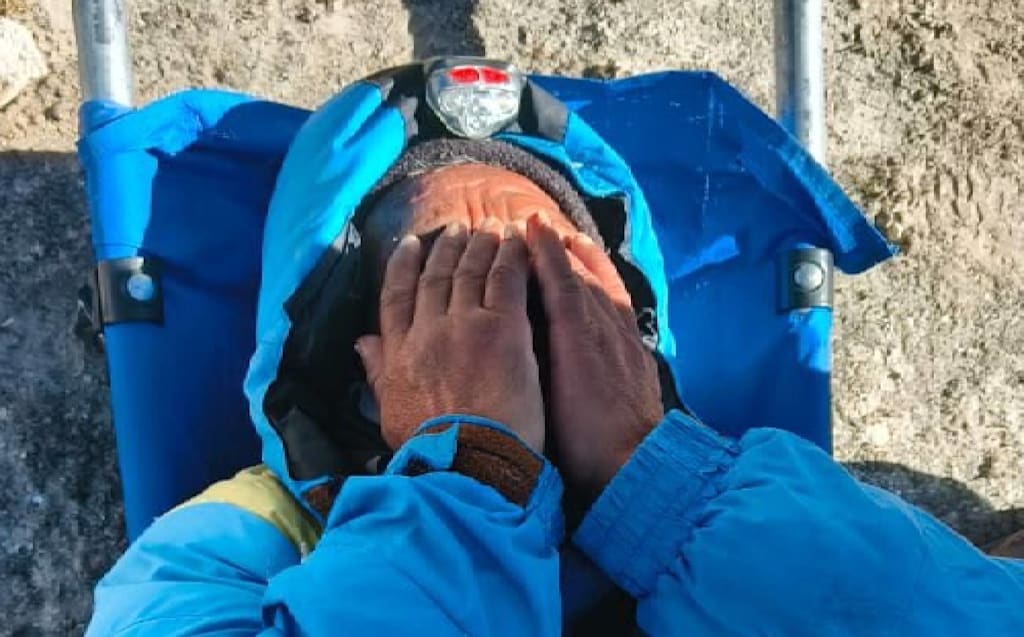
Mount Everest has long been known as a place where human endurance is tested to its absolute limits. Every year, climbers from around the world attempt to conquer the world's highest peak, facing extreme cold, powerful winds, avalanches, and the constant threat of altitude sickness. Yet even among the countless stories of courage and perseverance that emerge from the mountain, some stand out as truly extraordinary.
One such story has recently captured the attention of the global mountaineering community: the miraculous survival of a Sherpa who spent six days alone in Everest's infamous Death Zone without food, water, or supplementary oxygen.
The remarkable incident has been described by climbers, guides, and rescue experts as one of the most astonishing survival stories ever recorded on the world's highest mountain.
Disappearance High on the World's Highest Peak
The Sherpa was part of an expedition operating on Mount Everest during the climbing season. While working at extreme altitude above 8,000 meters, he became separated from his team amid challenging weather conditions and dangerous terrain.
Communication was lost, and despite immediate efforts to locate him, there was no sign of the missing climber. The mountain's harsh environment quickly turned the situation into a race against time.
As hours turned into days, concern grew among fellow climbers and expedition leaders. Many feared the worst. At such an altitude, survival without shelter, oxygen, food, or water is considered nearly impossible.
Search teams scanned the mountain whenever weather conditions allowed, but Everest's vast slopes and unpredictable conditions made rescue efforts extremely difficult. Hope gradually began to fade as the days passed.
Understanding the Death Zone
To appreciate the magnitude of this survival story, it is important to understand the environment in which the Sherpa was stranded.
The Death Zone refers to the region above 8,000 meters (26,247 feet) on Mount Everest and other Himalayan peaks. At this altitude, the human body can no longer properly acclimatize. Oxygen levels are approximately one-third of those found at sea level, making every breath a struggle.
Even simple movements require enormous physical effort. Climbers often experience extreme fatigue, confusion, impaired judgment, and a heightened risk of life-threatening conditions such as cerebral edema and pulmonary edema.
Most climbers rely heavily on supplementary oxygen to function in the Death Zone. Without it, prolonged exposure can rapidly lead to serious physical and mental deterioration.
Temperatures can plunge far below freezing, while powerful winds create conditions capable of causing severe frostbite within minutes. It is an environment where survival is measured in hours rather than days.
Six Days of Endurance
Exactly how the Sherpa managed to survive remains a testament to extraordinary resilience and determination.
Alone in one of the harshest environments on Earth, he endured freezing temperatures, relentless exposure, and dangerously low oxygen levels. With no access to food or drinking water, his body was forced to rely entirely on its remaining energy reserves.
Experienced mountaineers understand the devastating effects of dehydration at high altitude. The cold, dry air causes climbers to lose fluids rapidly through breathing, while physical exertion increases the body's demand for water.
Yet despite these challenges, the Sherpa continued fighting for survival.
Experts believe that years of experience working in the Himalayas may have helped him make critical decisions that increased his chances of staying alive. Sherpas often possess an exceptional understanding of mountain conditions and high-altitude environments gained through decades of experience.
Still, surviving six days under such circumstances remains almost unimaginable.
The Search Operation Continues
While many feared that the missing Sherpa had perished, rescue teams refused to abandon the search completely.
Fellow Sherpas, guides, and expedition operators continued monitoring possible locations where he might have sought refuge. Search efforts were complicated by dangerous weather, avalanche risks, and the physical challenges of operating at extreme altitude.
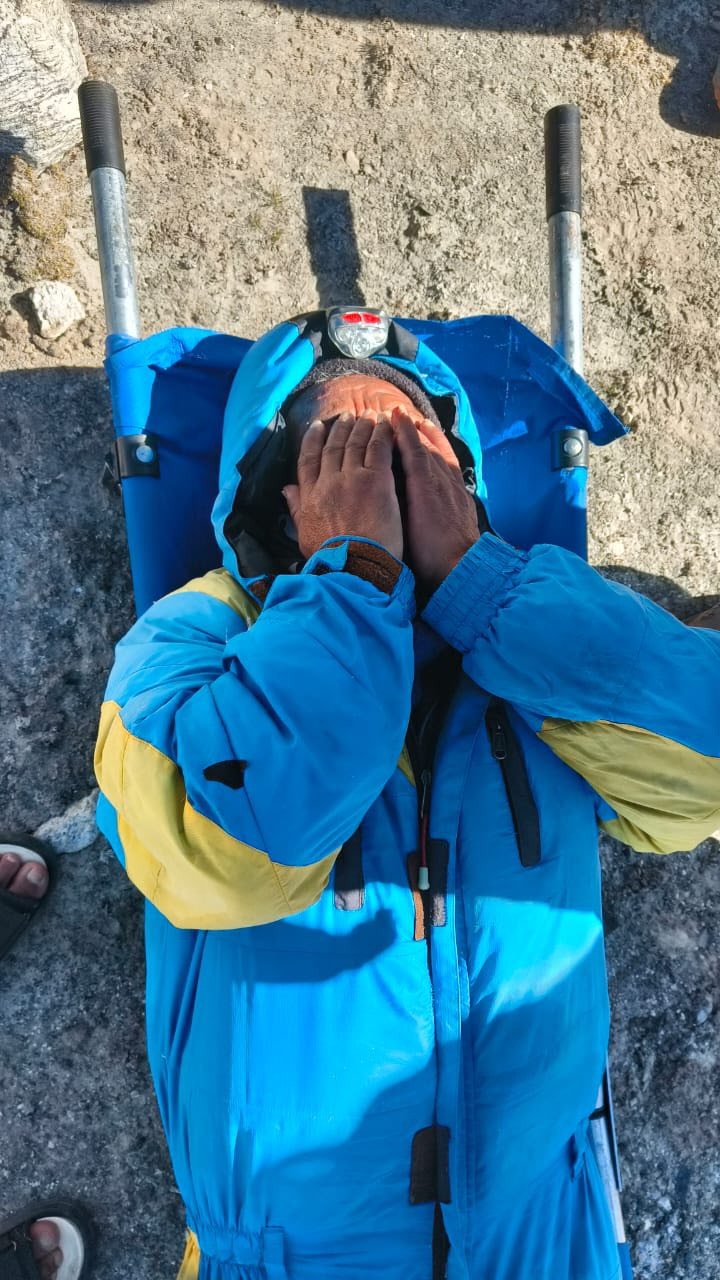
Every rescue mission in the Death Zone places rescuers themselves in significant danger. Helicopter operations are limited at such elevations, and search teams must often climb into hazardous terrain while carrying equipment and oxygen supplies.
Despite these obstacles, rescuers continued their efforts.
The determination of the search teams would eventually lead to an outcome few thought possible.
A Discovery That Shocked Rescuers
When the missing Sherpa was finally located, the discovery stunned everyone involved.
Against all expectations, he was alive.
Rescuers found him in an extremely weakened condition but conscious and responsive. Although suffering from severe exhaustion, dehydration, and frostbite, he had somehow survived nearly a week in conditions that experts routinely describe as unsurvivable.
Members of the rescue team reportedly could hardly believe what they were seeing. After six days in the Death Zone without food, water, or supplemental oxygen, most would have expected to find only a tragic outcome.
Instead, they found a survivor.
The moment quickly became one of the most emotional rescue stories in recent Everest history.
The Difficult Journey to Safety
Finding the Sherpa was only the beginning. The next challenge involved bringing him safely down the mountain.
Rescuing an injured or weakened climber from extreme altitude is a complex and dangerous operation. Every step downward requires careful coordination, oxygen management, and constant monitoring of the survivor's condition.
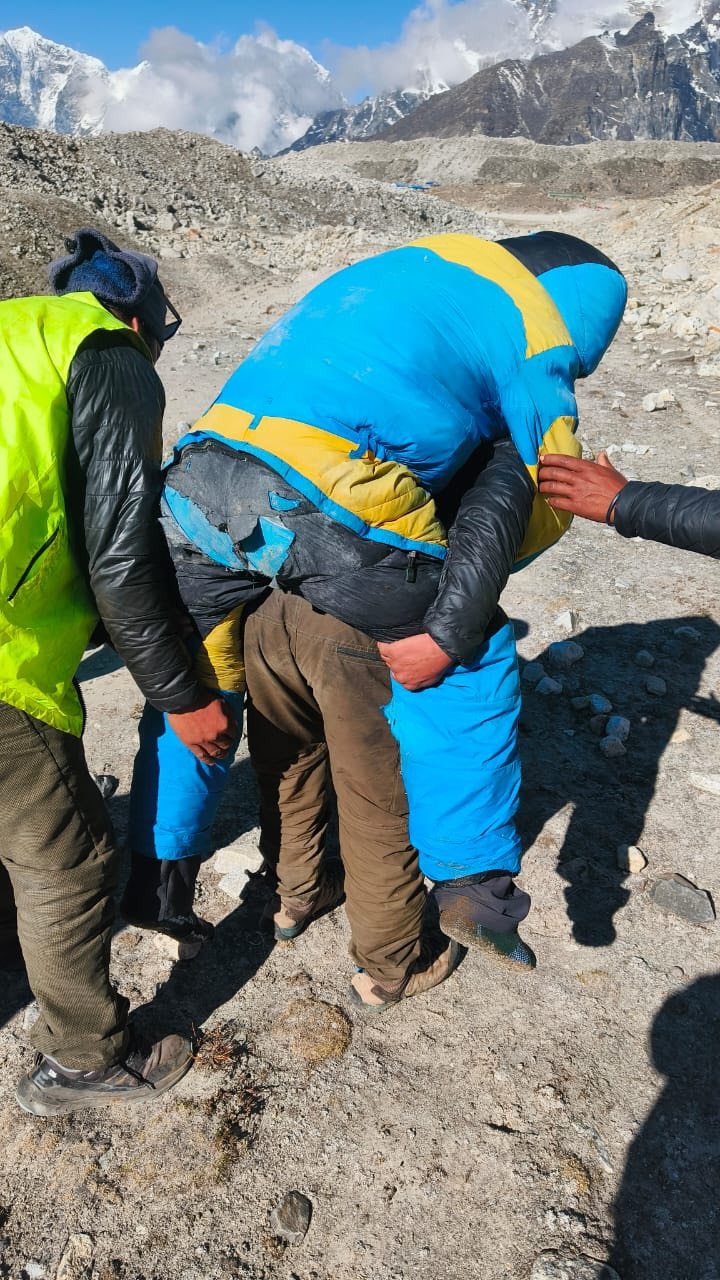
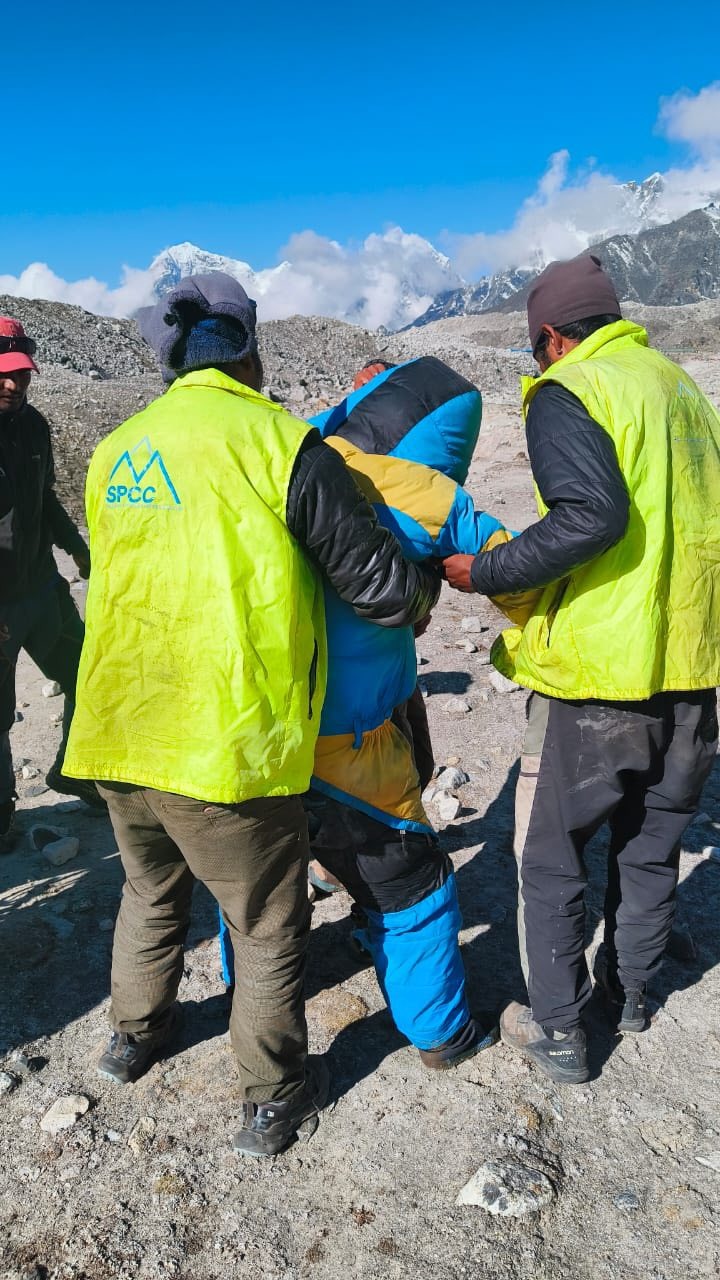
Rescuers worked tirelessly to assist the Sherpa through the hazardous terrain. The descent was slow and demanding, but eventually he was transported to lower elevations where medical teams could provide urgent treatment.
Upon reaching safety, he was immediately evaluated for frostbite, dehydration, altitude-related complications, and other injuries commonly associated with prolonged exposure to extreme altitude.
Medical professionals described his survival as extraordinary.
The Strength and Resilience of Sherpas
The incident has once again highlighted the incredible capabilities of the Sherpa community.
For decades, Sherpas have served as the backbone of Himalayan mountaineering. They carry equipment, establish camps, fix ropes, guide climbers, and conduct rescue operations in some of the most dangerous environments on Earth.
While many international climbers receive recognition for reaching the summit, Sherpas often undertake the most physically demanding and risky tasks on the mountain.
Their deep knowledge of high-altitude environments, combined with years of experience, makes them indispensable to Himalayan expeditions.
This remarkable survival story serves as another example of the resilience, courage, and determination that Sherpas demonstrate every climbing season.
Lessons From the Mountain
The miraculous survival of this Sherpa is both inspiring and humbling.
It reminds us that Mount Everest remains one of the most unforgiving places on Earth, where even the most experienced climbers face immense risks. It also highlights the importance of preparation, teamwork, rescue coordination, and the invaluable role played by Sherpas in mountain expeditions.
At the same time, the story demonstrates the incredible capacity of the human spirit to endure even the most extreme circumstances.
A Miracle That Will Be Remembered
As news of the rescue spreads throughout the mountaineering world, many are calling it a true miracle on Everest.
Few people have ever survived such prolonged exposure in the Death Zone. Fewer still have done so without food, water, or supplementary oxygen.
For climbers, guides, and adventure enthusiasts around the world, this remarkable story will be remembered as one of Everest's greatest survival tales—a powerful testament to human endurance, determination, and the will to live.
Against all odds, when hope seemed lost and survival appeared impossible, one Sherpa proved that miracles can still happen on the roof of the world.
About the Creator
Temba Tsheri Sherpa
Hi everyone, it’s me, Temba Tsheri Sherpa. I’m a young climber who summited Mount Everest at the age of 16. Through this space, I’ll be sharing my climbing stories, real expedition experiences, and lessons from the mountains.
Enjoyed the story? Support the Creator.
Subscribe for free to receive all their stories in your feed.
Comments
There are no comments for this story
Be the first to respond and start the conversation.