

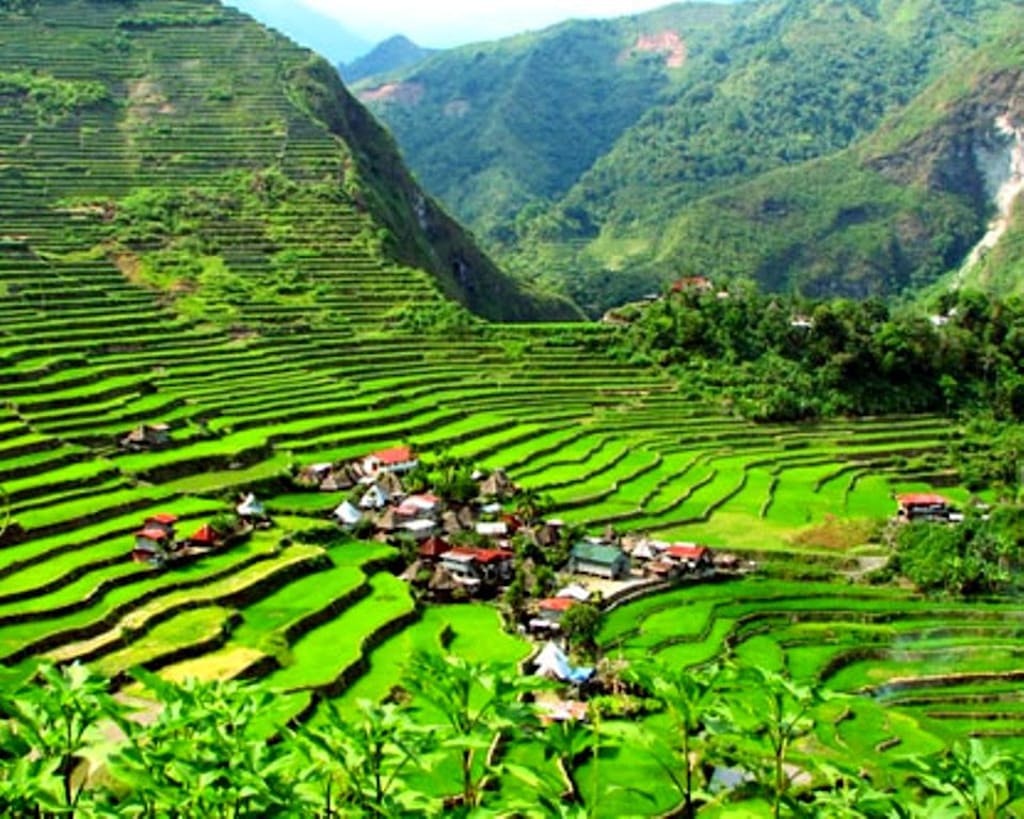
Banaue Rice Terraces
The Banaue Rice Terraces, located in the Ifugao province of the Philippines, are a remarkable example of ancient agricultural engineering, carved into the mountains over 2,000 years ago by the Ifugao people. These terraces are not only a UNESCO World Heritage Site but also a testament to the ingenuity and sustainable practices of indigenous cultures in rice farming. The terraces utilize a sophisticated irrigation system that channels water from the mountains.
Chocolate Hills
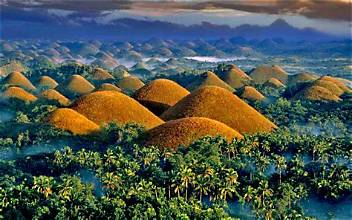
The Chocolate Hills are a unique geological formation located in Bohol. They consist of at least 1,260 conical limestone hills spread over an area of more than 50 square kilometers. These hills are particularly famous for their chocolate-brown color during the dry season, resembling mounds of chocolate, giving them their name. The site is a popular tourist destination, attracting visitors for its scenic views and unique landscape. Legend has it that two feuding giants threw rocks and chocolate at each other, which hardened into the hills.
Fort Santiago
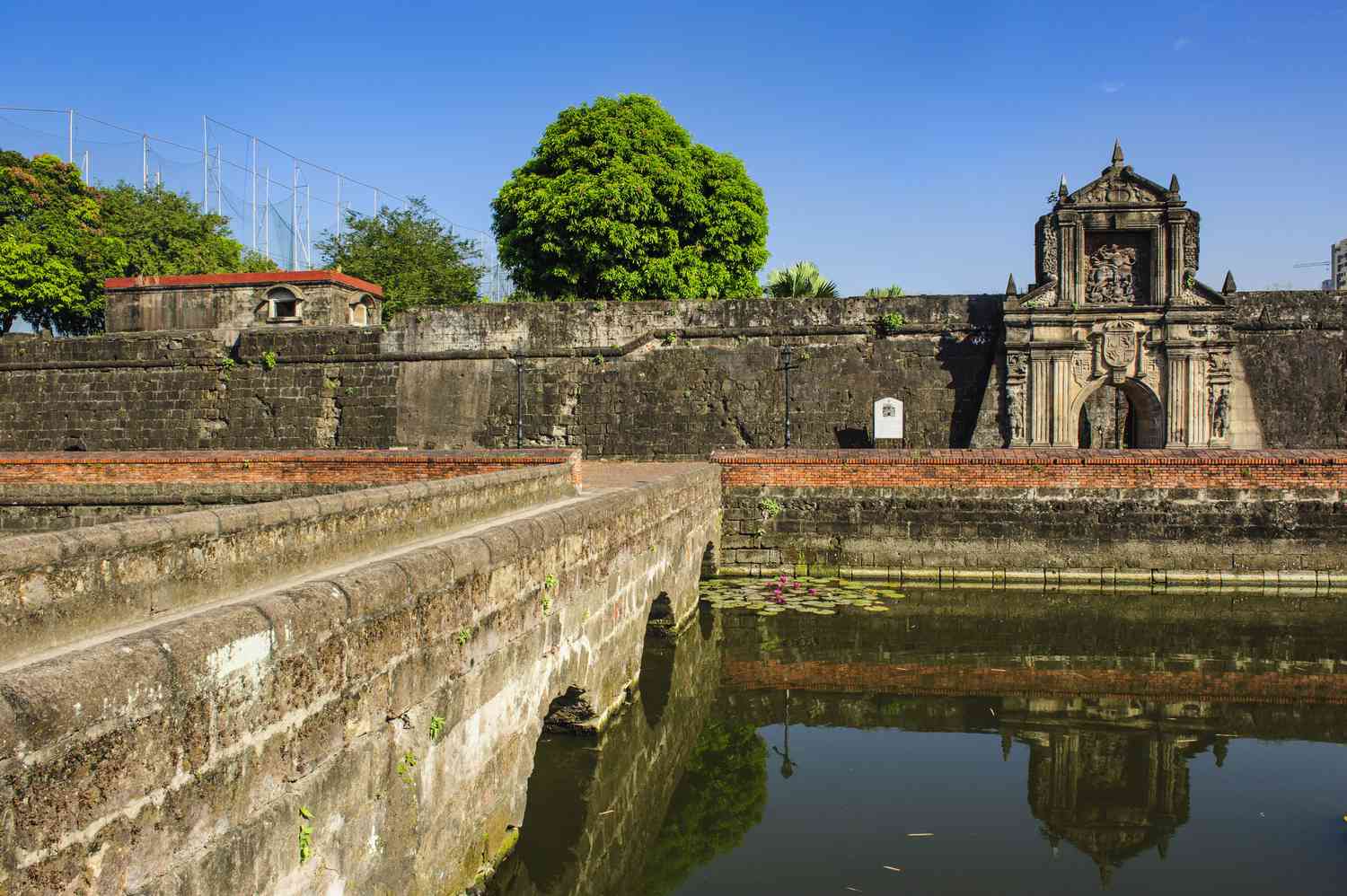
Fort Santiago is a historic Spanish colonial fortress located in Intramuros, Manila, built in 1571 by Miguel López de Legazpi. It served as a military stronghold and prison, and today it stands as a memorial to Filipino freedom and history. The fortress is built in stone and showcases Spanish colonial architecture. It served as a military headquarters and a prison, notably for national hero José Rizal. In 1950, it was declared a Shrine of Freedom, commemorating the sacrifices of Filipinos during World War II.
Intramuros
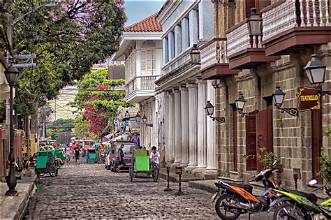
Intramuros, known as the "Walled City," is a historic district in Manila. It’s characterized by its well-preserved Spanish colonial architecture and significant cultural heritage. It served as the center of political, religious, and educational activities during the Spanish colonial period, making it a vital part of the country's history. It was the seat of the colonial government and a hub for the Manila galleon trade, which connected the Philippines to global commerce. Intramuros showcases a blend of Spanish and Asian influences, featuring landmarks like the Manila Cathedral and San Agustin Church.
Magellan’s Cross
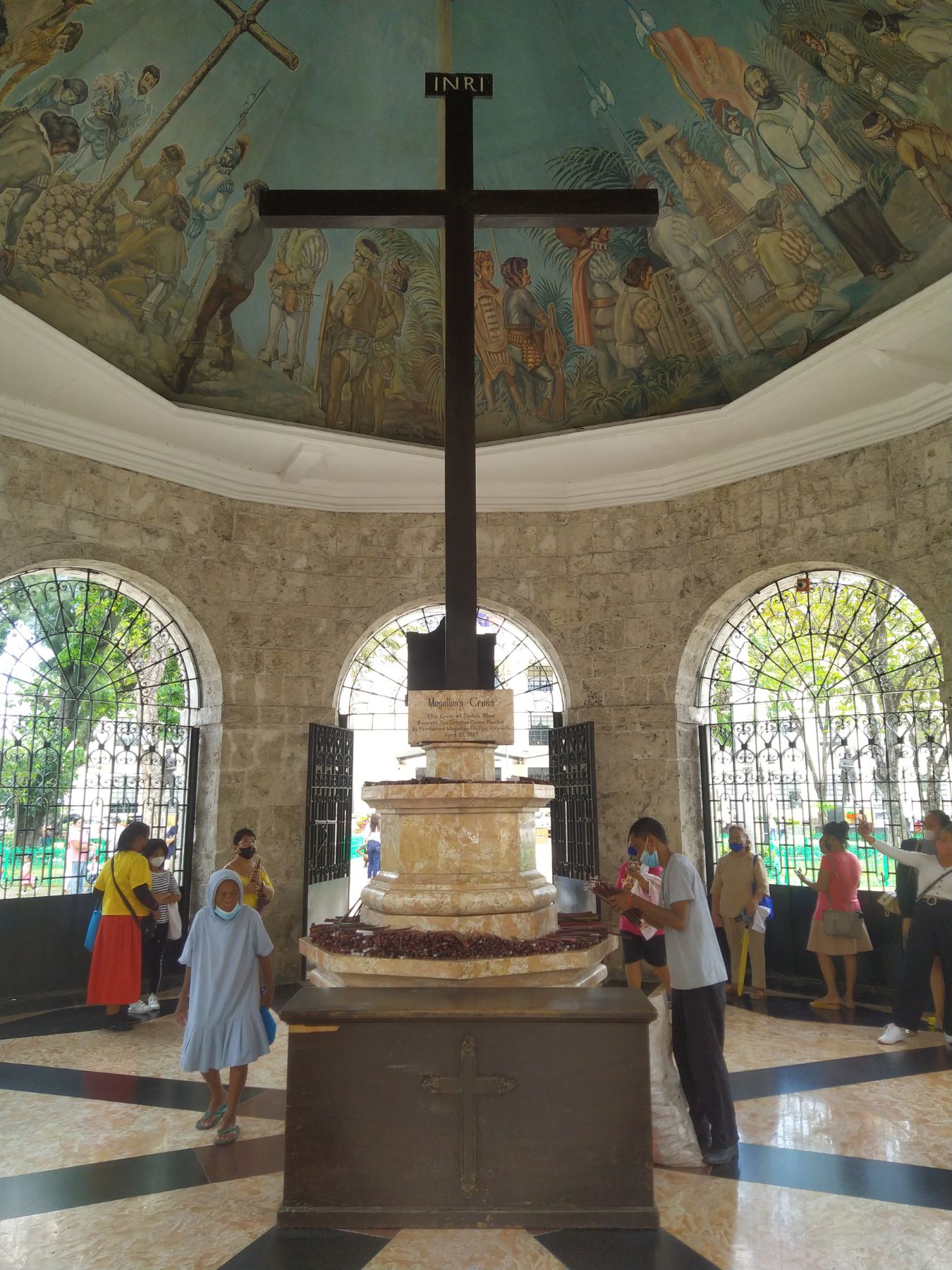
Magellan's Cross, located in Cebu City, is a significant historical landmark that symbolizes the introduction of Christianity to the Philippines. The cross is housed in a reinforced concrete pavilion, which protects it and highlights its importance in Filipino culture and history. It serves as a pilgrimage site, attracting thousands of visitors annually. The cross is often depicted in various forms of art, symbolizing the blend of cultures in the Philippines.
Mayon Volcano
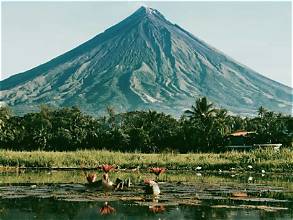
Mayon Volcano is renowned for its near-perfect conical shape and is the most active volcano in the country. Its eruptions have been documented since 1616, characterized by various volcanic activities, including lava flows and pyroclastic flows. The volcano is situated in the Bicol Region on Luzon Island. It is monitored by the Philippine Institute of Volcanology and Seismology (PHIVOLCS) due to its frequent eruptions.
Puerto Princesa Subterranean River
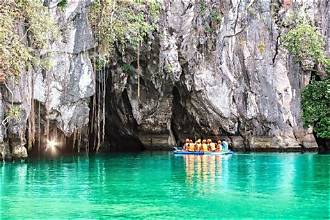
The Puerto Princesa Subterranean River, located in Palawan, is a UNESCO World Heritage Site and one of the New 7 Wonders of Nature. This remarkable natural wonder features an 8.2-kilometer navigable underground river flowing through a stunning cave system that leads directly to the sea. It protects a full mountain-to-sea ecosystem, hosting diverse flora and fauna, making it significant for conservation. The river flows through impressive limestone formations, featuring stalactites and stalagmites.
Rizal Park
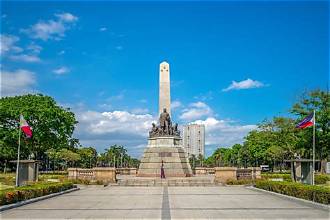
Rizal Park, also known as Luneta Park, is a significant historical site in Manila, dedicated to the national hero José Rizal. It commemorates his execution on December 30, 1896, which played a crucial role in the Philippine Revolution against Spanish colonial rule. The park is situated on the eastern shore of Manila Bay. It hosts various events and gatherings, connecting locals and tourists to Filipino heritage. Visitors can explore the Rizal Monument, Chinese and Japanese Gardens, and other historical markers. Rizal Day is observed every December 30 to honor Rizal's legacy.
Tubbataha Reefs Natural Park
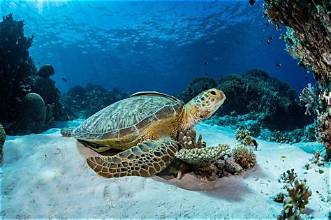
Tubbataha Reefs Natural Park, located in the Sulu Sea, is a UNESCO World Heritage Site renowned for its rich marine biodiversity and pristine coral reefs. Established as a national marine park in 1988, it is home to over 600 species of fish and numerous marine turtles. The park includes two large atolls and the Jessie Beazley Reef, characterized by steep walls and shallow reefs. The site is only accessible by live-aboard boats from March to June, making it a remote diving destination.
About the Creator
Rasma Raisters
My passions are writing and creating poetry. I write for several sites online and have four themed blogs on Wordpress. Please follow me on Twitter.
Enjoyed the story? Support the Creator.
Subscribe for free to receive all their stories in your feed. You could also become a paid subscriber, letting them know you appreciate their work.
Comments
There are no comments for this story
Be the first to respond and start the conversation.