

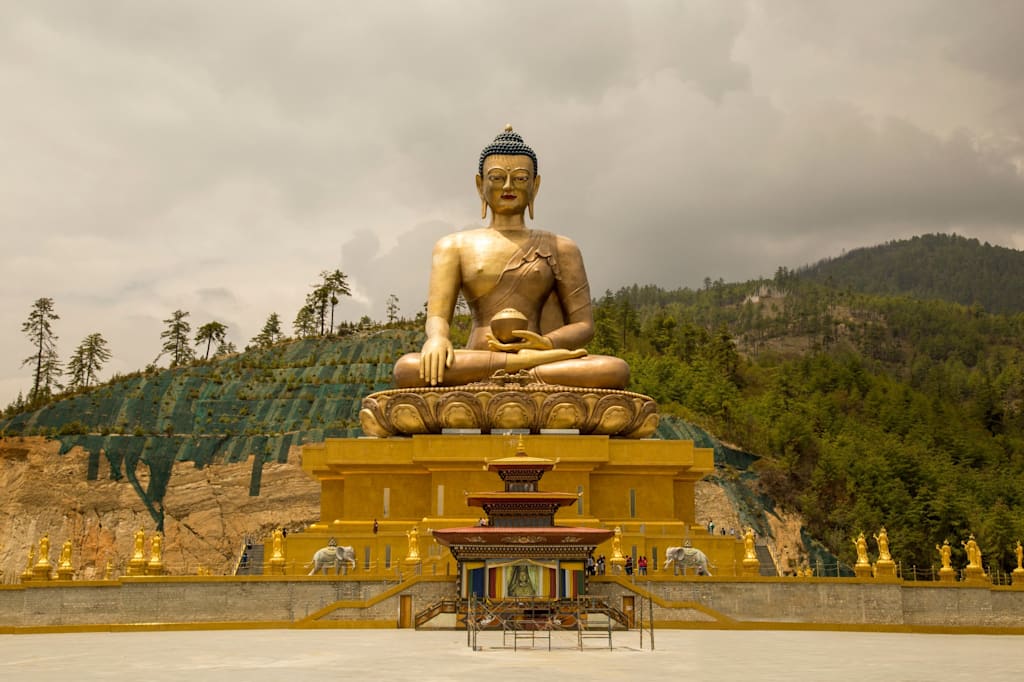
The Buddha Dordenma sits overlooking the capital city of Thimphu and is among the largest Buddha statues in the world. This golden monument houses 125,000 smaller Buddha statues within it, making it a significant pilgrimage site. Standing at 51.5 meters tall, it symbolizes peace and spiritual awakening. It is situated atop a hill in Kuensel Phodrang Nature Park.
The Buddha Dordenma was commissioned by Bhutan's fourth king, Jigme Singye Wangchuck, in the 1990s, and the idea was initiated by Thinley Norbu Rinpoche, a prominent Nyingma Buddhist master. The statue was completed in September 2015 after years of planning and construction.
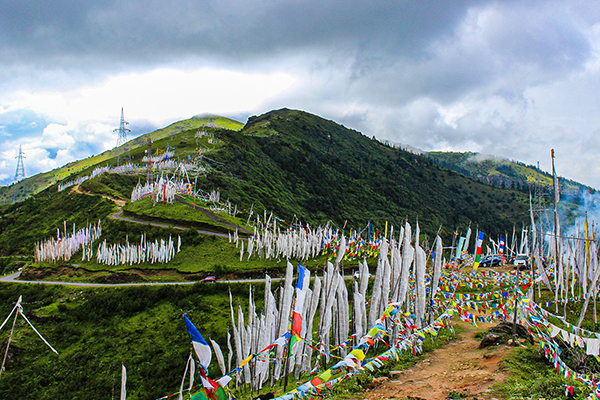
Chele La Pass is the highest motorable pass in Bhutan, situated between the Haa and Paro valleys. It offers stunning views of the Himalayan peaks and is a popular destination for trekkers and nature enthusiasts.
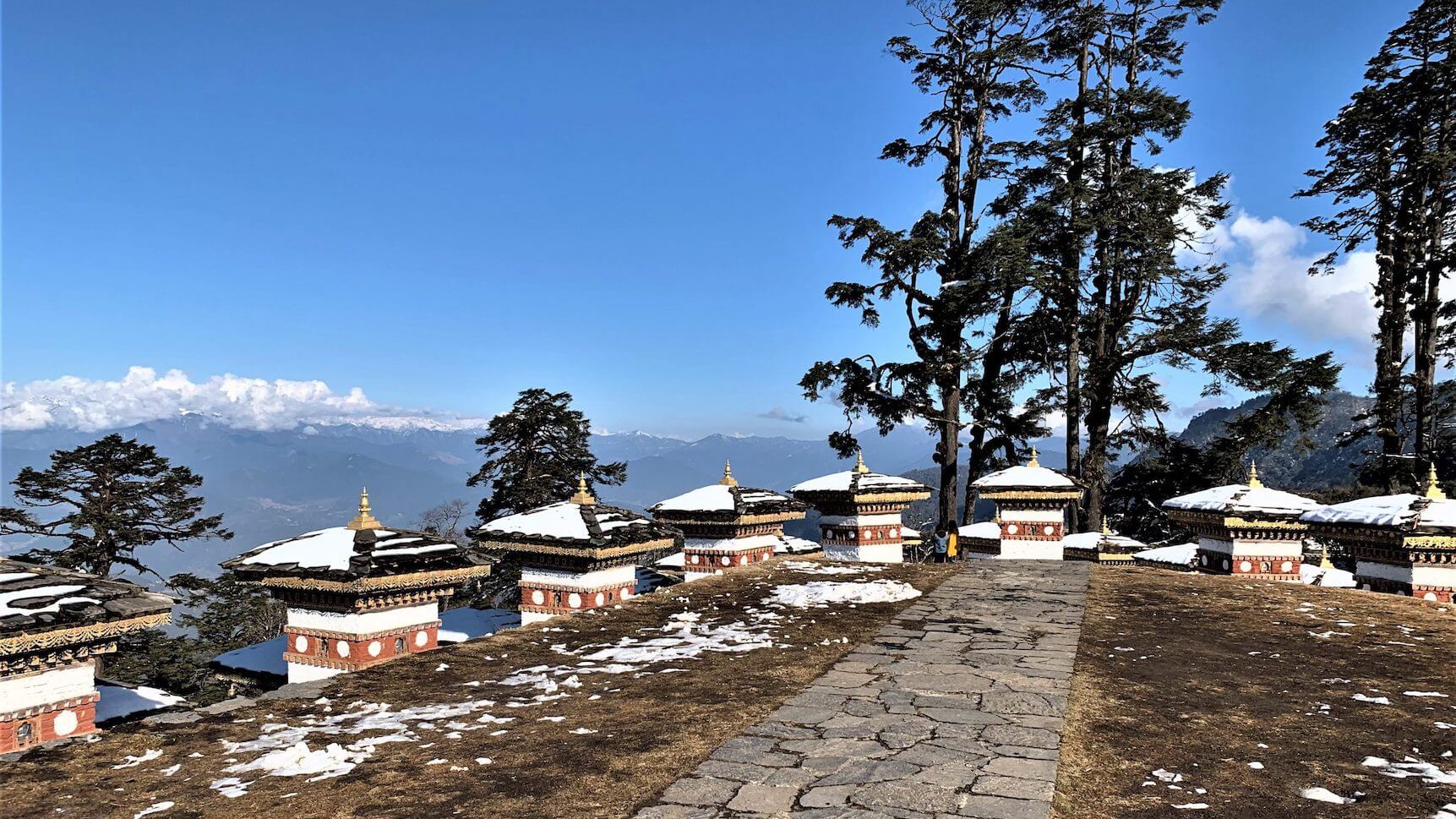
Dochula Pass is a scenic mountain pass that offers stunning views of the Himalayas and is known for its 108 chortens, which commemorate Bhutanese soldiers. It serves as a popular stop for travelers seeking both natural beauty and cultural significance.
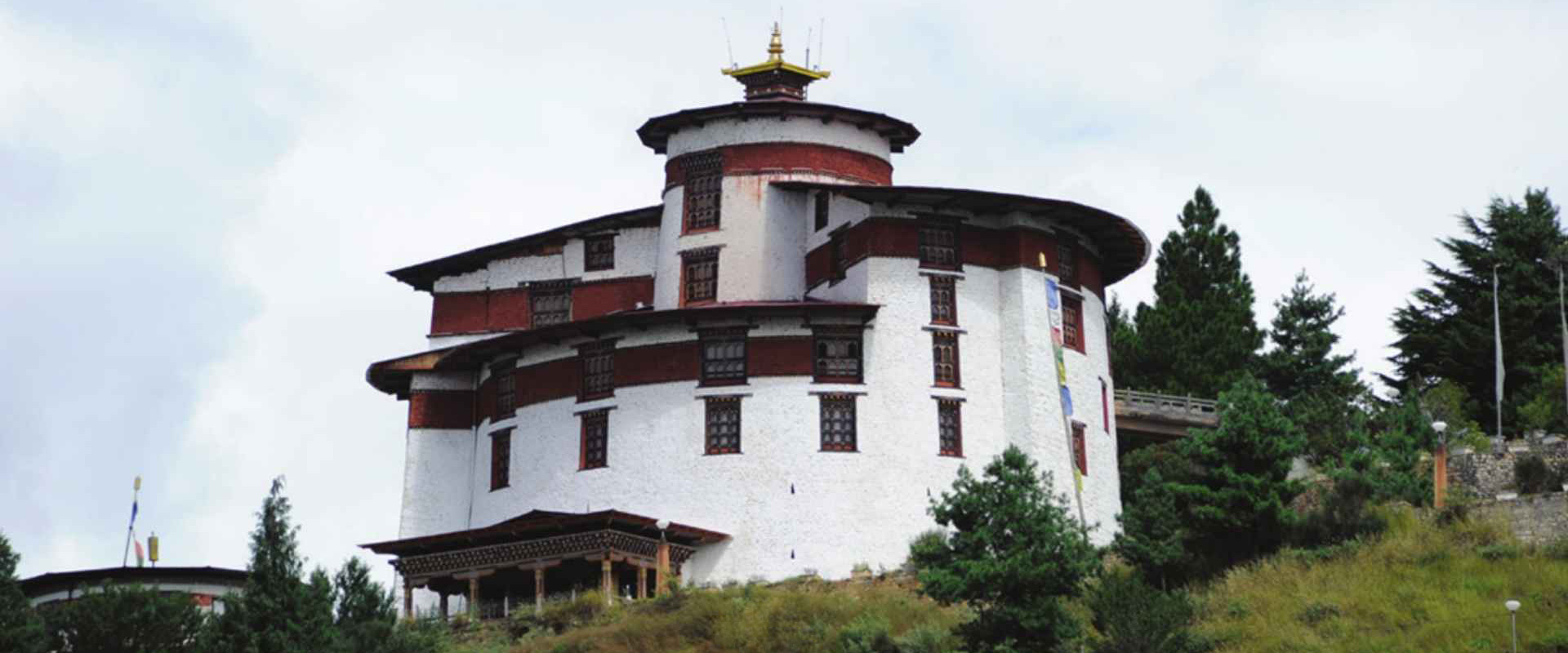
The National Museum of Bhutan, located in Paro, is a key institution that showcases the country's rich cultural and historical heritage through a diverse collection of artifacts. Established in 1968, it serves as a custodian of Bhutan's spiritual and artistic legacy, featuring over 3,000 items including sacred relics and royal heirlooms. The museum aims to interpret Bhutan's history and culture through exhibits and research.
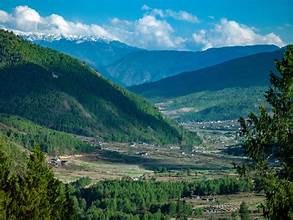
Phobjikha Valley, located in central Bhutan, is renowned for its stunning landscapes and as a winter habitat for the endangered black-necked cranes that migrate from Tibet. This glacial valley, situated at an elevation of approximately 2,900 meters, is also part of a significant wildlife preserve.
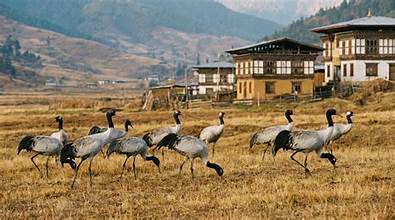
The area is not only a natural haven but also holds cultural importance, with local festivals celebrating the cranes.
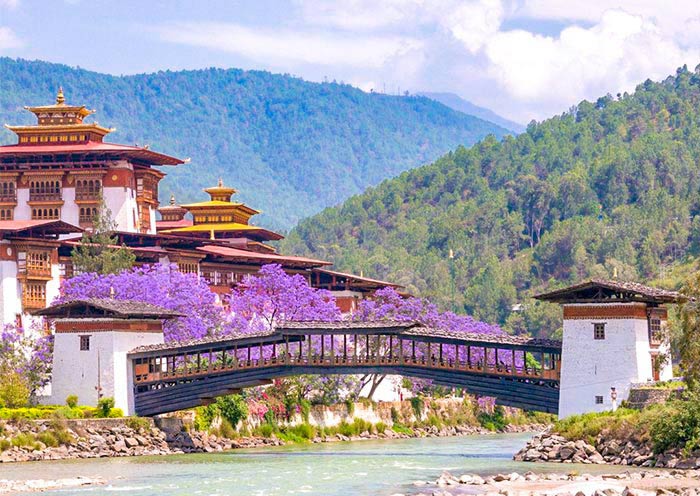
Punakha Dzong is strategically situated at the confluence of the Pho Chhu, known as the "father river," and the Mo Chhu, referred to as the "mother river." This unique location enhances its spiritual significance and scenic beauty.
Punakha Dzong, also known as the Palace of Great Happiness, is Bhutan's second-oldest and second-largest fortress-monastery, built in 1637-38 by Zhabdrung Ngawang Namgyal. It serves as a significant cultural and administrative center in Bhutan. The ancient fortress is surrounded by jacaranda trees that bloom in spring.
The dzong features remarkable Bhutanese architecture, blending traditional styles with functional design. It houses sacred relics, including the embalmed body of Zhabdrung Ngawang Namgyal and the Rangjung Kharsapani, a revered image of Avalokiteshvara. It remains a vital site for religious festivals and cultural events, attracting visitors and pilgrims alike.
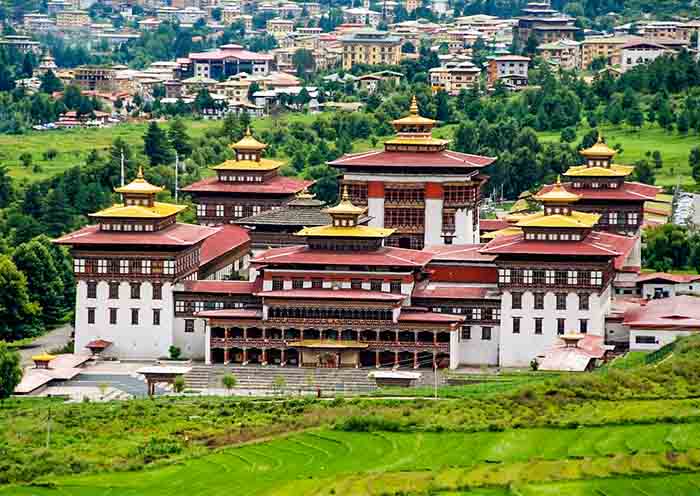
Tashichho Dzong is impressive in that it houses the throne room of the King of Bhutan and various government offices. It also serves as the summer residence of the central monastic body.
It is a significant fortress-monastery that serves as the seat of the Bhutanese government and a spiritual center. Known as the "Fortress of the Glorious Religion," it has been a key site for both administrative and religious activities since the 1960s. The dzong is renowned for its stunning architecture and beautiful location along the Wang Chhu River.
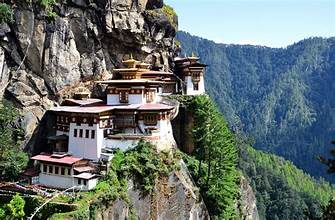
Tiger’s Nest is also known as Paro Taktsang and is an iconic landmark sitting perched on a cliffside. This sacred Buddhist monastery is thought to be the meditation site of Guru Rinpoche, who bought Buddhism to Bhutan. Visitor enjoy taking up the challenge of hiking to the monastery with breathtaking views all around.
Tiger's Nest Monastery is a sacred Buddhist site perched about 900 meters (3,000 feet) above the Paro Valley. This iconic monastery is renowned for its stunning cliffside location and spiritual significance, attracting many visitors each year. The trek to the monastery is about 6 kilometers (3.7 miles) and takes around 2-3 hours, providing scenic views along the way.
Tiger's Nest is a symbol of Bhutanese identity and spirituality, often featured in national imagery and literature.
About the Creator
Rasma Raisters
My passions are writing and creating poetry. I write for several sites online and have four themed blogs on Wordpress. Please follow me on Twitter.
Enjoyed the story? Support the Creator.
Subscribe for free to receive all their stories in your feed. You could also become a paid subscriber, letting them know you appreciate their work.
Comments
There are no comments for this story
Be the first to respond and start the conversation.