


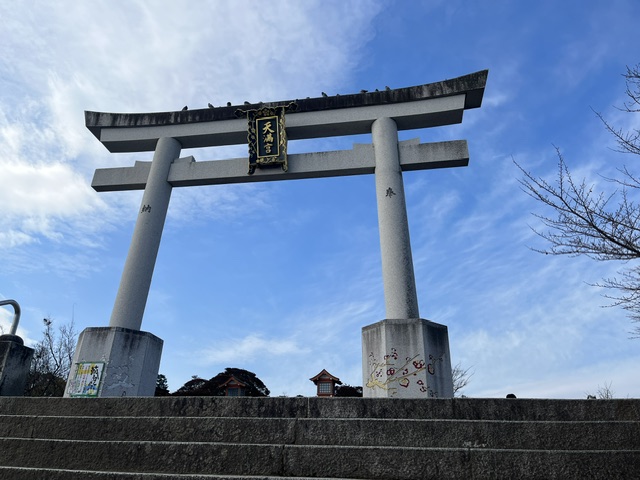
Whenever people ask me for a true "hidden gem" in Kyoto, I always tell them to skip the packed temples in the city center and take a short train ride southwest.Welcome to Nagaoka Tenmangu Shrine—my personal favorite sanctuary where time seems to slow down, and nature puts on a spectacular show
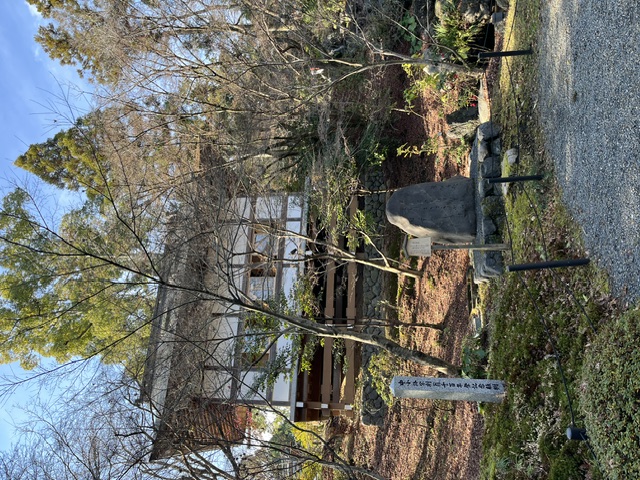
Located on the west side of Hachijogaike Pond, Kumpu-tei is a historic two-story tea-house style building. It was built during the Taisho period (around 1919–1926) by Keinen Imao (1845–1924), a prominent Kyoto-born Japanese-style painter (Nihonga artist) of the Meiji and Taisho eras. Designed to blend harmoniously with the tranquil nature and pond scenery, this elegant wooden structure is officially designated as a Registered Tangible Cultural Property of Japan. It serves as a wonderful example of traditional Japanese architectural beauty integrated with a serene landscape.
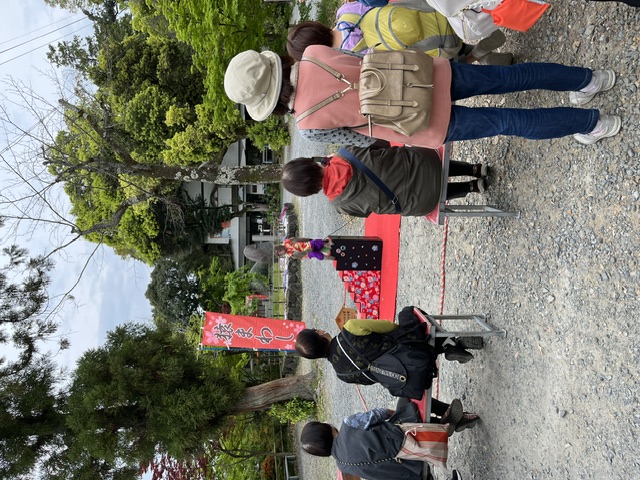
During special events or peak seasons (such as the spring azalea viewing in April), you can sometimes see traditional "Sarumawashi" (Japanese monkey performances) on the shrine grounds.
This is a centuries-old Japanese street performance where a trained monkey and its handler showcase entertaining tricks, acrobatics, and walk on stilts in sync. It is a very lively and family-friendly attraction that brings smiles to many visitors.
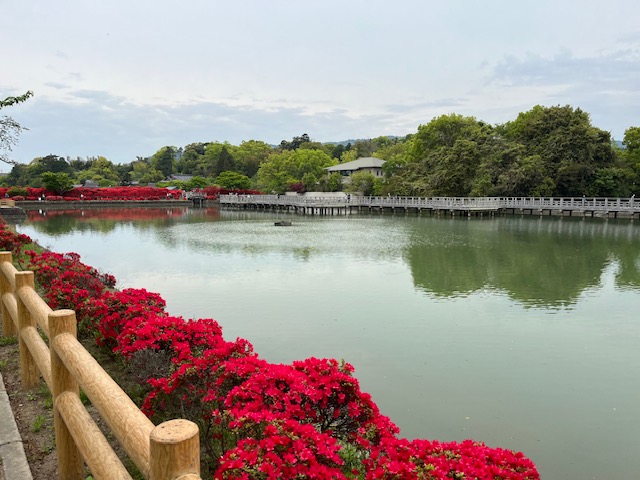
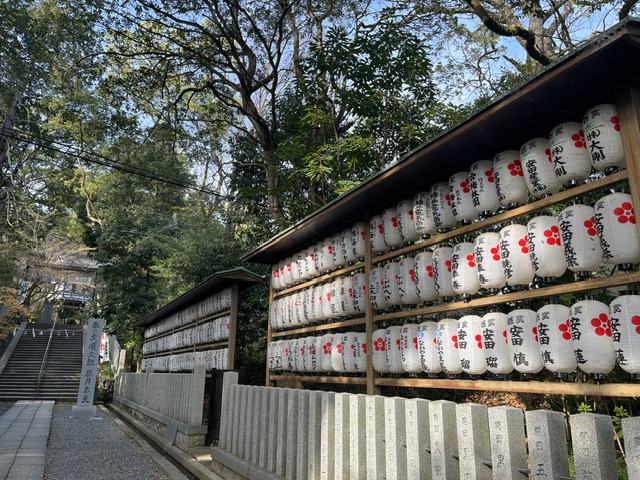
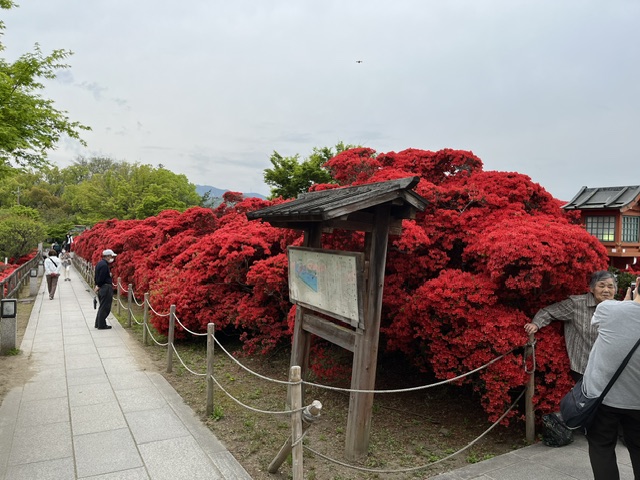
The shrine is most famous for its stunning deep-red Kirishima azalea bushes lining the central approach (sando). Some of these plants are over 100 to 170 years old and grow up to 2.5 meters tall, creating a breathtaking "crimson tunnel" when they bloom in late April.
Located within the shrine grounds, Kinkei-en is a picturesque strolling garden featuring ponds, waterfalls, and around 100 maple trees. It is especially breathtaking in late November, when the autumn foliage turns vibrant shades of red and gold. The garden also hosts evening light-up events during the peak autumn season, creating a magical and romantic atmosphere.
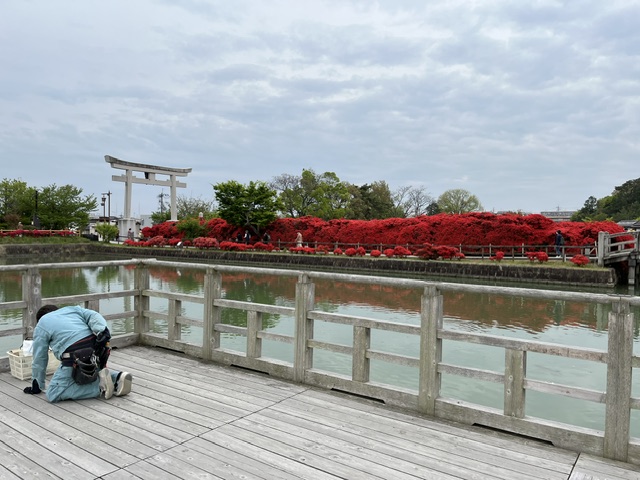
Suijokyo Bridge is a magnificent, straight wooden bridge made entirely of Hinoki cypress that stretches across Hachijogaike Pond. Walking across the bridge offers a wonderful panoramic view of the vast pond, the surrounding seasonal flowers (such as azaleas in spring and lotuses in summer), and the lush Nishiyama mountains in the background. It is a favorite photography spot for visitors.
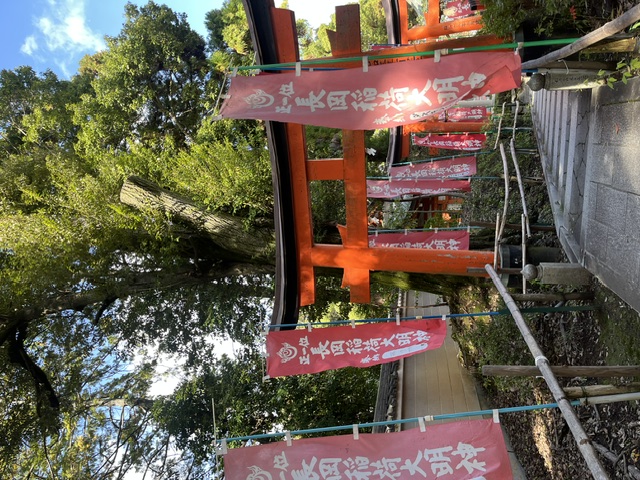
Within the history of Nagaoka Tenmangu, there is a deep connection to Hosokawa Yusai (1534–1610), a renowned Sengoku-period warrior and master of traditional arts who passed down classical poetry secrets to the Imperial family's Hachijomiya lineage.
In 1859, marking his 250th memorial service, he was granted a divine title and enshrined here as "Nagaoka Daimyojin." A stone monument marking the historic site of this shrine hall still stands on the grounds, preserving the deep historical ties between the shrine and cultural figures of the past.
Access : Train: A 10-minute walk west from Nagaoka-Tenjin Station (Hankyu Kyoto Line), or about a 20-minute walk from JR Nagaokakyo Station (JR Tokaido Line).
Admission / Entrance Fee: Free. Admission to the shrine grounds is completely free of charge, and visitors are welcome to walk around freely.
About the Creator
Kyoko
Kyoto native, alumnus of Osaka University of Arts (known as an elite madhouse of unbridled talent), and now navigating life in the UK. On a mission to smuggle Japan's best-kept secrets out to the world—before everyone else catches on.
Enjoyed the story? Support the Creator.
Subscribe for free to receive all their stories in your feed.
Comments
There are no comments for this story
Be the first to respond and start the conversation.