
Journeys to the Top of the World: Young Explorers at the North Pole
The Voyage of a Lifetime From Classroom to Icebreaker Science That Reaches for the Sky Flags and Dreams at the Summit Sharing the Experience A New Generation Looks North

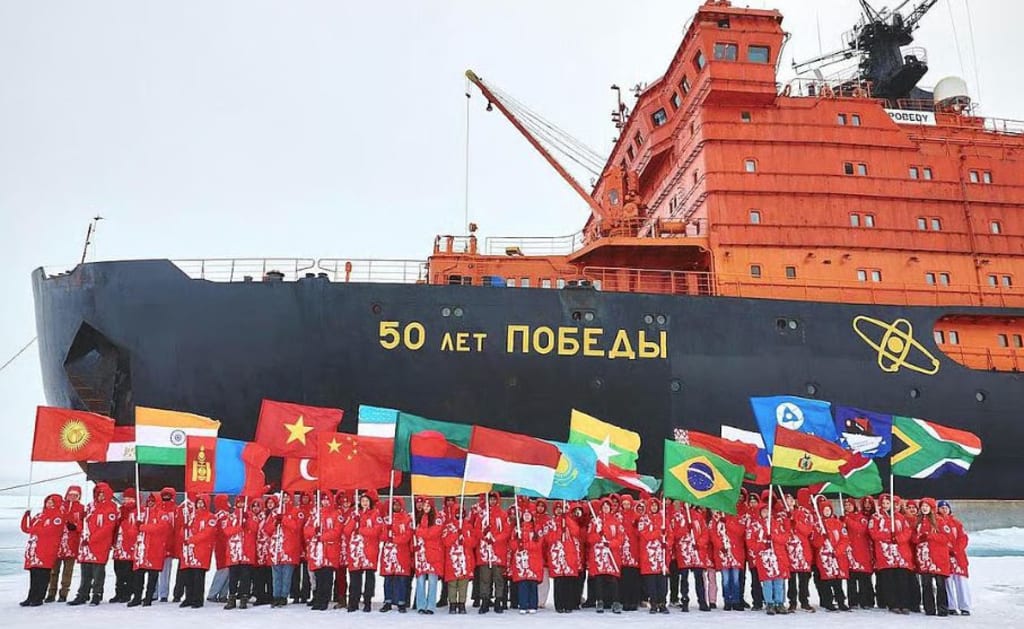
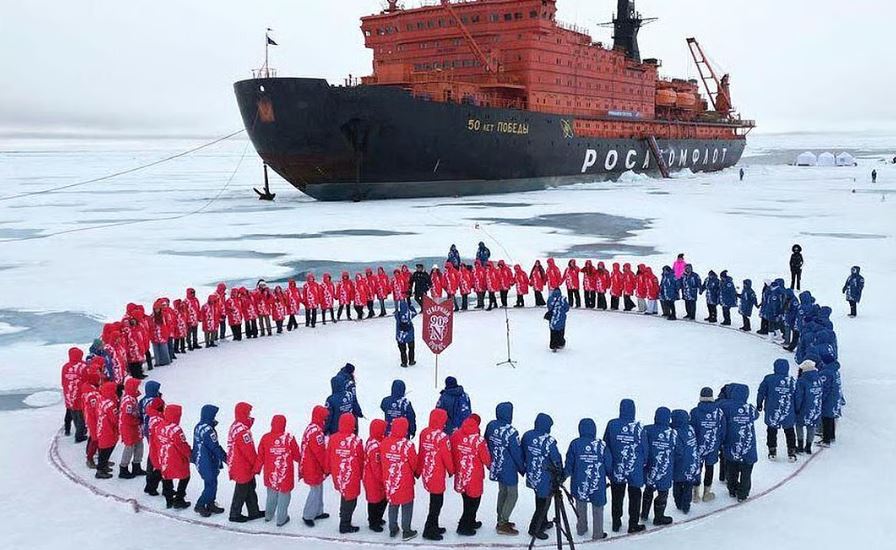
For most 15‑year‑olds, a school field trip might mean a visit to a local museum or nature reserve. For Xyleen Mapunda, it meant travelling nearly to the top of the world. The Tanzanian student stood on the sea ice at the North Pole, held her country’s flag against the vast white horizon, and saw snow and polar bears for the very first time. “It was simply an incredible feeling … that excitement is impossible to describe in words,” she said. She was not alone. Joining her was Galen Athayam Rinaldi Putra, 16, from East Java, Indonesia, for whom reaching the pole during his nation’s independence celebrations made the journey doubly profound. Together with 66 other teenagers aged 14 to 16, they embarked on an expedition that blended discovery, adventure, and hands‑on science, a voyage few people of any age will ever undertake.
The Voyage of a Lifetime
The adventure unfolded aboard “50 Let Pobedy”, the world’s most powerful nuclear‑powered icebreaker. Departing the northern Russian port of Murmansk on August 4, the ship carried the students across the Arctic Ocean to the geographic North Pole and onward to the remote Franz Josef Land archipelago, returning 10 days later on August 13. Malaysia was represented through Bernama, which joined media delegations from seven other nations to witness the historic send‑off. Even before sailing, the air held a crisp sense of occasion: temperatures hovered around 8–10°C, students stood in bright red winter coats against the vessel’s striking red hull, and national flags fluttered in the polar breeze. For many, this was their first time leaving their home countries, let alone setting foot in the Arctic.
From Classroom to Icebreaker
These were not tourists on holiday. Every participant earned their place through an international science competition, bringing curiosity and ability to a purpose‑built floating laboratory. Far beyond textbook diagrams, they learned how an icebreaker smashes through metre‑thick ice, how crews navigate in waters where compasses behave strangely, and how researchers survive and work in one of Earth’s harshest environments. They kept watch for polar bears, explored the ship’s engine rooms and bridges, and discovered a region whose influence on global climate reaches every continent, including their own.
Science That Reaches for the Sky
The expedition’s heart lay in its aerospace laboratory, set up specially on board. Under expert guidance, the students worked alongside scientists on real, cutting‑edge projects. They launched a radiosonde to improve communications in remote Arctic zones, vital as warming seas open new shipping lanes. They also tested a returnable stratospheric platform designed for environmental monitoring, which soared to more than 15 kilometres altitude and travelled over 100 kilometres before landing precisely on Hooker Island in the Franz Josef Land group. Anton Yurmanov, one of the experts overseeing the work, explained the philosophy: learning happens best when you do it. “Combine education with practical work,” he said, and for these teenagers, that meant their experiments did not stay on paper; they flew.
Flags and Dreams at the Summit
Standing at 90 degrees north, surrounded by endless ice and sky, each student carried something more precious than equipment: the pride of home. For Xyleen, holding Tanzania’s flag at the planet’s apex felt like bringing her country to a place it had never been. For Galen, arriving as Indonesia marked its independence linked his nation’s story to the wider world. It was a reminder that the Arctic belongs to no single nation, yet it matters deeply to all. As the ice melts and global patterns shift, the decisions made here will shape lives from the tropics to the poles. These young people saw that truth first‑hand.
Sharing the Experience
Some came to Murmansk to see them off parents, teachers, and mentors who understood what was unfolding. Mina Semele Masoga, a science teacher from Pretoria, South Africa, captured the hope shared by many: “This is truly a once‑in‑a‑lifetime experience … I hope they will bring home the knowledge and share it with their peers.” The expedition was never meant to be hoarded; it was intended to ripple outward, sparking conversations, inspiring projects, and proving to young people everywhere that science can take them as far as they dare to go.
A New Generation Looks North
When the icebreaker docked again, the students returned changed. They brought back photographs and memories, yes but also a keener sense of Earth’s fragility, a sharper wonder at science’s power, and a quiet confidence that they belong in the front ranks of discovery. They have stood at the pole; they have touched the ice; they have seen the world from its highest latitude. The journey home is the next leg of their voyage and if they carry what they learned with courage and care, the greatest adventures may well be the ones they lead.
About the Creator
Mark Lim
Hi I am mark an automotive student and a car, tech and food enthusiast ! Im gonna try and post daily & hope you enjoy what I write and do share my page with people you know. I would gladly appreciate it! Cheers
Enjoyed the story? Support the Creator.
Subscribe for free to receive all their stories in your feed.
Comments
There are no comments for this story
Be the first to respond and start the conversation.