
Death toll from capsized Indonesian ship climbs as search widens for 107 missing
Indonesian rescuers are expanding underwater operations after the Virgo Transport 8 ferry sank in the Java Sea, with dozens of victims still unaccounted for more than a week after the disaster.
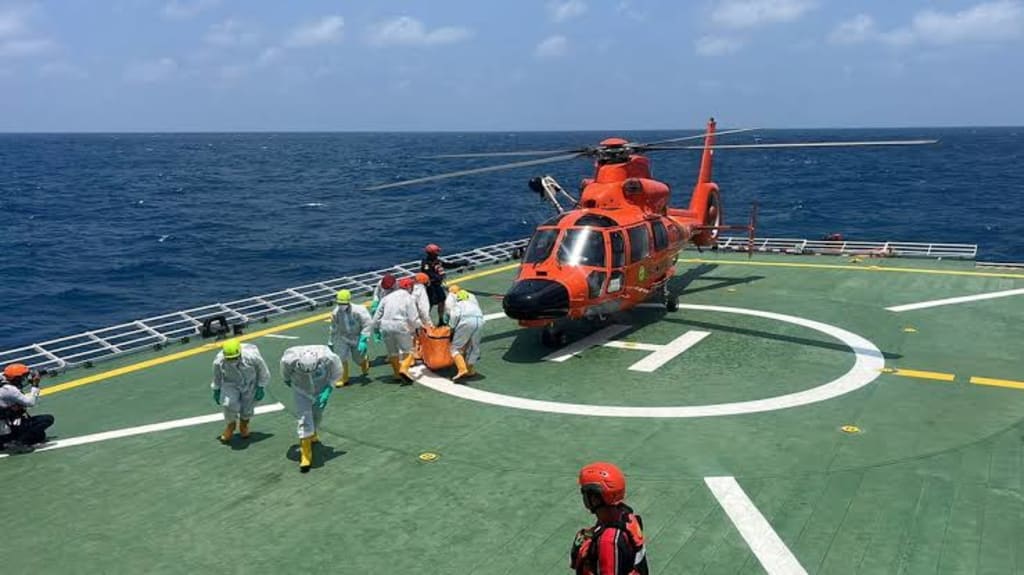
The death toll from a passenger ferry that capsized and sank in Indonesia's Java Sea has risen to 28, while 107 people remain missing, according to authorities. Rescue teams are widening their underwater search as they continue efforts to recover victims from the vessel and surrounding waters.
The disaster involving the Virgo Transport 8 began on September 13, when the ferry capsized during bad weather while traveling from Surabaya in East Java to Banjarmasin in South Kalimantan. The vessel was carrying 243 people, including 30 crew members, as well as vehicles.
Authorities have confirmed 108 survivors. The latest figures demonstrate the scale of the continuing search operation and the difficulties facing divers working around the sunken vessel.
Underwater Search Intensifies
Indonesian coast guard and Navy personnel have been conducting underwater operations around the overturned ferry. According to the latest reports, rescuers recovered numerous bodies from inside the vessel during the days leading up to September 23.
The operation has become increasingly focused on the ship's cabins, where rescuers believe additional victims may be located.
Divers have faced significant technical and environmental challenges. Murky water and strong underwater currents have made it difficult to enter parts of the ferry and safely recover bodies.
Rescue officials have emphasized that diver safety remains a major consideration as teams assess which sections of the ship can be searched.
Search Extended as Families Wait
The search-and-rescue operation has been extended through September 27 as authorities continue looking for the missing.
For families of passengers who remain unaccounted for, the extended operation provides an opportunity for rescuers to continue gathering information and recovering victims.
Some bodies have also been discovered away from the original accident site. Authorities reported that two bodies were found washed ashore in Central Kalimantan, approximately 253 kilometers from where the ferry sank.
This illustrates how currents can move victims and debris over considerable distances, making large maritime searches especially complicated.
Bad Weather Played a Major Role
The ferry capsized during severe weather conditions on September 13. Earlier reports said rough seas and strong waves complicated rescue efforts immediately after the accident.
The exact circumstances that caused the vessel to overturn remain subject to investigation. Authorities have not announced a final determination of responsibility or a definitive explanation for the accident.
Investigators will likely examine weather conditions, the vessel's condition, passenger numbers, loading arrangements, crew actions and other factors as part of the process of determining what happened.
A Difficult Environment for Divers
Underwater rescue operations are considerably more complicated than surface searches.
Divers must contend with limited visibility, currents, unstable structures and the possibility of becoming trapped inside the wreck. The ferry's overturned position also makes access to cabins and other compartments more difficult.
Rescuers have reportedly encountered situations in which bodies could be seen but could not immediately be reached because of dangerous underwater conditions.
The operation therefore requires careful coordination between divers, naval personnel, rescue agencies and salvage specialists.
Why Ferry Safety Matters in Indonesia
Indonesia is an archipelago made up of thousands of islands, making maritime transportation essential for millions of people.
Ferries connect communities separated by large stretches of water and are often an affordable alternative to air travel. Because of this dependence, major maritime accidents can have consequences that extend far beyond the passengers directly involved.
The Virgo Transport 8 disaster has renewed attention on ferry safety, although the causes of this particular accident remain under investigation.
Previous maritime accidents in the region have also highlighted the importance of vessel maintenance, passenger manifests, emergency equipment, weather monitoring and effective evacuation procedures.
The Importance of Accurate Passenger Information
One of the challenges following a maritime disaster is establishing exactly who was aboard a vessel.
Accurate passenger and crew records are essential because they help rescue agencies determine who has survived, who is missing and who may have been recovered.
In large emergencies, information can change as survivors are located and identities are confirmed. This explains why casualty figures may differ between early reports and later official updates.
Authorities continue to revise the figures as the search progresses.
What Happens Next?
The immediate priority remains locating and recovering missing people while protecting the rescue teams working underwater.
Authorities have also been preparing operations to reposition or salvage the capsized vessel. Righting the ferry could provide rescuers with improved access to areas that are currently difficult or impossible to enter.
However, such an operation must be carefully planned because the wreck can present additional risks to divers and salvage crews.
Investigators will eventually need to examine the vessel and available evidence to establish how the accident occurred.
A Continuing Search for Answers
More than a week after the disaster, the search for 107 missing people remains one of Indonesia's major ongoing maritime rescue operations.
The confirmed death toll of 28 represents only part of the human impact of the tragedy, while 108 survivors have been brought to safety. The families of those still missing continue to wait for information as rescuers work in difficult conditions.
The accident also demonstrates the unpredictable dangers associated with maritime travel during severe weather. For Indonesia, where ferries remain a crucial link between islands, the disaster could prompt renewed scrutiny of emergency preparedness and passenger-vessel safety.
Conclusion
The sinking of the Virgo Transport 8 has developed into a complex search-and-recovery operation involving divers, naval personnel, coast guard teams and other emergency agencies.
With 28 confirmed deaths and 107 people still missing as of September 23, rescuers are continuing underwater searches around the overturned ferry and surrounding waters. The operation has been extended as authorities attempt to locate additional victims and provide answers to families.
The final investigation into the disaster will take time. Until then, the priority remains the safe recovery of those still missing and the careful examination of the circumstances that led to one of Indonesia's latest major maritime tragedies.
About the Creator
Enjoyed the story? Support the Creator.
Subscribe for free to receive all their stories in your feed.
Comments
There are no comments for this story
Be the first to respond and start the conversation.