
Chilling With Elephants in Sri Lanka
It's bath time for pachyderms at Pinnawala

“Colombo? Where’s Colombo?” I said. “It’s the capital city of Sri Lanka, an island in the Indian Ocean immediately south of the mainland,” my partner replied. Sri Lanka is a melting pot of colonizers and cultures, Portuguese, Dutch and finally the British who developed a lucrative trade in tea when Sri Lanka was called Ceylon. We were in Sri Lanka not for tea but for elephants.
The elephants were still a few days away when we landed in Colombo. Eager to see the city, we had spotted an old, red, double-decker bus parked near the terminal thinking it was a Hop On / Hop Off but it wasn’t. It was a commercial tour bus and we were the only ones aboard. We were about to get off when Michael, the guide, said he’d take us around. Diesel was expensive and I knew he was losing money on two cheapskates who couldn’t tell one double-decker from another but he was gracious and accommodating. As we lumbered through the oldest, busiest, and most crowded parts of the city, Michael asked if we had ever had a golden coconut. We hadn’t. Viran, the driver, stopped the bus in the middle of the street, jumped out and returned with two golden coconuts and two straws. The water was warm and sweet. It was a sweet gesture too, spontaneous and welcoming, indicative of the vibe we encountered in the rest of the country.
The next day another bus took us up the Kandy Highway to the Pinnawala Elephant Orphanage, one of five elephant refuges in the country. It's supposed to have the largest herd of captive elephants in the world, 93 at last count, although we only saw two dozen or so.
Founded in 1975 to care and protect orphaned young elephants, Pinnawala is now administered by the Sri Lanka Department of National Zoological Gardens. It has expanded its mandate to include older elephants which have been captured and billeted after destroying farmers' crops. Meandering pachyderms are a big deal in the outlying countryside. Their care and feeding is supported by admission fees, donations and the Sri Lanka government.
Pinnawala consists of two areas, a viewing and bathing area along the Maha Oya River and a feeding and rest area across the highway. Getting to the river required walking past a row of shops selling everything from paper made out of elephant dung paper to buffalo leather products to key chains. Make no mistake, whole commercial communities are built around attractions like Pinnawala. Although we were in the middle of nowhere there was no shortage of hotels and restaurants in the vicinity. Had we wished, we could have booked into the elegant Grand Royal Pinnalanda or the humbler Hotel Elephant Bay and saved ourselves a two-and-a-half-hour road trip from Colombo.
Admission to the refuge was reasonable - 350 Sri Lankan rupees or 18 US dollars each. We paid by Visa. Credit cards are accepted at major tourist stops and shops but it’s advisable to have Sri Lankan rupees on hand for tuk tuks and smaller establishments off the beaten path.
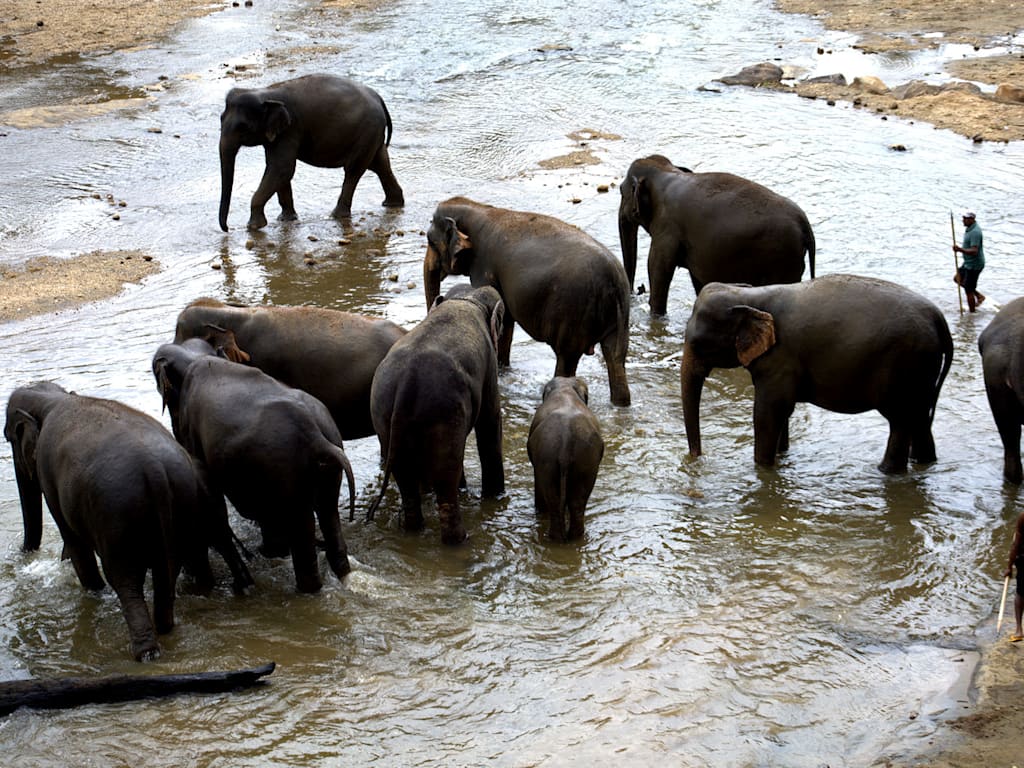
By now it was lunchtime and 15 elephants dutifully trod down to the river. The parade included three young pachyderms which was encouraging because unlike their African counterparts, the smaller Asian elephants are considered an endangered species. Pinnawala instituted a breeding program in 1984 resulting in over 75 births so far.
Once led to the river, shallow in spots and interspersed with rocks and sandbars, the animals assumed various positions. Some stood at attention while others rolled over on their sides. What? Are they sick? Are they hurt? Nope, it was part of their daily routine. It was pachyderm bath time at the Maha Oya and they were happy to lie in the water and let their trainers, called mahouts, splash them with water. Mahouts spend years with the animals, getting to know and bond with them. You might say they’re elephant whisperers because they make a point of being alert to the animal’s moods and behavior.
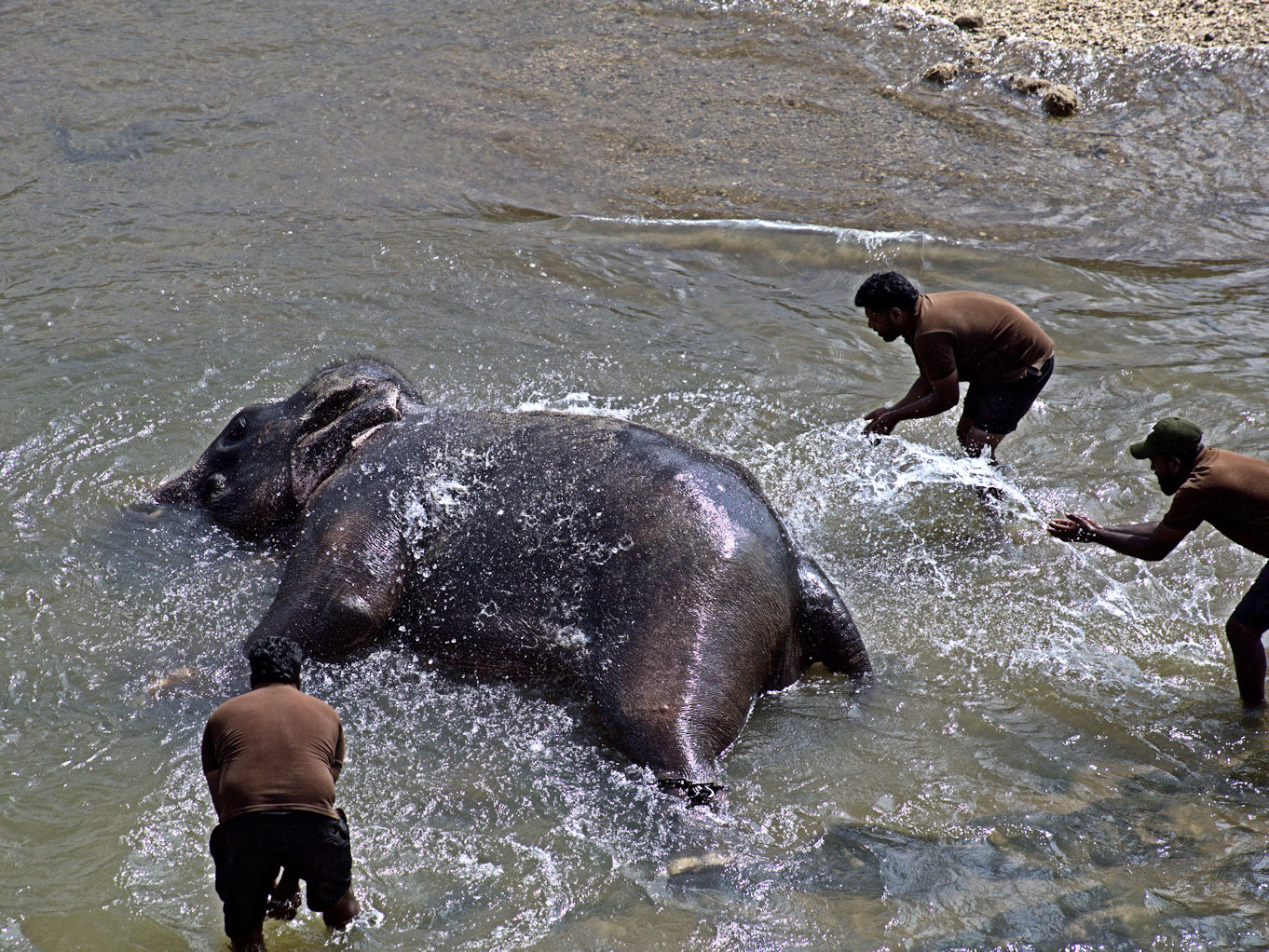
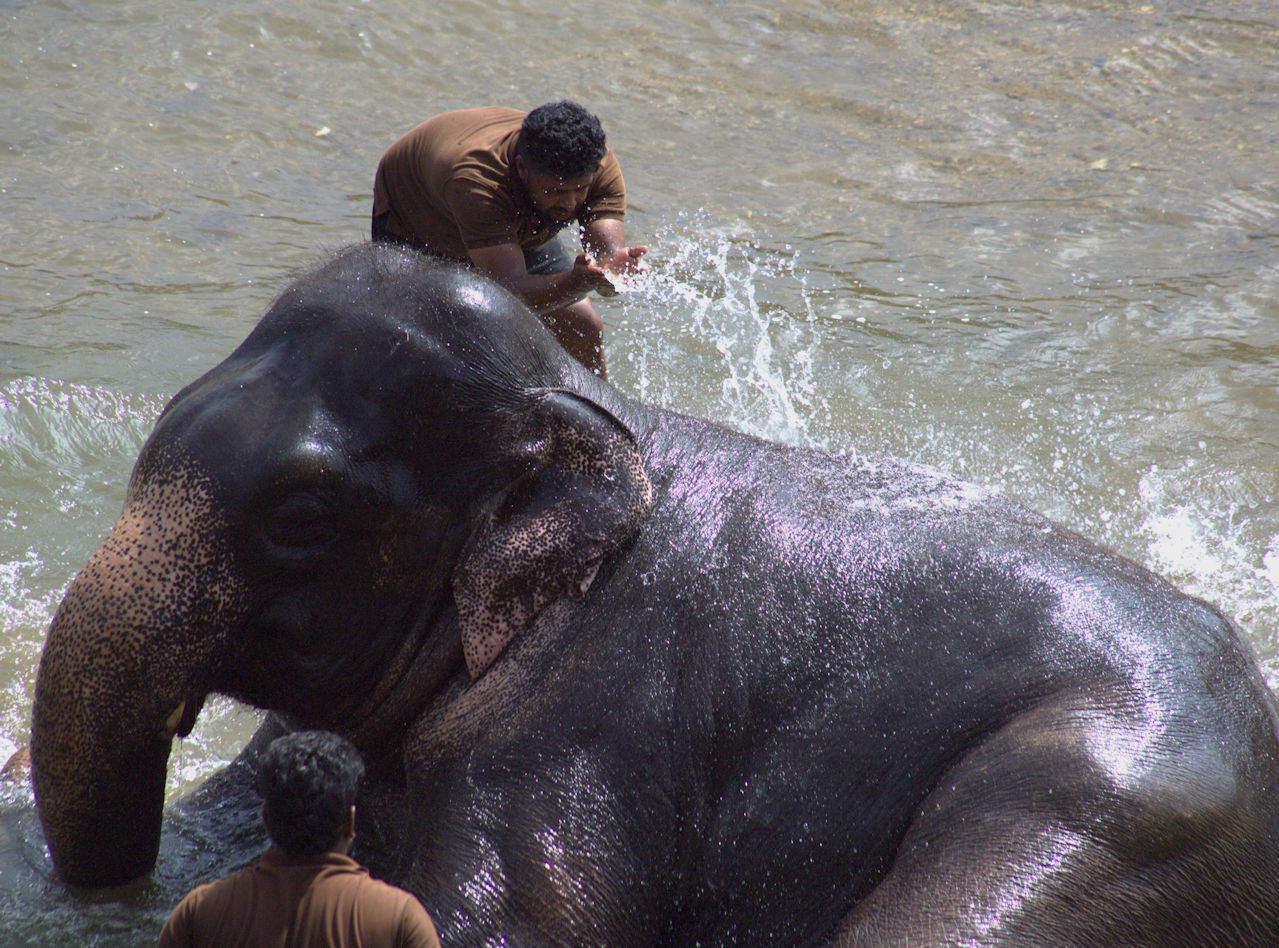
These beasts were so accustomed to humans that entire families were in the water “helping” to wash them. This is part of the experience should anyone want to participate. It’s not quite swimming with the dolphins but animal / visitor interactions are encouraged. One couple even hoisted their toddler on the elephant’s back while it was resting on its side.
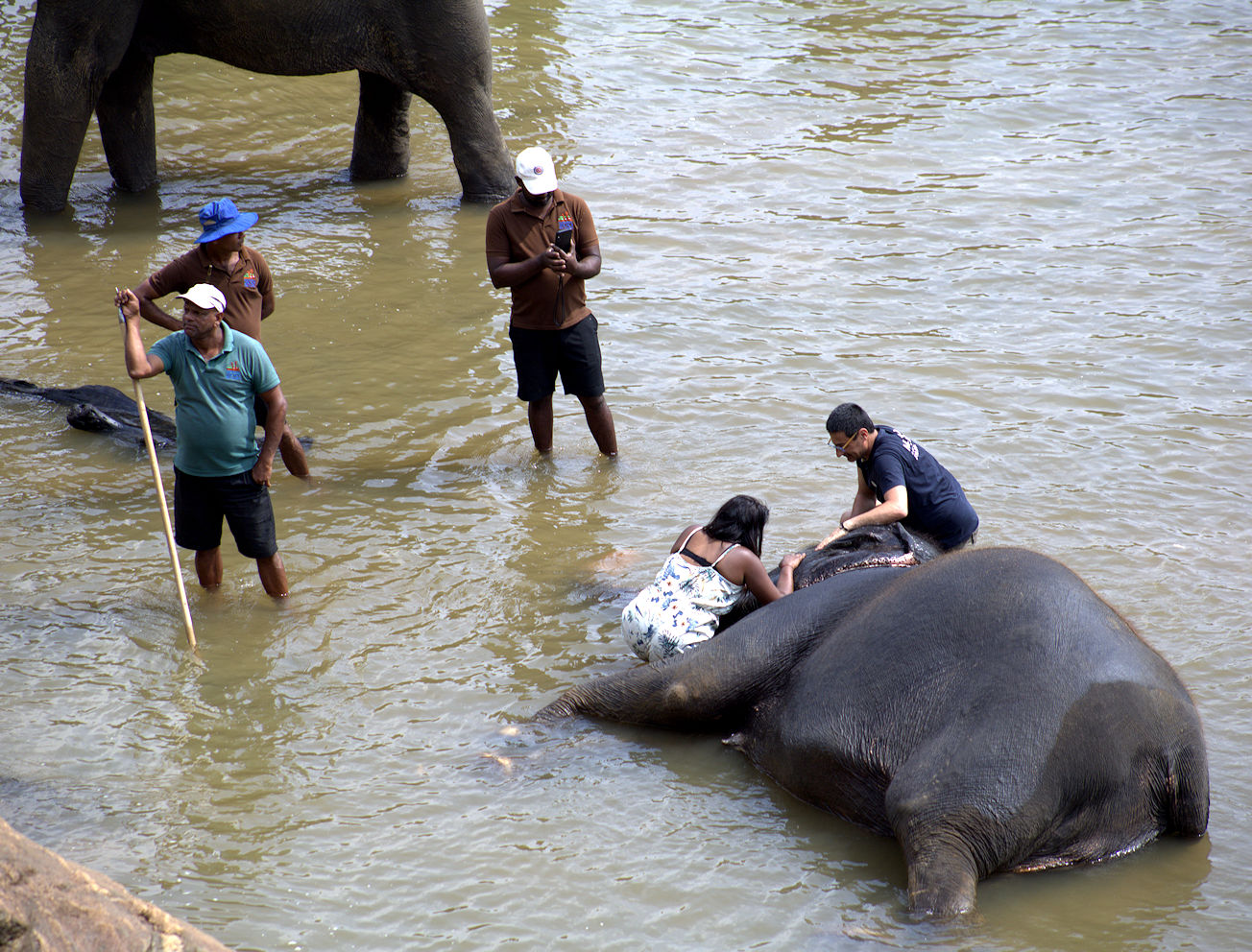
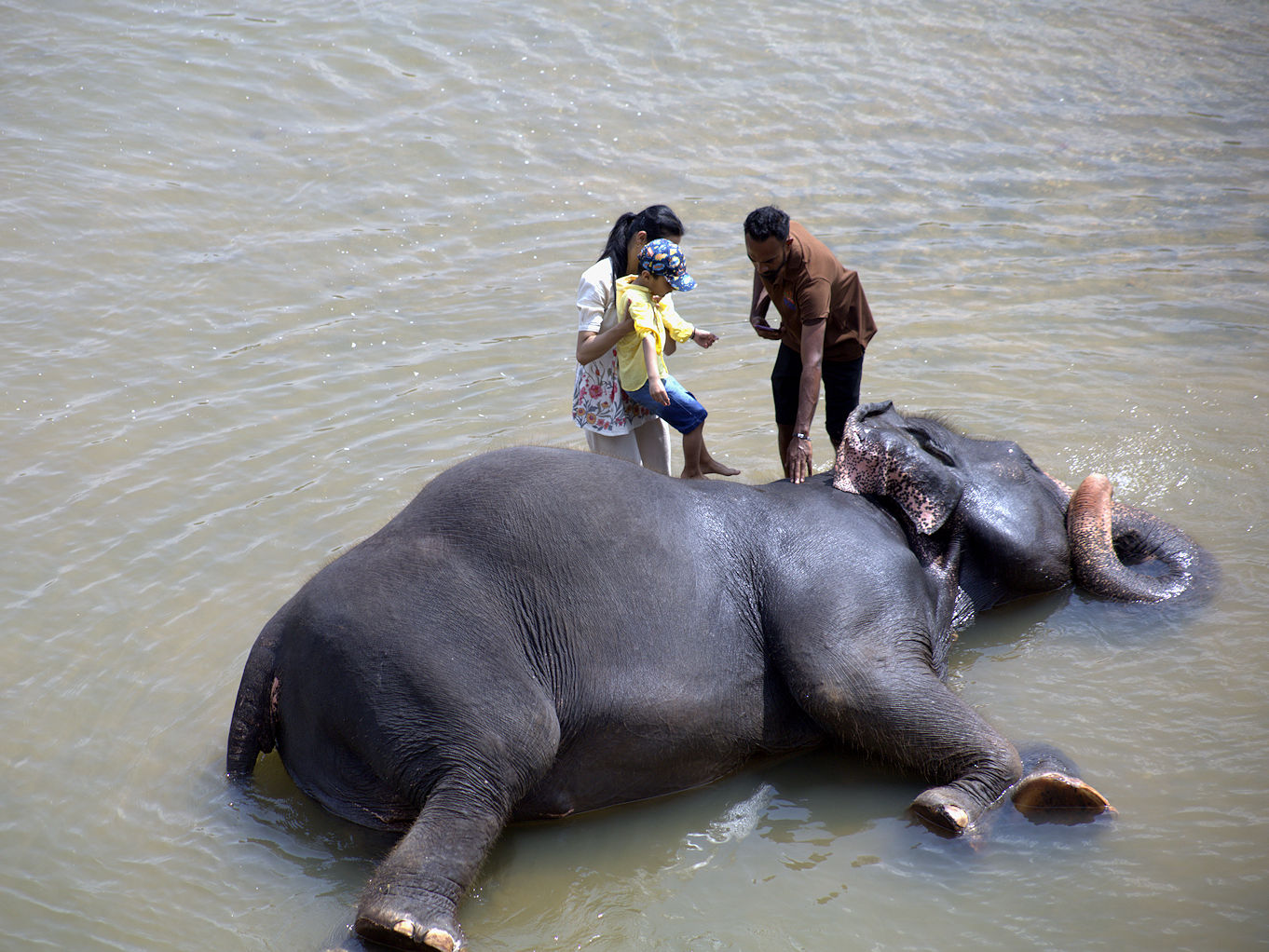
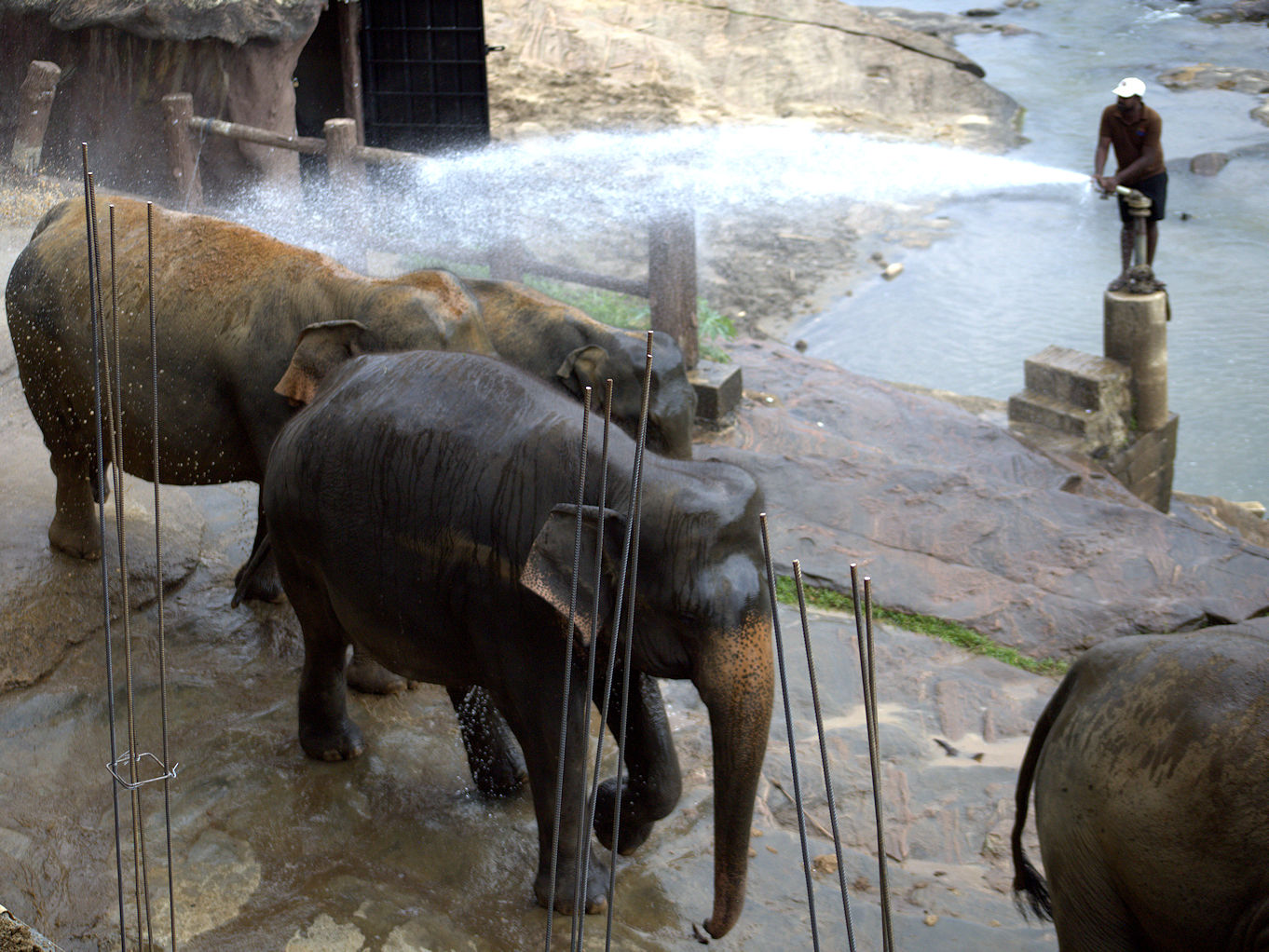
After an hour or so in the water the animals were rounded up and led to the feeding area across the road. We followed the parade to the other part of the refuge and watched four elephants chow down on lunch, a banquet of fiber and leaves which the mahouts had laid out on the shelter floor. I had seen videos of elephants eating before but never live or close-up. An elephant stomped on a large twig with its massive front leg, breaking the bark and exposing the fiber inside which it eagerly scooped up with its trunk. I was mesmerized.
All and all it was a fascinating experience. Walking past the hucksters wishing to sell us stuff was annoying but well worth it. And understandable too given the fact so many people in Sri Lanka depend on tourism to make a living.
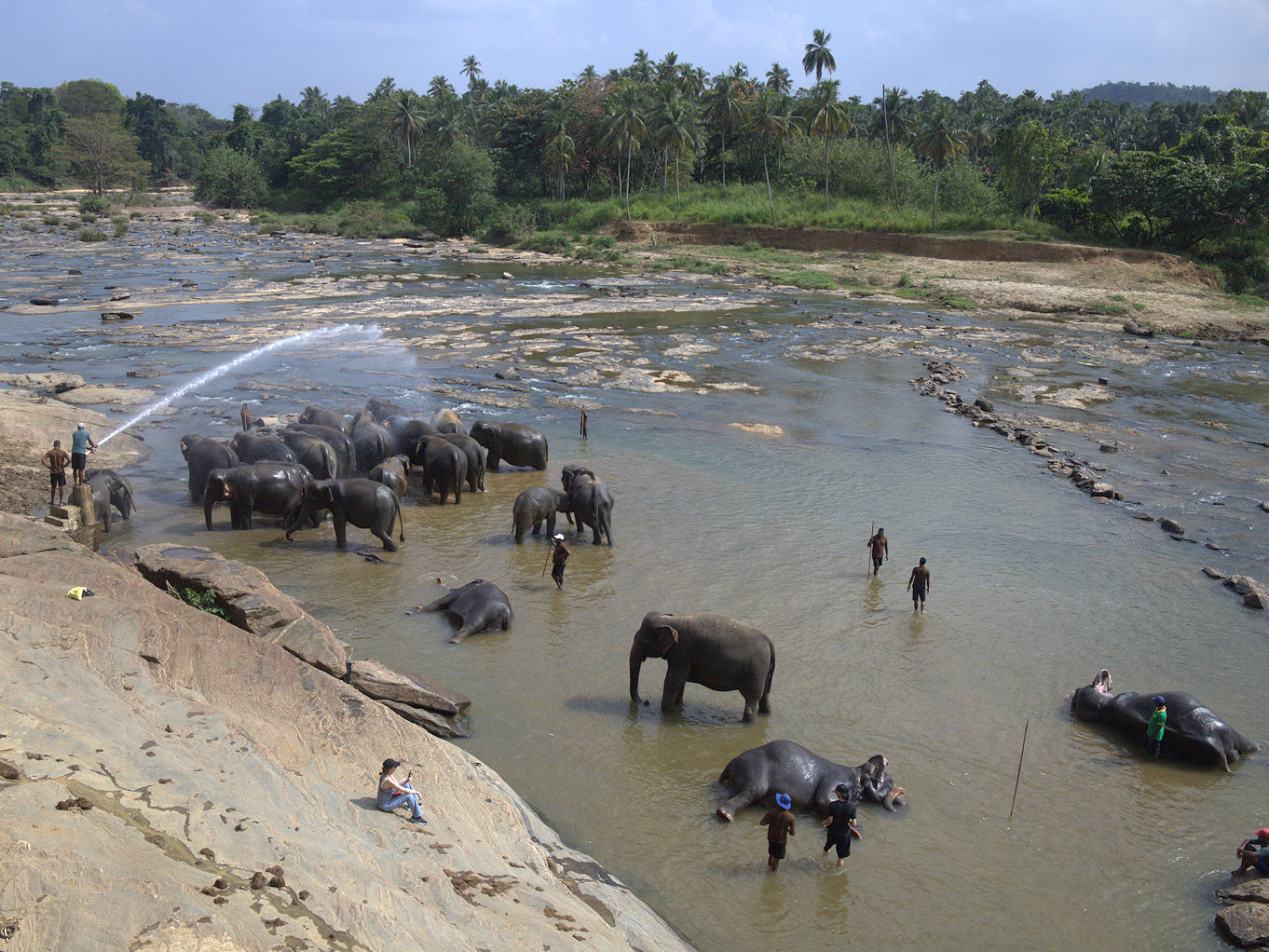
Critics of places like Pinnawala say the elephants aren’t really free but captive. That’s true; they are fed and cared for by humans. They do not forage for themselves and they are paraded in front of tourists for entertainment. I’m not sure that’s a bad thing. It raises the old argument about zoos and whether keeping animals in captivity as an educational experience is a good thing or not. I know I came away with an appreciation for Asian elephants that I would never have experienced if they weren’t so available. Visitors to Sri Lanka will have to decide for themselves.
About the Creator
John Thomson
Former television news and current affairs producer now turned writer. Thanks Spell Check. Visit my web page at https://woodfall.journoportfolio.com
Enjoyed the story? Support the Creator.
Subscribe for free to receive all their stories in your feed.
Comments
There are no comments for this story
Be the first to respond and start the conversation.