


The incredible town of Brasov is interesting in its own way by have its own Hollywood-style “Brasov” sign up on a hill.

The Old Town Council Square includes the town’s Gothic landmark, the Black Church.
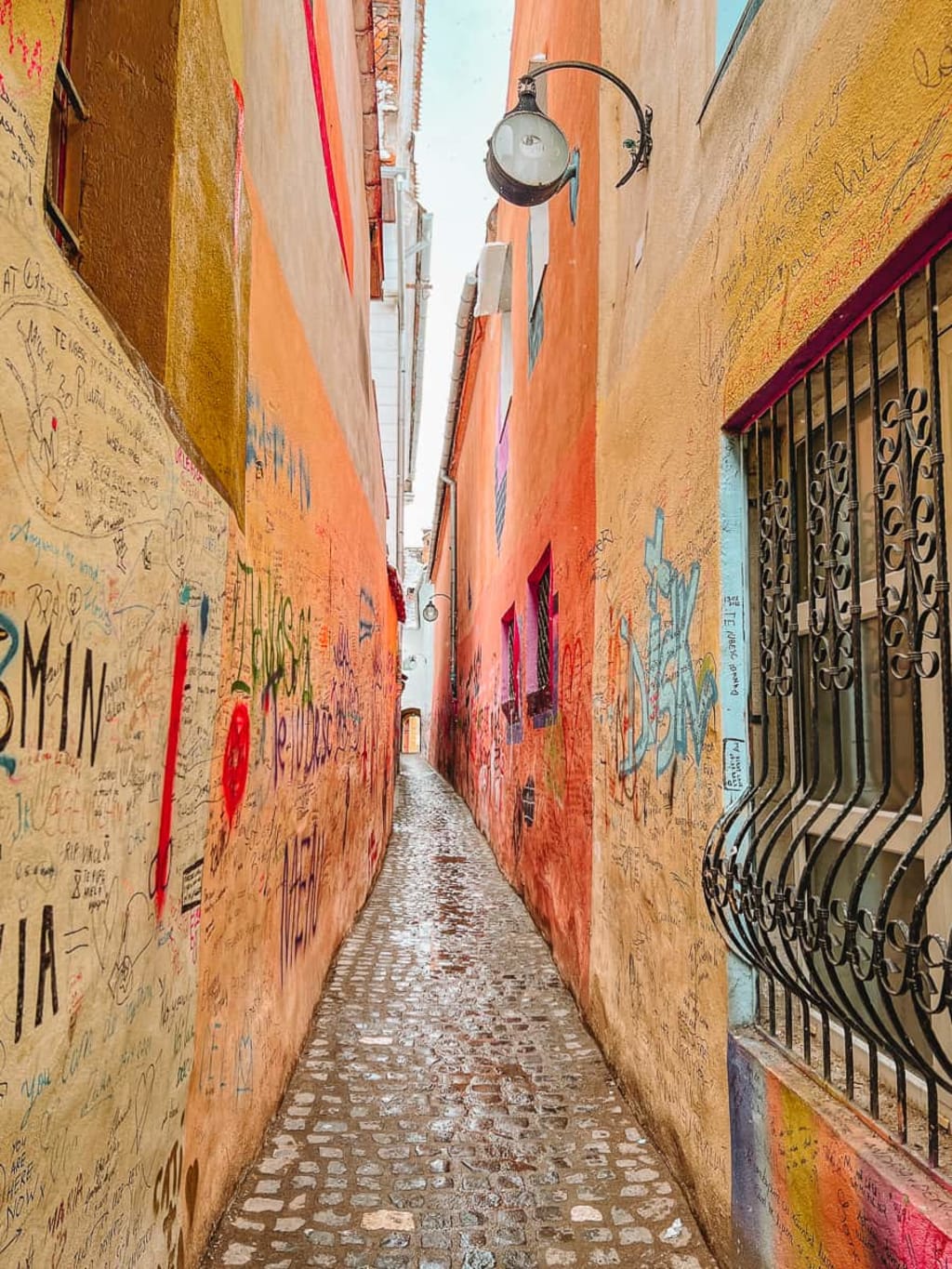
See Rope Street, one of the narrowest streets in Europe.

See nearby attractions such as the fairytale Peles Castle, nestled at the foot of the Bucegi Mountains. It is a masterpiece of German New Renaissance architecture in the nearby town of Sinaia.

Visit the beautiful winter resort known for ski adventures, Poiana Brașov.

If you want a thrilling adventure, visit the well-known Bran Castle. The castle was built by Saxons in 1377 who were given the privilege by Louis I of Hungary. It is a national monument and landmark in Transylvania.

Situated in the Silicon Valley of Romania, Cluj-Napoca is a beautiful town and home to the biggest music festival in Romania—Untold. You can enjoy the quaint Old Town area. It is known as the Heart of Transylvania.

Relax at Central Park and take a stroll.

See the impressive St. Michael’s Church, the tallest church in the country. The tower is now open to visitors for amazing views all around.

Right in front of Saint Michael’s Church stands the Matthias Corvinus Monument. It’s the city’s most imposing statue, honoring the 15th-century King of Hungary who was born right here in Cluj.

Visit the Matthias Corvinus House, the oldest secular building in the city and the home where Matthias was born.

The Banffy Palace is situated on Unirii Square and is the finest example of Baroque architecture in Cluj. It was built for the governor of Transylvania. Today, it houses the National Art Museum, where you can find over a thousand Romanian and European treasures, from paintings to sculptures and decorative art.

The Alexandru Borza Botanical Garden is a mix of Japanese gardens, Mediterranean plants, Roman statues, and Australian greenhouses

Take a hike in the “World’s Most Haunted Forest.” Located on the edge of the city, the Hoia Baciu Forest is famous for crooked trees that grow in strange patterns, alleged UFO sightings, and spirits/energies roaming around. The forest itself is a beautiful, if slightly eerie, place for a hike.

Constanta is a city located on the coast of the Black Sea in southeastern Romania. It serves as the country's largest port and is a popular destination for summer tourism.

Ovid Square was named after the Roman poet Ovid, who spent his last years in exile in Constanța. The square is dominated by a statue of him. The square is surrounded by historic buildings and is a lively part of the city.

The Great Mahmudiye Mosque was built in 1910 and reflects the city’s diverse cultural influences. Its architecture has a mix of Romanian and Byzantine design with a towering minaret that offers panoramic views.

The iconic Constanța Casino, with its Art Nouveau architecture, stands as a symbol of the city’s glamorous past. While currently not in use and in need of restoration, its façade and seaside location make it a picturesque landmark.

Visit the Archaeological Park to enjoy the ancient Roman ruins, including columns, mosaics, and statues in an open-air setting.

Mamaia is a popular seaside resort with white sands and clear waters.

The Constanța Aquarium, situated on the seafront, is home to a variety of marine species from the Black Sea and the Danube Delta, as well as exotic fish.

In the last northern outcrops of the Poiana Ruscă mountains, Deva sits at the base of an extinct volcano crowned with the ruins of a fortress. These stone walls have been left to decay since an explosion during the Wallachian Revolution of 1848.

The first record of the Deva Fortress is from 1269, and it was built over an ancient Dacian oppidum.

You can ride up to the Deva Fortress in under two minutes from the town on this funicular railway.

The adventurous can climb Fortress Hill.

The fine Renaissance and Baroque palace Magna Curia below Fortress Hill was first established in 1582 by the Hungarian captain in charge of the garrison at the fortress. In the 1610s it was transformed into a more refined residence when it became home to the prince of Transylvania, Gabriel Bethlen, who briefly made Deva the capital of Transylvania.

Parcul Municipal Cetate is a densely wooded park to the east of the Magna Curia, which used to be the palace grounds and was made public at the start of the 20th century.

A brief road trip to the south, Corvin Castle was first ordered by the famed Hungarian general John Hunyadi in the 15th century as a bulwark on the frontier with the Ottoman Empire. It features towering buttresses, a high approach ramp, inner courtyards with quatrefoil motifs, a chapel, a majestic Knights’ Hall, and a drawbridge.

Sibiu is a city situated in central Romania, in the historical region of Transylvania, straddling the Cibin River, a tributary of the Olt River. The town is known for its Gothic architecture, cobblestone streets, and unique “eye rooftops” that look like they’re watching you. They are the iconic eyebrow dormers on the roofs of Sibiu's houses. The town was elected the European Cultural Capital in 2017.

Visit Brukenthal Palace, one of the oldest museums in Europe. The Brukenthal National Museum is home to art galleries with about 1,200 artworks belonging to the main European schools of painting from the 15th to the 18th century.

The Great Square is the gathering place and venue for cultural events.

Visit the open-air ASTRA Museum to learn about Romanian culture.
About the Creator
Rasma Raisters
My passions are writing and creating poetry. I write for several sites online and have four themed blogs on Wordpress. Please follow me on Twitter.
Enjoyed the story? Support the Creator.
Subscribe for free to receive all their stories in your feed. You could also become a paid subscriber, letting them know you appreciate their work.
Comments
There are no comments for this story
Be the first to respond and start the conversation.